

Blog / Model Comparison

2024 Toyota Tacoma vs 2024 Ford Ranger

2024 TOYOTA TACOMA

The midsize pickup truck market has always been hotly contested, but in recent years, it's become even more competitive. The Toyota Tacoma has been the sales leader in the class for several years, but the Ford Ranger is one of its strongest rivals. With both these trucks having been redesigned for the new model year, how does the 2024 Toyota Tacoma stack up against the new Ford Ranger? Here at Keith Pierson Toyota in Jacksonville, Florida, we've put together a midsize truck comparison.

Comparing the 2024 Toyota Tacoma and 2024 Ford Ranger

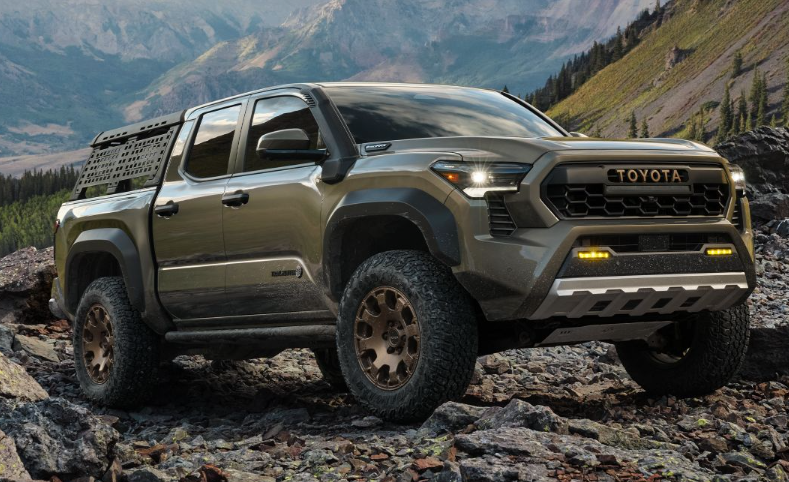
The all-new 2024 Toyota Tacoma has been fully redesigned with more rugged and aggressive styling, a new engine lineup, and a more comfortable, contemporary interior. It's offered in eight trim levels, including specialized off-road models. You can choose from an extended two-door, two-seat XtraCab, and a 6-foot bed or a four-door Double Cab with a 5- or 6-foot bed, depending on the trim. The lower four trims come standard with rear-wheel drive or the option of four-wheel drive, which is standard on higher trims.

The 2024 Ford Ranger has also had a full revamp with an interior makeover and a new front-end design inspired by the bigger F-150. It's available in four trim levels, including a Raptor high-performance off-road variant. The Ranger is only offered in the four-door SuperCrew cab with a 5-foot bed. Rear-wheel drive is standard, or you can opt for four-wheel drive on all but the Raptor for which it's standard.

Performance and Capability

Under the Tacoma SR's hood is a turbocharged i-FORCE 2.4-liter four-cylinder engine that delivers 228 horsepower and 243 lb-ft of torque via an eight-speed automatic transmission. In other trims, this engine is boosted to create 278 horsepower and 317 lb-ft of torque and can be paired with a six-speed manual transmission in some models. 

Standard for the Tacoma TRD Pro and Trailhunter and optional on some other trims is the i-FORCE MAX hybrid powertrain that combines the turbocharged engine with a 48-horsepower electric motor for an outstanding system output of 326 horsepower and 465 lb-ft of torque. 

When properly equipped, the Tacoma has a maximum towing capacity of 6,500 pounds and a payload of up to 1,710 pounds. Off-road models get special equipment to handle the toughest trails, with a higher ride height, all-terrain tires, a range of suspension options, crawl control, and underbody skid plates.

The Ranger is powered by a turbocharged 2.3-liter four-cylinder engine that generates 270 horsepower and 310 lb-ft of torque. The Ranger will also offer the option of a 2.7-liter V-6 turbo, delivering 315 horsepower and 400 lb-ft of torque. The Raptor features a turbocharged 3.0-liter V-6 that generates 405 horsepower and 430 lb-ft of torque. Each engine is paired with a 10-speed automatic transmission.

The Ranger has a maximum payload of 1,805 pounds and, with the available Trailer Tow Package, can tow up to 7,500 pounds. Unlike Tacoma off-road models, the Ranger Raptor doesn't get a suspension lift, but it does get specialized equipment to handle the tough trails and desert terrain.

Technology and Safety

For entertainment, the 2024 Tacoma's standard infotainment system offers an 8-inch touch screen, wireless Android Auto and Apple CarPlay, and a six-speaker sound system with a trial subscription for satellite radio. Available features include a 14-inch touch screen and a 10-speaker JBL audio system.

All Tacoma trucks come with the Toyota Safety Sense 3.0 suite of driver-assistance technologies. It includes proactive driver assist, radar cruise control, a pre-collision system with automatic braking and pedestrian detection, lane departure mitigation, road sign assist, and automatic high beams. Moving up the model line gets you features such as blind-spot monitoring, rear cross-traffic warning, a panoramic view monitor, a head-up display, and a multiterrain monitor. For easy trailer maneuvering, you can get a trailer backup guide and an integrated trailer brake controller.

The Ranger's base infotainment system has a 10-inch touch screen, wired smartphone connectivity, and a six-speaker audio system. Available upgrades include a 12-inch touch screen and a 10-speaker Bang & Olufsen sound system. For safety features, the base Ranger XL offers pre-collision assist, automatic emergency braking, and auto high beams. The XLT gets lane-keep assist and blind-spot monitoring, while higher trims offer adaptive cruise control, parking sensors, and enhanced parking assist. You can also opt for packages for trailer towing and backup technologies. 

Interior Comfort

In the Tacoma XtraCab, you'll find comfortable seating for two and extra storage space behind the front seats. In the spacious Double Cab, the 60/40-split rear seats offer underseat storage. The Ranger's five-seat Crew Cab has a fold-flat rear bench with storage beneath. 

The higher trims of both trucks offer available features such as upgraded upholstery, heated power-adjustable front seats, dual-zone climate control, and a heated steering wheel that add to comfort levels. 

Fuel Efficiency

With their standard engines, the Tacoma and Ranger offer similar fuel economy. The Tacoma returns from 18 to 21 mpg in the city and 23 to 26 mpg on the highway. The Ranger returns up to 21 mpg in the city and 25 mpg on the highway. Figures for the Toyota i-FORCE MAX hybrid engine and the Ford 2.7-liter EcoBoost engine were not available at the time of writing.

Pricing and Value

When it comes to pricing for the Tacoma vs. Ranger, the base Tacoma SR has a starting MSRP of $31,500, while the midrange TRD Sport starts at $39,400. The base MSRP for the luxurious Tacoma Limited trim is $52,100. At the time of writing, pricing for the rugged Trailhunter and TRD Pro models was unavailable. For the Ford Ranger 2024 truck models, the MSRP starts at $32,670 for the XL and rises to $43,630 for the Lariat trim. The Raptor starts at $55,470.

For warranty coverage, both the Tacoma and Ranger offer a three-year or 36,000-mile standard warranty and a five-year or 60,000-mile powertrain warranty. Toyota gives you two years of complimentary scheduled maintenance and roadside assistance. Ford offers five-year roadside assistance but no free maintenance.

Tacoma vs. Ranger

So, the Tacoma clearly comes out on top. It offers more trims and configurations to suit every need and has a lower starting price. It also has more powerful engines yet gives you better fuel economy. The Ranger has slightly higher payload and towing capacities, but the Tacoma has more than enough capability for most users. The best way to determine the best truck for you is to drive both vehicles. Contact us today at Keith Pierson Toyota in Jacksonville to schedule a test drive in the 2024 Toyota Tacoma.

Check out our comparison of the 2024 Toyota Tacoma vs the Ford Ranger!
Posted in:

Related Posts

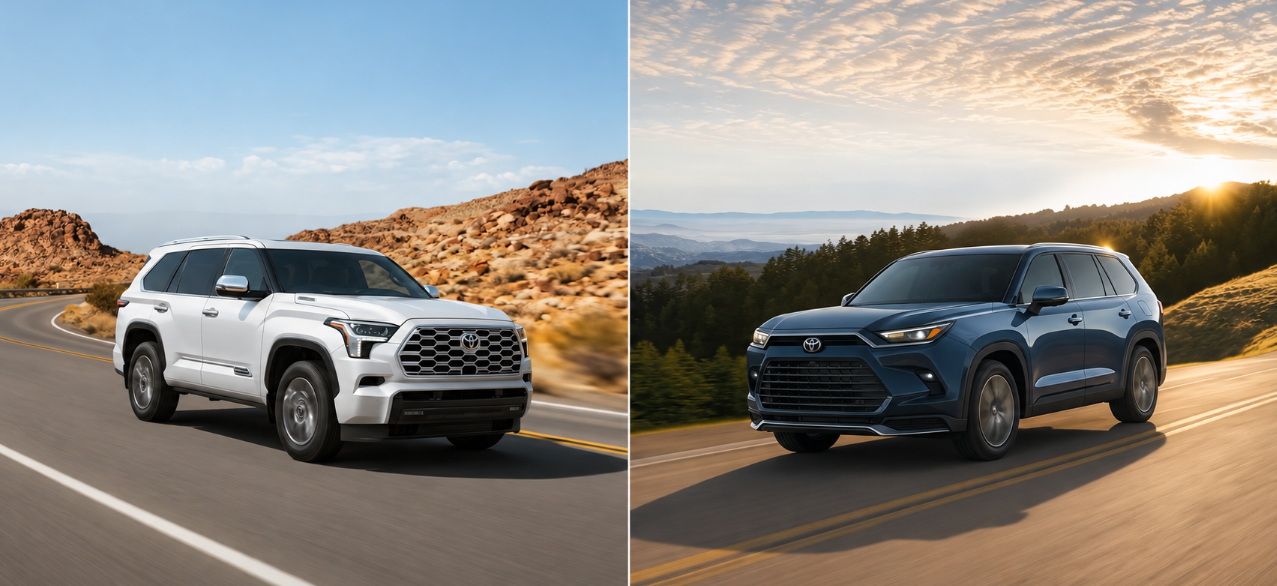
2026 Toyota Sequoia vs. Grand Highlander

2026 Toyota Sequoia vs. Grand Highlander: Which Three-Row SUV Fits Your Family?

The Toyota Sequoia vs Grand Highlander question comes up often at our family-owned Toyota dealership in Jacksonville, FL. Each one seats up to eight and wears a Toyota badge, but they answer different needs. The right pick depends on how you drive and park, and on what you tow. If you'd rather feel the difference than read about it, you can browse our new Toyota inventory and plan a visit. Toyota Sequoia vs Grand Highlander: Quick Comparison for Jacksonville Families Start with your routine: your commute, school pickup, where you park, and how many passengers you carry. Add how often you tow. Those answers usually settle the 2026 Toyota Sequoia vs Grand Highlander debate faster than a spec sheet. Two Three-Row Toyota SUVs, Two Different Use Cases The 2026 Grand Highlander suits most everyday family driving. It has an adult-sized third row and a manageable size, and you can pick gas or Hybrid MAX power, or the standard Hybrid. The 2026 Toyota Sequoia suits families who want heavier towing capability, a standard i-FORCE MAX hybrid powertrain, and available off-road equipment. Spec Grand Highlander Sequoia Powertrain Gas 2.4-liter turbo four-cylinder. Hybrid 2.5-liter. Hybrid MAX 2.4-liter turbo i-FORCE MAX twin-turbo V6 hybrid, 10-speed automatic Drivetrain FWD or AWD (gas and Hybrid). Full-time electronic AWD standard on Hybrid MAX 2WD or part-time 4WD on SR5 and Limited. 4WD standard on 1794 Edition, Platinum, TRD Pro, Capstone Horsepower and torque Gas 265 hp, 310 lb.-ft. Hybrid 245 net combined hp. Hybrid MAX 362 net combined hp, 400 net combined lb.-ft. 437 hp, 583 lb.-ft. Fuel economy (EPA city/highway/combined) Gas 20/26/22 to 21/28/24 by grade and drivetrain. Hybrid 35/31/33 to 37/34/36. Hybrid MAX 26/27/27 4x2 21/24/22. 4x4 19/22/20 Max towing Gas and Hybrid MAX 5,000 lbs. Hybrid 3,500 lbs Up to 9,520 lbs (SR5 2WD); 8,980 to 9,310 lbs on other grades Third-row legroom 33.5 in. 28.1 to 33.7 in. (sliding third row) Cargo (behind 3rd / 2nd / 1st row) 20.6 / 57.9 / 97.5 cu. ft. 11.5-22.3 / 49.0 / 86.9 cu. ft. Seating Seven or eight by grade Seven or eight by grade Length / ground clearance 201.4 in. / 8.0 in. 208.1 in. / 8.6 in. (9.1 in. TRD Pro) Safety system Toyota Safety Sense 3.0 Toyota Safety Sense 2.5 Fuel economy, towing, and cargo figures are manufacturer or EPA estimates. They vary with trim, load, and driving conditions. Size, Parking, and Daily Driving in Jacksonville Daily driving is where the size gap shows. Picture tight parking in San Marco or Riverside, crowded beach lots on a summer weekend, and the stop-and-go stretches of I-95 and I-10. Dimensions, Garage Fit, and Maneuverability The Grand Highlander is 201.4 inches long and 78.3 inches wide without mirrors, on a 116.1-inch wheelbase, with 8.0 inches of ground clearance. The Sequoia measures 208.1 inches long and 79.6 inches wide on a 122.0-inch wheelbase, with 8.6 inches of ground clearance (9.1 on the TRD Pro). That's nearly 7 inches more length and almost 6 inches more wheelbase on the Sequoia, which you'll notice most in tight garages and parking spots. Parking Assist with Automatic Braking is standard on the Sequoia. On the Grand Highlander, it is available on Limited and Platinum, and a Panoramic View Monitor is available by grade. Measure your garage, including mirrors and door-opening room, and practice reversing and parking on your test drive, not just highway cruising. Three-Row Seating, Passenger Space, and Cargo Room Exterior size says little about usable room inside. Check interior dimensions for each row and each seating layout. Second-Row Layouts, Third-Row Comfort, and Car Seat Access Both SUVs seat seven or eight, depending on grade. The Grand Highlander offers captain's chairs on XLE, Limited, Platinum, and the Hybrid Nightshade Edition. An eight-passenger bench is standard on LE and available on XLE and Limited. Its second-row legroom is 39.5 inches. The third row gives 33.5 inches of legroom, 37.2 inches of headroom, and 57.5 inches of shoulder room. There is a support grip for entry and individual USB ports. The Sequoia's second row offers 39.2 inches of legroom. Its third row slides, so legroom ranges from 28.1 to 33.7 inches depending on whether you favor passengers or cargo. Third-row headroom is 35.6 inches, compared with the Grand Highlander's 37.2, while the Sequoia's wider body gives its third row 62.6 inches of shoulder room against the Grand Highlander's 57.5. The Sequoia has a 60/40 bench on the SR5 and Limited and captain's chairs on the Platinum, 1794 Edition, TRD Pro and Capstone, with one-touch third-row access on every grade. Both have lower anchors on the outboard second-row seats. The Grand Highlander adds a third-row tether anchor. Bring your car seats to the dealership and check access and anchor locations yourself. Cargo Space for Strollers and Sports Gear Despite its smaller footprint, the Grand Highlander has more cargo room behind the first and second rows: 97.5 and 57.9 cu. ft., compared with the Sequoia's 86.9 and 49.0. Behind the third row, the Grand Highlander offers 20.6 cu. ft., or room for seven carry-on suitcases. The Sequoia's sliding third row ranges from 11.5 to 22.3 cu. ft., so it can beat the Grand Highlander behind row three, but only when those seats are slid forward. The Sequoia also includes a standard multi-level cargo shelf system. Load your usual gear with the seats set the way you really drive, whether that's a stroller, a cooler or sports bags. If cargo layout is a deciding factor, contact our team, and we'll help you plan a test fit. Hybrid Powertrain Options and Fuel-Economy Considerations Both SUVs offer hybrid power, but they use it differently. A hybrid system pairs the engine with electric motors, which adds power, efficiency, or both depending on how it is tuned. Grand Highlander Turbo and Hybrid MAX Choices The Grand Highlander isn't hybrid-only; the gas model uses a 2.4-liter turbo four-cylinder making 265 hp and 310 lb.-ft. The Grand Highlander Hybrid uses a 2.5-liter engine rated at 245 net combined hp and aims at fuel savings, with a maximum combined rating of 36 mpg. Hybrid MAX favors performance. Its 2.4-liter turbo delivers 362 net combined hp and 400 net combined lb.-ft., with full-time electronic AWD standard, and the Hybrid MAX Limited and Platinum AWD are rated at 26/27/27 mpg. Gas AWD models use Dynamic Torque Control, and Hybrid AWD models use electronic On-Demand AWD. Sequoia i-FORCE MAX Hybrid Performance and Efficiency Every Sequoia grade has the i-FORCE MAX twin-turbo V6 hybrid with a 10-speed automatic, making 437 hp and 583 lb.-ft. The electric assist adds muscle for a large SUV, and it helps with efficiency too. EPA ratings are 21/24/22 mpg for 4x2 and 19/22/20 mpg for 4x4. Towing, heavy loads, and speed can all change what you see in real driving. Towing, Recreational Use, and Family Road-Trip Practicality Towing separates these two SUVs more than anything else. Think of a boat headed toward the St. Johns River or Mayport, or a camper for a weekend away. Boat and Trailer Needs On gas and Hybrid MAX models, the Grand Highlander tows 5,000 lbs, while the Hybrid is rated for 3,500 lbs. The Sequoia tows up to 9,520 lbs on the SR5 2WD, and every other grade still tows between 8,980 and 9,310 lbs, roughly double the Grand Highlander's maximum. Match the vehicle to your trailer's loaded weight, and remember that passengers and cargo count against payload, which ranges from 1,375 to 1,730 lbs on the Sequoia depending on grade. For trailering, the Sequoia comes standard with Blind Spot Monitor with Rear Cross-Traffic Alert and Trailer Merge Warning. It also has Front and Rear Parking Assist with Automatic Braking and a Panoramic View Monitor. The Tow Technology Package adds a digital rearview mirror and Trailer Backup Guide with Straight Path Assist. Off-road gear differs too. Sequoia TRD Pro and models with the TRD Off-Road Package include Multi-Terrain Select, Crawl Control, Downhill Assist Control, and an electronically locking rear differential. The Grand Highlander offers Multi-Terrain Select (Mud & Sand, Rock & Dirt, Snow) on gas AWD and Hybrid MAX. To see what fits your trailer, explore new Toyota inventory and ask us to confirm towing provisions. Long-Distance Comfort, Technology, and Safety Features The Grand Highlander comes with Toyota Safety Sense 3.0, Blind Spot Monitor with Rear Cross-Traffic Alert, a 12.3-inch touchscreen and three-zone climate control with second- and third-row vents. It also has seven USB-C ports and acoustic glass on the windshield and front windows. Its fuel tank holds 17.8 gallons on gas models and 17.2 on hybrids, and the Hybrid's 33 to 36 mpg combined gives it the longer range between stops. Traffic Jam Assist is available on top grades and requires an active Drive Connect trial or subscription. The Sequoia has Toyota Safety Sense 2.5, including Pre-Collision System with Pedestrian Detection, Full-Speed Range Dynamic Radar Cruise Control, Lane Departure Alert with Steering Assist and Lane Tracing Assist. The SR5 has an 8-inch touchscreen, with a 14-inch screen available, and the 14-inch screen is standard from the Limited up, with JBL audio on the Platinum, TRD Pro and Capstone. Wireless Apple CarPlay and Android Auto come on every grade. Adaptive Variable Suspension and Load-leveling Rear Height Control Air Suspension are available, and its 22.5-gallon tank helps on long highway stretches. Driver-assistance systems still need an attentive driver behind the wheel. Which Three-Row Toyota SUV Fits Your Family? Choose the Grand Highlander if: You want an adult-sized third row for everyday passengers. Tight parking and a more compact footprint matter. You like having gas and hybrid powertrains to pick from. Your towing stays at or under 5,000 lbs. Choose the Sequoia if: You tow a heavier boat or camper. You want a standard i-FORCE MAX hybrid powertrain. Available off-road equipment appeals to you. A longer, wider SUV doesn't bother you. Families often ask us whether to pick by size or by power. Pick by how you'll use it. We can set up a back-to-back drive of both SUVs so you can compare third-row access and driving feel with your own family aboard. Browse Toyota SUV Inventory and Contact Keith Pierson Toyota At Keith Pierson Toyota, we're a family-owned Toyota dealership in Jacksonville, FL. If you're searching for a Grand Highlander in Jacksonville, FL or a Toyota Sequoia in Jacksonville, we can help you compare trims, powertrains, drivetrains, and seating layouts. Inventory changes, so we'll confirm what's on hand. Shopping for a family SUV in Jacksonville can also include used vehicles if that fits your plans. Your next step: browse new Toyota inventory, get pre-approved or reach out to our team to schedule a back-to-back drive of both SUVs. FAQs About the Sequoia and Grand Highlander Which has more third-row legroom? The Grand Highlander's third row offers 33.5 inches. The Sequoia's ranges from 28.1 to 33.7 inches. Which tows more? The Sequoia, by a wide margin. It tows up to 9,520 lbs, and every grade is rated for at least 8,980 lbs. The Grand Highlander tows 5,000 lbs on gas and Hybrid MAX models and 3,500 lbs on the Hybrid. Do both offer hybrids? Yes. The Grand Highlander offers Hybrid and Hybrid MAX alongside a gas turbo. Every Sequoia has the i-FORCE MAX hybrid. How many people does each seat? Both seat seven or eight, depending on grade and second-row layout.

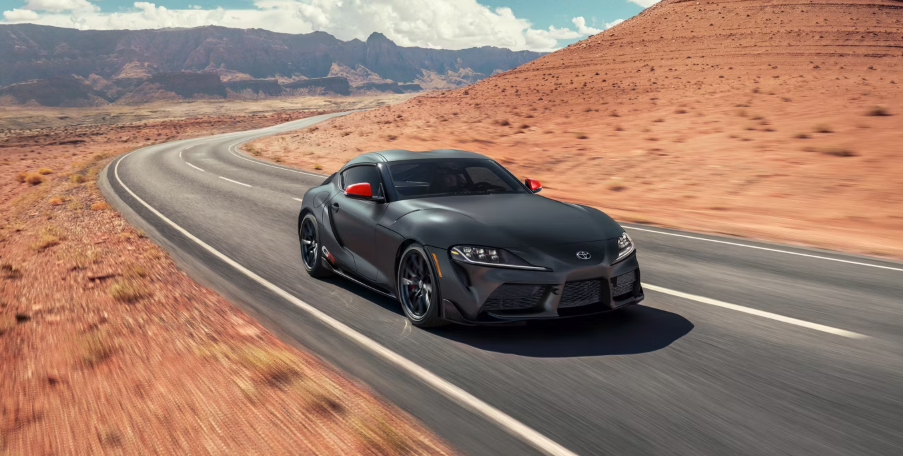
Toyota GR Supra driving on desert highway

Fastest Toyota Cars: Performance and Thrills for Jacksonville Enthusiasts

Toyota's Gazoo Racing lineup has fundamentally changed what a Toyota sports car can be. These are real performance machines that feel just as natural on a winding back road as they do during a weekend track session. For Jacksonville drivers who want something more thrilling than a commuter vehicle, the GR family offers three distinct ways to experience performance Toyota engineering at its best. If you're ready to explore your options, browse our new Toyota lineup to see what's currently available. Toyota's GR Performance Lineup: Built for Jacksonville Enthusiasts The Gazoo Racing badge, better known as GR, is Toyota's motorsport program applied directly to production vehicles. Each GR model is purpose-built with track-oriented technology, tuned suspension, and powertrains designed for driver involvement. Chassis rigidity and steering feedback were treated with the same seriousness as outright power. Aerodynamic balance too. Every choice reflects Toyota's motorsport background, and the result is a lineup that spans straight-line speed, AWD grip, and corner-carving precision. Jacksonville is a genuinely good place to own a fast car. Open highway stretches and sweeping on-ramps give these vehicles room to do what they were built for, and Florida's back roads are never far away. Drivers who want more from their daily commute will find the GR lineup delivers it. GR Supra: Toyota's Most Powerful Production Sports Car The GR Supra is Toyota's flagship performance model, pairing aggressive aerodynamic styling with engineering built around high-speed stability and driver responsiveness. Its low, wide stance actively manages airflow and cornering grip, keeping the car planted and composed when you're pushing hard. An advanced multi-link suspension system sharpens that further, giving the driver confidence through sweeping bends and tighter technical corners alike. For 2026, the GR Supra runs a turbocharged 3.0L inline-six producing 382 hp and 368 lb-ft of torque, with peak torque arriving at just 1,800 rpm. Top speed is 160 mph (governor-limited), and the drivetrain is RWD throughout. The 3.0L Inline-Six: The Only Engine for 2026 For 2026, Toyota discontinued the previous four-cylinder variant. The inline-six is now the sole engine option, and it's a strong one. Torque peaks early at 1,800 rpm and pulls consistently through the rev range, producing an effortless sensation on highway entries and a deeply satisfying response on open roads. Power builds progressively rather than arriving all at once, which makes the car both fast and genuinely manageable. Transmission Choices and Their Effect on the Driving Experience Transmission selection shapes the Supra experience significantly. Both options share the same 382 hp output and 160 mph top speed, but they deliver it differently. Transmission Horsepower 0-60 mph Top Speed 8-speed automatic 382 hp 3.9 sec 160 mph 6-speed manual 382 hp 4.2 sec 160 mph The automatic shifts quickly and intelligently, managing Jacksonville traffic without friction while responding with snappy precision when you call for more. Sport and track modes adjust shift timing to extract performance when the moment calls for it. The manual changes the relationship between driver and car. Controlling gear selection yourself creates a more direct connection between intention and response, and many enthusiasts consider it the more rewarding choice for spirited driving. Both are legitimate options; it comes down to how involved you want to be. GR Corolla: Turbocharged AWD Performance With Everyday Capability Many performance buyers want a fast daily driver that actually functions as a daily driver. The GR Corolla fits that description well. Its turbocharged 1.6L inline-three produces 300 hp and 295 lb-ft of torque, paired with Toyota's GR-FOUR AWD system. Unlike the Supra's two-seat layout, the GR Corolla has a rear seat, cargo space, and enough practicality to work as someone's only vehicle. Transmission options are a 6-speed manual or an 8-speed Direct Automatic Transmission (DAT). The 0-60 time is approximately 5.0 seconds (estimate). The GR Corolla is also the fastest Corolla in Toyota's current lineup, and it's not particularly close. Engine Output, All-Wheel Drive, and Handling Balance What sets the GR Corolla apart is how the GR-FOUR AWD system works with the engine rather than simply splitting power to all four wheels. Drivers can adjust torque distribution between the front and rear axles, allowing the car to be set up for maximum grip on back roads or dialed toward a more neutral, playful balance in controlled environments. That level of driver control is typically found on vehicles that cost significantly more. On wet Florida roads, the AWD system keeps things confident and predictable. On dry, winding stretches, the GR Corolla becomes one of the most satisfying cars in the GR lineup to drive hard, and it rewards drivers who push into its full capability. To check for available offers on models like this one, view our current new vehicle specials. GR86: Lightweight Precision and Corner-Carving Thrills The GR86 comes from a different philosophy than the other two GR models. Where the Supra prioritizes power and the Corolla adds AWD capability, the GR86 strips the formula back to something purer. Its 2.4L naturally aspirated flat-four (boxer) engine produces 228 hp and 184 lb-ft of torque, the car weighs approximately 2,800 lbs, and the drivetrain is RWD. Transmission choices are a 6-speed manual or 6-speed automatic. The 0-60 time is 6.1 seconds. Enthusiasts who care more about feel and feedback than straight-line speed consistently gravitate toward the GR86. It's the kind of car that makes you a better driver over time rather than simply carrying you along. Naturally Aspirated Power and Rear-Wheel Drive Dynamics The naturally aspirated engine behaves differently from a turbocharged unit. Power builds as revs climb rather than arriving in a sudden surge of boost pressure. The delivery is linear and predictable, which makes it easier to place the car precisely through corners. Drivers who enjoy working through the gearbox and keeping the engine in its power band will get a lot out of it. RWD completes the package by allowing the rear of the car to rotate naturally in response to throttle input. For drivers who want to develop genuine car control skills, the GR86 is well suited to that. It's honest and communicative, with clear feedback about what the car is doing at all times. Straight-Line Speed vs. Cornering Performance: How the Three GR Models Compare Choosing among these three models comes down to what kind of driving experience you're after. Rather than a strict ranking, each GR car excels in a different dimension. Model Horsepower Drivetrain 0-60 mph Handling Focus Ideal Use Case GR Supra 382 hp RWD 3.9 sec (auto) / 4.2 sec (manual) Straight-line speed, high-speed stability Track days, highway performance GR Corolla 300 hp GR-FOUR AWD ~5.0 sec (estimate) AWD grip, all-weather versatility Daily driver, spirited back roads GR86 228 hp RWD 6.1 sec Lightweight cornering precision Back roads, skill development The GR Supra leads in outright straight-line performance. Its turbocharged inline-six, combined with a low drag coefficient and firm suspension tuning, makes it the strongest performer when 0-60 times and top speed are the priority. The GR Corolla occupies a compelling middle ground. AWD and turbocharged output make it extremely capable in both acceleration and cornering, especially in variable Florida weather. Its peak speed doesn't match the Supra's, but the versatility more than compensates. Weekend drives, road trips, Monday commutes, it handles all of them in one car without making you feel like you're compromising. The GR86 trades raw speed for precision. Its cornering ability relative to its power output is exceptional, and the RWD layout means skilled drivers can extract something genuinely exciting from every twisting road. For Jacksonville enthusiasts who prioritize weekend back roads as much as weekday commutes, the GR86 rewards that mindset directly. Which Fast Toyota Matches Your Driving Style and Lifestyle Choosing among these Toyota performance cars comes down to an honest look at how you actually use a vehicle day to day. The GR Supra suits drivers who treat performance as the primary value and are comfortable with a two-seat setup. It's for someone who views their car as a direct expression of driving passion. The GR Corolla is the practical enthusiast's answer. It handles passengers, cargo, weekend trips, and weekday errands while still being genuinely fast and fun. It's also the entry point for drivers curious about AWD performance in a compact format. The GR86 suits someone who values driving as a skill and wants a car that encourages them to develop it further. It's also the most accessible of the three on price, making it an excellent first performance car or a worthwhile addition for someone building a collection. Find Your GR Model at Keith Pierson Toyota Our team at Keith Pierson Toyota in Jacksonville can walk you through the real-world differences between GR models in plain terms, covering transmission preferences, drivetrain tradeoffs, and what everyday ownership of a Toyota sports car actually looks like. Please note that availability varies and not every model may be in stock at any given time, so we recommend reaching out before making the trip. Browse our new Toyota lineup to see current inventory, or contact our sales team at 888-461-3879, Monday through Saturday from 8:30 AM to 8 PM and Sunday from 10 AM to 7 PM. We're here to match the right driver with the right car, no pressure, just informed guidance from people who take performance seriously.

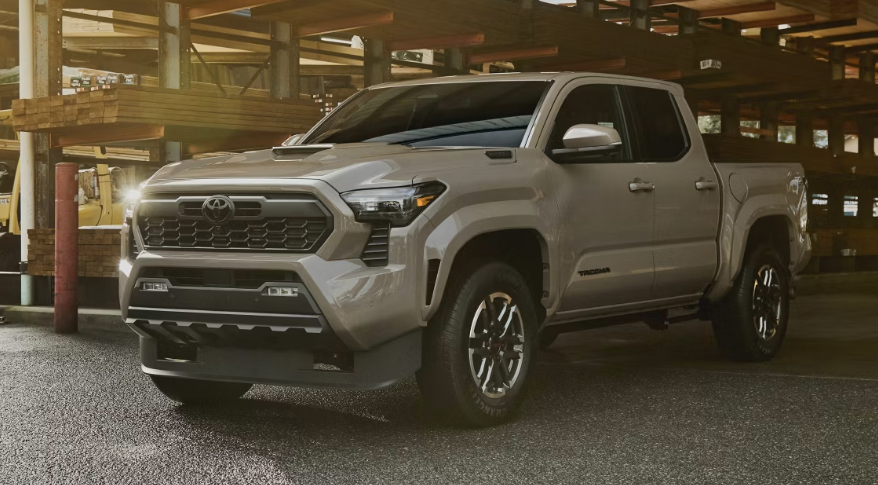
2026 Toyota Tacoma parked inside a covered structure

2026 Toyota Tacoma vs. Ford Ranger for Jacksonville Drivers

How Long Should a Car Battery Last in Jacksonville's Heat? Toyota Battery Care Tips Jacksonville drivers know the heat here isn't just uncomfortable, it's relentless. From April through October, temperatures consistently push past 90 degrees, and even the cooler months rarely give your vehicle much of a break. That kind of sustained heat doesn't just drain your energy; it actively works against one of your car's most essential components: the battery. If you're already noticing sluggish starts or flickering electronics, don't wait for a breakdown to take action. Our service department at Keith Pierson Toyota offers complimentary battery testing so you know exactly where you stand. Understanding how Jacksonville's climate shortens battery life can be the difference between a reliable start every morning and an unexpected breakdown in a parking lot. According to AAA, batteries in hot climates like ours typically last approximately three years, compared to five years or longer in cooler northern climates, and it's something every local driver should factor into their maintenance routine. How Long Does a Car Battery Last in Jacksonville's Heat? Under normal conditions, most car batteries are rated to last between three and five years. In Jacksonville, that window shrinks considerably. High ambient temperatures, intense sun exposure, and year-round humidity all accelerate the chemical processes inside the battery, causing it to age faster than it would in a cooler climate. Many Jacksonville drivers find their batteries lasting only about three years, with some failing even sooner, especially when a vehicle sits in direct sunlight regularly. Knowing the average car battery life in Florida is shorter than the national norm helps you plan ahead rather than react after something fails. Why Jacksonville's Heat Is Your Battery's Biggest Enemy Most drivers associate dead batteries with cold weather, and while freezing temperatures do affect performance, heat kills car batteries in a more permanent way. Cold reduces immediate power output, but heat causes structural and chemical damage that shortens the battery's total lifespan. In Florida's climate, heat is the primary threat, and it works through two key mechanisms. Heat Evaporates Battery Fluid and Cuts Capacity Inside a traditional lead-acid battery, liquid electrolyte surrounds the lead plates and enables the chemical reactions that generate power. When temperatures rise sharply, that fluid evaporates faster than the battery can sustain. Over time, this leads to exposed lead plates, warping, and a buildup of sulfate crystals that block electrical flow. A car battery overheating scenario doesn't require any engine malfunction; simply sitting in a hot parking lot is enough to accelerate this degradation. Once fluid levels drop and plates begin to warp, the battery's ability to hold a full charge is permanently reduced, not just temporarily impaired. This is one reason why hot weather affects car batteries so differently than cold. Cold weather is a performance issue. Heat is a structural one. A battery that's been through several Jacksonville summers may test fine in the morning but struggle to deliver full power after sitting in direct sun for eight hours. Florida's Year-Round Warmth Leaves No Recovery Window In northern climates, batteries get a natural reset period during fall and winter. Cooler temperatures slow chemical activity and give internal components a chance to stabilize. Florida doesn't offer that reprieve. The heat persists through what passes for winter here, meaning batteries in Jacksonville face continuous thermal stress without the recovery window that extends battery life elsewhere. This is why AAA data shows Florida drivers getting roughly three years of service from a battery that could last five years or longer in a cooler northern climate. Modern vehicles compound this further. Today's cars carry more electrical loads than ever, from infotainment systems and backup cameras to advanced safety features, all drawing on the battery continuously. Warning Signs Your Car Battery Is Struggling in the Heat Heat damage tends to build gradually, but the warning signs often appear weeks before a complete failure. Watch for these specific symptoms: A slow, labored crank when starting the engine, especially after the car has been parked in the sun. The battery may no longer be strong enough to power the starter motor, or loose and corroded terminals could be contributing to the problem. Dim headlights when the engine is turned off, pointing to a battery that can't sustain consistent voltage on its own. Unexplained electronics dimming inside the cabin, including sluggish power windows or a slower-than-usual infotainment response. Corrosion around the battery terminals, often appearing as a white or bluish powdery buildup, which impairs conductivity and speeds up degradation. A swollen or bloated battery case, one of the most serious physical signs. Heat causes the casing to expand, which directly decreases battery life. At this stage, replacement isn't optional. If you notice any of these, especially during or after a stretch of hot weather, getting a battery test promptly is the smart move. Schedule your service appointment online and let our team give you a clear picture of what's happening before it becomes a roadside problem. Heat Prevention Tips to Extend Your Car Battery's Life in Jacksonville You can't change Jacksonville's climate, but you can manage how much of it your battery absorbs. A few consistent habits can meaningfully extend battery life and reduce the likelihood of an unexpected failure. Parking and Shade Habits That Reduce Heat Damage Where you park matters more than most drivers realize. Engine bay temperatures in a car parked in direct sun can climb well above the ambient air temperature, creating conditions that accelerate fluid evaporation and plate damage. Given Jacksonville's sun intensity, choosing covered parking wherever possible is one of the most effective things you can do for battery longevity. Parking in a garage, under a carport, or in a shaded structure reduces the sustained thermal load your battery absorbs over the course of a day. When covered parking isn't available, positioning your car to minimize direct sun exposure on the hood side is a simple but worthwhile habit. Driving and Accessory Habits That Protect Battery Health Avoiding frequent short trips also helps. Short drives don't give the alternator enough time to fully recharge the battery after starting, which in hot weather means the battery runs at a slight deficit repeatedly until the cumulative effect catches up. Whenever possible, consolidate errands into longer drives that allow the alternator to bring the battery back to a full charge. Before shutting the engine off, turn off accessories like the air conditioning, headlights, and audio system. This small habit reduces the electrical draw at startup and prevents the battery from being asked to do more work during the moments it's most vulnerable. Routine Checks That Catch Problems Early Regular battery testing is the most reliable way to stay ahead of heat damage. Testing measures reserve capacity and output, giving you a concrete picture of how much life the battery has left rather than guessing based on age alone. AAA recommends annual testing once a battery reaches three years of age. Cleaning corroded terminals removes buildup that restores a clean electrical connection. What to Look for When Replacing a Battery Built for Florida Heat Not all batteries are engineered equally for hot climates, and choosing the right one when the time comes can significantly impact how long it lasts. When evaluating replacement options, CCA (Cold Cranking Amps) is a commonly cited rating, but it measures winter performance and is far less relevant in Florida's climate. What matters more here is RC (Reserve Capacity), which reflects how long a battery can sustain your vehicle's electrical load if the alternator fails. In Jacksonville's heat, RC is the more meaningful number to compare. The table below breaks down the most common battery types and how they compare for Florida drivers: Spec 2026 Toyota Tacoma 2026 Ford Ranger Engine 2.4L Turbo + Electric Motor (i-FORCE MAX hybrid) 2.3L EcoBoost Turbo Four-Cylinder Hybrid Option Yes No Towing Capacity Up to 6,500 lbs Up to 7,500 lbs Fuel Economy (City/Hwy) ~22 / 24 MPG (hybrid) ~21-23 / 24-25 MPG Standard Safety Suite Toyota Safety Sense 3.0 Standard driver-assist features Manual Transmission Available Not available Resale Value Superior retention Higher depreciation AGM batteries are often OEM on newer Toyota models and are generally the best choice for Jacksonville drivers. Their sealed construction reduces evaporation risk, and they handle the higher electrical demands of modern vehicles more effectively than standard flooded options. Free Battery Testing and Lifetime Warranty at Keith Pierson Toyota Complimentary Testing With No Guesswork Keith Pierson Toyota takes the guesswork out of battery health with complimentary battery testing. Our service team can tell you exactly how much capacity remains and whether your battery is approaching the point where Jacksonville's heat will push it over the edge. Given that heat-related failure often happens with little warning, proactive testing is one of the most practical things a local driver can do. Lifetime Warranty Coverage Beyond testing, Keith Pierson Toyota backs qualifying new Toyotas with a Lifetime Limited Non-Factory Warranty with unlimited miles. That coverage means you're protected against unexpected powertrain failures for the life of the vehicle. Schedule Your Visit Toyota service is available seven days a week, with hours running Monday through Friday from 7 a.m. to 7 p.m., Saturday from 7 a.m. to 6 p.m., and Sunday from 9 a.m. to 4 p.m. Visit our service department page for full details, or contact us directly if you have questions before coming in. We're located at 6501 Youngerman Circle, Jacksonville, FL 32244, and we're here to help you stay ahead of battery problems before they turn into bigger ones. Frequently Asked Questions About Car Batteries and Jacksonville Heat How long should a car battery last in Florida? According to AAA data, most batteries in Florida last around three years under typical driving conditions. That's well below the national average. Heat accelerates chemical degradation and fluid evaporation, which significantly shortens the useful lifespan. Does heat kill car batteries? Yes, heat is one of the most damaging factors for battery longevity. It evaporates internal fluid and warps the lead plates, which permanently reduces the battery's ability to hold a charge. Over time, this permanently reduces the battery's ability to hold a charge. Can a car battery overheat? Yes. When engine bay and surrounding air temperatures are high enough, the battery absorbs that heat and internal temperatures rise beyond safe operating levels. This accelerates fluid loss and internal damage, especially in vehicles parked in direct sunlight for extended periods. What are the signs that my battery is struggling in the heat? Slow engine cranking, dim headlights with the engine off, unexplained electronics dimming, terminal corrosion, and a swollen battery case are all warning signs. If any of these show up, especially after a stretch of hot weather, have the battery tested before it leaves you stranded. Does hot weather affect car battery performance day to day? Yes. Even before permanent damage sets in, a battery that's hot from sun exposure may deliver inconsistent voltage, making starts feel unreliable and putting strain on other electrical systems. The longer a battery runs in these conditions without maintenance, the worse the cumulative impact becomes. Where can I get my battery tested in Jacksonville? Keith Pierson Toyota at 6501 Youngerman Circle, Jacksonville, FL 32244 offers complimentary battery testing. You can schedule a service visit online or call 888-597-3703. The service department is open seven days a week for added convenience.