

Blog / Model Comparison

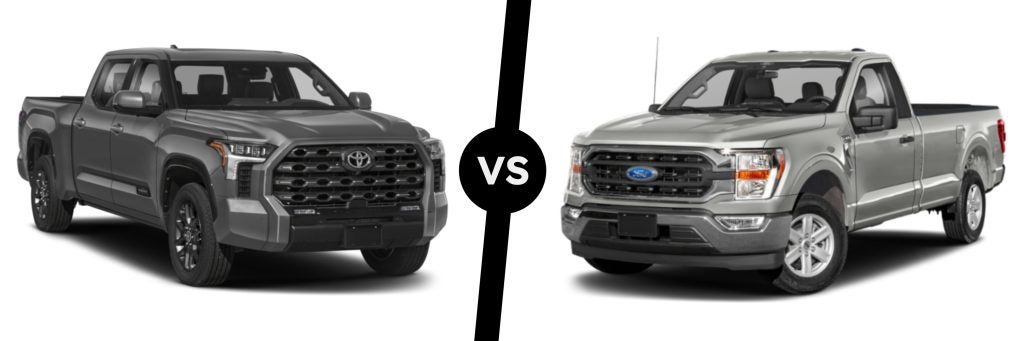
2022 Toyota Tundra vs 2022 Ford F-150

toyota-tundra-vs-ford-f150

If you're shopping for a full-size pickup truck, you'll likely include the Toyota Tundra and Ford F-150 in your shortlist. These two models offer a great blend of reliability, capability, comfort, and technology, making them appealing to all kinds of truck buyers. If you want to know which of them better suits your needs, you have to take a closer look at their specifications and features. Check out this detailed comparison between the 2022 Toyota Tundra and the 2022 Ford F-150.

Trim Levels

Regardless of whether you choose the Toyota Tundra or Ford F-150, you have many models to consider. The Tundra is available in six trim levels: the base SR, SR5, Limited, Platinum, 1794 Edition, and the off-road-ready TRD Pro. The F-150, on the other hand, comes in eight trims: the entry-level XL, XLT, Lariat, King Ranch, Platinum, Limited, and the off-road-oriented Tremor and Raptor. 
2022-toyta-tundra-jacksonville-fl
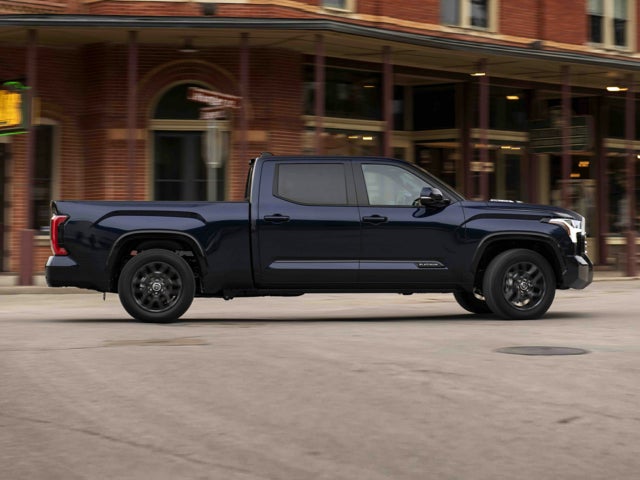
2022 Toyota Tundra Exterior

Exterior

Both the Toyota Tundra and Ford F-150 have an imposing stance that gives them a commanding road presence. Nonetheless, the Toyota truck appears bolder and more aggressive as a result of its massive grille, which covers almost the entire front end. A muscular hood, pronounced wheel arches, and deeply sculpted sides further accentuate its rugged appeal. In contrast, the Ford features a sleeker styling with softer angles, smoother lines, and a narrower grille. However, it's still a tough-looking truck, thanks to its tall hood and prominent shoulder line. 

Power
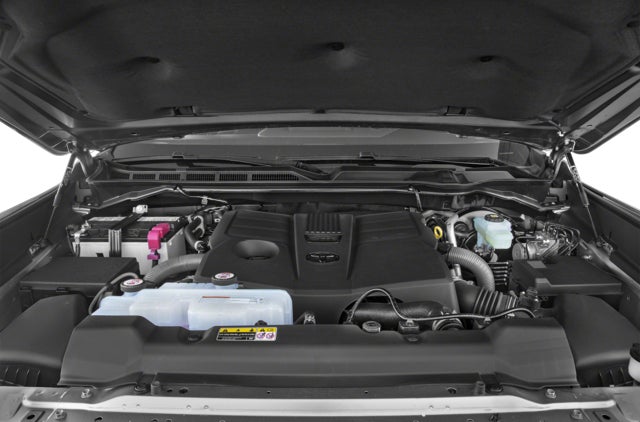
2022-toyta-tundra-engine-jacksonville-fl
2022 Toyota Tundra Engine

If horsepower is an important consideration, you'll probably be better off choosing the Toyota Tundra. This truck comes standard with a twin-turbo V-6 rated at 389 horsepower. You can opt for the available hybrid version of the same engine instead, and it produces a stout 437 horsepower. Mated to a 10-speed automatic transmission, both engines feel lively off the line and provide adequate power for most driving tasks. 

The Ford F-150 offers six engine options, ranging from the base V-6 with 290 horsepower to a hybrid EcoBoost V-6 with 430 horsepower. Although its maximum horsepower rating is lower than that of the Tundra, it has a higher tow rating, which stands at 14,000 pounds. The Toyota isn't far behind, with its maximum capacity of 12,000 pounds. 

Handling

The Toyota Tundra and Ford F-150 are similarly impressive in terms of handling. Despite their large dimensions, these two trucks are easy to drive in most situations, from running errands in town to negotiating winding country roads. They come with responsive steering that makes them highly maneuverable and a compliant suspension that soaks up bumps and road blemishes nicely. They also feel well-planted around sharp corners, demonstrating little body roll. In addition, both the Tundra and F-150 have off-road-ready models that can stand up to the toughest terrain. 

Interior
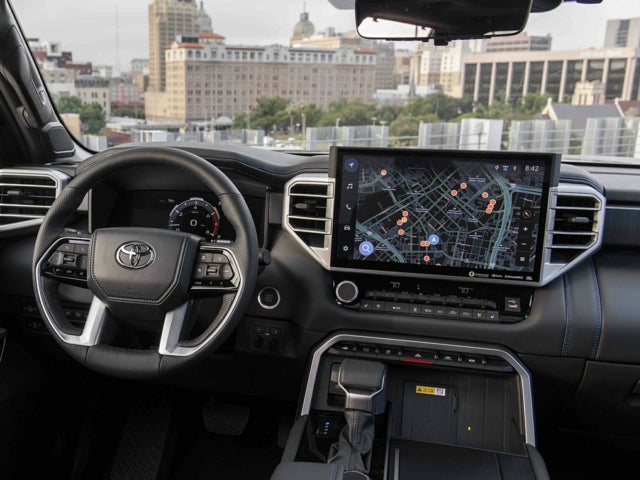
2022-toyta-tundra-interior-jacksonville-fl
2022 Toyota Tundra Interior

The Toyota Tundra has a more well-built interior than most other pickup trucks, but it isn't as upscale as the Ford F-150. The cabin is airy and quiet and features a solid fit and finish and a good amount of soft-touch surfaces. No matter which cab configuration you choose, both the front and rear seats provide ample legroom and headroom for most adults. Furthermore, this Toyota model comes standard with automatic climate control, a power-retractable or -sliding rear window, and push-button start.

The interior of the Ford F-150 boasts an aesthetically pleasing design, excellent build quality, and plenty of premium materials. It also does a great job of canceling out road and wind noises at highway speeds. However, you need to move up the trim ladder to get comfort and convenience features, such as dual-zone automatic climate control, push-button start, and power windows. 

Cargo Capacity

When it comes to cargo capacity, the Toyota Tundra has an upper hand over the Ford F-150, though a very slight one. It offers three bed options: a 5-foot-6-inch short bed, 6-foot-6-inch regular bed, and an 8-foot-1-inch long bed. The Ford F-150 also comes with the same three bed choices, but each of them is an inch shorter than the corresponding option on the Toyota truck. If you opt for the Tundra, you'll also have plenty of in-cabin storage features, including compartments under and behind the rear seats. 

Infotainment Features

The Toyota Tundra also has a better selection of standard infotainment features than the Ford F-150. Its base model is fitted with an 8-inch touch-screen display, Apple CarPlay, Android Auto, satellite radio, a Wi-Fi hot spot, USB ports, and a six- or nine-speaker sound system. You can improve your in-vehicle experience by getting optional features, such as a 14-inch touch-screen display, extra USB ports, a wireless device charger, and a 12-speaker JBL audio system. 

The standard tech features of the Ford F-150 include an 8-inch touch-screen display, Android Auto, Apple CarPlay, USB ports, and a Wi-Fi hot spot. However, the truck offers plenty of available features, such as a 12-inch touch-screen display, a wireless device charger, satellite radio, HD radio, wireless Android Auto and Apple CarPlay, navigation, and an eight- or 18-speaker Bang & Olufsen sound system. 

Safety Features
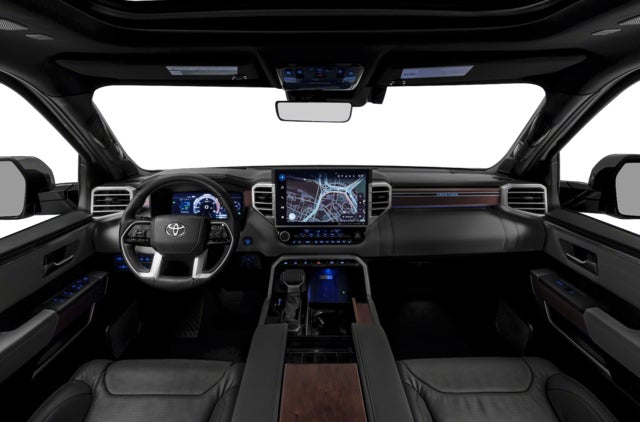
2022-toyta-tundra-hybrid-jacksonville-fl
2022 Toyota Tundra Hybrid Interior

Few full-size pickup trucks have more standard active safety features than the Toyota Tundra. The truck comes with forward-collision alert, pedestrian monitoring, forward automatic emergency braking, traffic-sign recognition, adaptive cruise control, lane-keeping assistance, lane-tracing assistance, and lane-departure alert. For an even safer driving experience, opt for available features such as blind-spot detection, rear cross-traffic warning, a 360-degree parking camera system, and a head-up display.

The entry-level Ford F-150 offers only a few driver-assistance systems, including pedestrian monitoring, forward automatic emergency braking, and forward-collision alert. Choosing a higher trim gives you access to additional features, such as lane-keeping assistance, traffic-sign recognition, intersection assistance, blind-spot detection, adaptive cruise control, evasive-steering assistance, cross-traffic warning, reverse automatic emergency braking, front and rear parking sensors, a 360-degree parking camera system, perpendicular and parallel parking assistance, and the semi-autonomous Active Drive Assist. 

If you're thinking of buying the 2022 Toyota Tundra in Jacksonville, Florida, we invite you to come to Keith Pierson Toyota for a test drive. Regardless of which trim level or color you have in mind, you can find it at our Jacksonville dealership. Don't hesitate to contact us if you have any questions. 

Images via toyota.com
Posted in:

Related Posts

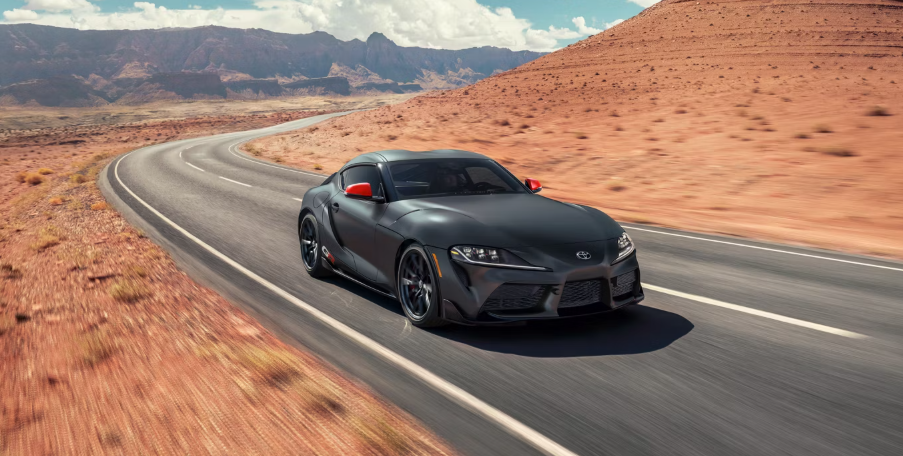
Toyota GR Supra driving on desert highway

Fastest Toyota Cars: Performance and Thrills for Jacksonville Enthusiasts

Toyota's Gazoo Racing lineup has fundamentally changed what a Toyota sports car can be. These are real performance machines that feel just as natural on a winding back road as they do during a weekend track session. For Jacksonville drivers who want something more thrilling than a commuter vehicle, the GR family offers three distinct ways to experience performance Toyota engineering at its best. If you're ready to explore your options, browse our new Toyota lineup to see what's currently available. Toyota's GR Performance Lineup: Built for Jacksonville Enthusiasts The Gazoo Racing badge, better known as GR, is Toyota's motorsport program applied directly to production vehicles. Each GR model is purpose-built with track-oriented technology, tuned suspension, and powertrains designed for driver involvement. Chassis rigidity and steering feedback were treated with the same seriousness as outright power. Aerodynamic balance too. Every choice reflects Toyota's motorsport background, and the result is a lineup that spans straight-line speed, AWD grip, and corner-carving precision. Jacksonville is a genuinely good place to own a fast car. Open highway stretches and sweeping on-ramps give these vehicles room to do what they were built for, and Florida's back roads are never far away. Drivers who want more from their daily commute will find the GR lineup delivers it. GR Supra: Toyota's Most Powerful Production Sports Car The GR Supra is Toyota's flagship performance model, pairing aggressive aerodynamic styling with engineering built around high-speed stability and driver responsiveness. Its low, wide stance actively manages airflow and cornering grip, keeping the car planted and composed when you're pushing hard. An advanced multi-link suspension system sharpens that further, giving the driver confidence through sweeping bends and tighter technical corners alike. For 2026, the GR Supra runs a turbocharged 3.0L inline-six producing 382 hp and 368 lb-ft of torque, with peak torque arriving at just 1,800 rpm. Top speed is 160 mph (governor-limited), and the drivetrain is RWD throughout. The 3.0L Inline-Six: The Only Engine for 2026 For 2026, Toyota discontinued the previous four-cylinder variant. The inline-six is now the sole engine option, and it's a strong one. Torque peaks early at 1,800 rpm and pulls consistently through the rev range, producing an effortless sensation on highway entries and a deeply satisfying response on open roads. Power builds progressively rather than arriving all at once, which makes the car both fast and genuinely manageable. Transmission Choices and Their Effect on the Driving Experience Transmission selection shapes the Supra experience significantly. Both options share the same 382 hp output and 160 mph top speed, but they deliver it differently. Transmission Horsepower 0-60 mph Top Speed 8-speed automatic 382 hp 3.9 sec 160 mph 6-speed manual 382 hp 4.2 sec 160 mph The automatic shifts quickly and intelligently, managing Jacksonville traffic without friction while responding with snappy precision when you call for more. Sport and track modes adjust shift timing to extract performance when the moment calls for it. The manual changes the relationship between driver and car. Controlling gear selection yourself creates a more direct connection between intention and response, and many enthusiasts consider it the more rewarding choice for spirited driving. Both are legitimate options; it comes down to how involved you want to be. GR Corolla: Turbocharged AWD Performance With Everyday Capability Many performance buyers want a fast daily driver that actually functions as a daily driver. The GR Corolla fits that description well. Its turbocharged 1.6L inline-three produces 300 hp and 295 lb-ft of torque, paired with Toyota's GR-FOUR AWD system. Unlike the Supra's two-seat layout, the GR Corolla has a rear seat, cargo space, and enough practicality to work as someone's only vehicle. Transmission options are a 6-speed manual or an 8-speed Direct Automatic Transmission (DAT). The 0-60 time is approximately 5.0 seconds (estimate). The GR Corolla is also the fastest Corolla in Toyota's current lineup, and it's not particularly close. Engine Output, All-Wheel Drive, and Handling Balance What sets the GR Corolla apart is how the GR-FOUR AWD system works with the engine rather than simply splitting power to all four wheels. Drivers can adjust torque distribution between the front and rear axles, allowing the car to be set up for maximum grip on back roads or dialed toward a more neutral, playful balance in controlled environments. That level of driver control is typically found on vehicles that cost significantly more. On wet Florida roads, the AWD system keeps things confident and predictable. On dry, winding stretches, the GR Corolla becomes one of the most satisfying cars in the GR lineup to drive hard, and it rewards drivers who push into its full capability. To check for available offers on models like this one, view our current new vehicle specials. GR86: Lightweight Precision and Corner-Carving Thrills The GR86 comes from a different philosophy than the other two GR models. Where the Supra prioritizes power and the Corolla adds AWD capability, the GR86 strips the formula back to something purer. Its 2.4L naturally aspirated flat-four (boxer) engine produces 228 hp and 184 lb-ft of torque, the car weighs approximately 2,800 lbs, and the drivetrain is RWD. Transmission choices are a 6-speed manual or 6-speed automatic. The 0-60 time is 6.1 seconds. Enthusiasts who care more about feel and feedback than straight-line speed consistently gravitate toward the GR86. It's the kind of car that makes you a better driver over time rather than simply carrying you along. Naturally Aspirated Power and Rear-Wheel Drive Dynamics The naturally aspirated engine behaves differently from a turbocharged unit. Power builds as revs climb rather than arriving in a sudden surge of boost pressure. The delivery is linear and predictable, which makes it easier to place the car precisely through corners. Drivers who enjoy working through the gearbox and keeping the engine in its power band will get a lot out of it. RWD completes the package by allowing the rear of the car to rotate naturally in response to throttle input. For drivers who want to develop genuine car control skills, the GR86 is well suited to that. It's honest and communicative, with clear feedback about what the car is doing at all times. Straight-Line Speed vs. Cornering Performance: How the Three GR Models Compare Choosing among these three models comes down to what kind of driving experience you're after. Rather than a strict ranking, each GR car excels in a different dimension. Model Horsepower Drivetrain 0-60 mph Handling Focus Ideal Use Case GR Supra 382 hp RWD 3.9 sec (auto) / 4.2 sec (manual) Straight-line speed, high-speed stability Track days, highway performance GR Corolla 300 hp GR-FOUR AWD ~5.0 sec (estimate) AWD grip, all-weather versatility Daily driver, spirited back roads GR86 228 hp RWD 6.1 sec Lightweight cornering precision Back roads, skill development The GR Supra leads in outright straight-line performance. Its turbocharged inline-six, combined with a low drag coefficient and firm suspension tuning, makes it the strongest performer when 0-60 times and top speed are the priority. The GR Corolla occupies a compelling middle ground. AWD and turbocharged output make it extremely capable in both acceleration and cornering, especially in variable Florida weather. Its peak speed doesn't match the Supra's, but the versatility more than compensates. Weekend drives, road trips, Monday commutes, it handles all of them in one car without making you feel like you're compromising. The GR86 trades raw speed for precision. Its cornering ability relative to its power output is exceptional, and the RWD layout means skilled drivers can extract something genuinely exciting from every twisting road. For Jacksonville enthusiasts who prioritize weekend back roads as much as weekday commutes, the GR86 rewards that mindset directly. Which Fast Toyota Matches Your Driving Style and Lifestyle Choosing among these Toyota performance cars comes down to an honest look at how you actually use a vehicle day to day. The GR Supra suits drivers who treat performance as the primary value and are comfortable with a two-seat setup. It's for someone who views their car as a direct expression of driving passion. The GR Corolla is the practical enthusiast's answer. It handles passengers, cargo, weekend trips, and weekday errands while still being genuinely fast and fun. It's also the entry point for drivers curious about AWD performance in a compact format. The GR86 suits someone who values driving as a skill and wants a car that encourages them to develop it further. It's also the most accessible of the three on price, making it an excellent first performance car or a worthwhile addition for someone building a collection. Find Your GR Model at Keith Pierson Toyota Our team at Keith Pierson Toyota in Jacksonville can walk you through the real-world differences between GR models in plain terms, covering transmission preferences, drivetrain tradeoffs, and what everyday ownership of a Toyota sports car actually looks like. Please note that availability varies and not every model may be in stock at any given time, so we recommend reaching out before making the trip. Browse our new Toyota lineup to see current inventory, or contact our sales team at 888-461-3879, Monday through Saturday from 8:30 AM to 8 PM and Sunday from 10 AM to 7 PM. We're here to match the right driver with the right car, no pressure, just informed guidance from people who take performance seriously.

2026 Toyota Tacoma parked inside a covered structure

2026 Toyota Tacoma vs. Ford Ranger for Jacksonville Drivers

How Long Should a Car Battery Last in Jacksonville's Heat? Toyota Battery Care Tips Jacksonville drivers know the heat here isn't just uncomfortable, it's relentless. From April through October, temperatures consistently push past 90 degrees, and even the cooler months rarely give your vehicle much of a break. That kind of sustained heat doesn't just drain your energy; it actively works against one of your car's most essential components: the battery. If you're already noticing sluggish starts or flickering electronics, don't wait for a breakdown to take action. Our service department at Keith Pierson Toyota offers complimentary battery testing so you know exactly where you stand. Understanding how Jacksonville's climate shortens battery life can be the difference between a reliable start every morning and an unexpected breakdown in a parking lot. According to AAA, batteries in hot climates like ours typically last approximately three years, compared to five years or longer in cooler northern climates, and it's something every local driver should factor into their maintenance routine. How Long Does a Car Battery Last in Jacksonville's Heat? Under normal conditions, most car batteries are rated to last between three and five years. In Jacksonville, that window shrinks considerably. High ambient temperatures, intense sun exposure, and year-round humidity all accelerate the chemical processes inside the battery, causing it to age faster than it would in a cooler climate. Many Jacksonville drivers find their batteries lasting only about three years, with some failing even sooner, especially when a vehicle sits in direct sunlight regularly. Knowing the average car battery life in Florida is shorter than the national norm helps you plan ahead rather than react after something fails. Why Jacksonville's Heat Is Your Battery's Biggest Enemy Most drivers associate dead batteries with cold weather, and while freezing temperatures do affect performance, heat kills car batteries in a more permanent way. Cold reduces immediate power output, but heat causes structural and chemical damage that shortens the battery's total lifespan. In Florida's climate, heat is the primary threat, and it works through two key mechanisms. Heat Evaporates Battery Fluid and Cuts Capacity Inside a traditional lead-acid battery, liquid electrolyte surrounds the lead plates and enables the chemical reactions that generate power. When temperatures rise sharply, that fluid evaporates faster than the battery can sustain. Over time, this leads to exposed lead plates, warping, and a buildup of sulfate crystals that block electrical flow. A car battery overheating scenario doesn't require any engine malfunction; simply sitting in a hot parking lot is enough to accelerate this degradation. Once fluid levels drop and plates begin to warp, the battery's ability to hold a full charge is permanently reduced, not just temporarily impaired. This is one reason why hot weather affects car batteries so differently than cold. Cold weather is a performance issue. Heat is a structural one. A battery that's been through several Jacksonville summers may test fine in the morning but struggle to deliver full power after sitting in direct sun for eight hours. Florida's Year-Round Warmth Leaves No Recovery Window In northern climates, batteries get a natural reset period during fall and winter. Cooler temperatures slow chemical activity and give internal components a chance to stabilize. Florida doesn't offer that reprieve. The heat persists through what passes for winter here, meaning batteries in Jacksonville face continuous thermal stress without the recovery window that extends battery life elsewhere. This is why AAA data shows Florida drivers getting roughly three years of service from a battery that could last five years or longer in a cooler northern climate. Modern vehicles compound this further. Today's cars carry more electrical loads than ever, from infotainment systems and backup cameras to advanced safety features, all drawing on the battery continuously. Warning Signs Your Car Battery Is Struggling in the Heat Heat damage tends to build gradually, but the warning signs often appear weeks before a complete failure. Watch for these specific symptoms: A slow, labored crank when starting the engine, especially after the car has been parked in the sun. The battery may no longer be strong enough to power the starter motor, or loose and corroded terminals could be contributing to the problem. Dim headlights when the engine is turned off, pointing to a battery that can't sustain consistent voltage on its own. Unexplained electronics dimming inside the cabin, including sluggish power windows or a slower-than-usual infotainment response. Corrosion around the battery terminals, often appearing as a white or bluish powdery buildup, which impairs conductivity and speeds up degradation. A swollen or bloated battery case, one of the most serious physical signs. Heat causes the casing to expand, which directly decreases battery life. At this stage, replacement isn't optional. If you notice any of these, especially during or after a stretch of hot weather, getting a battery test promptly is the smart move. Schedule your service appointment online and let our team give you a clear picture of what's happening before it becomes a roadside problem. Heat Prevention Tips to Extend Your Car Battery's Life in Jacksonville You can't change Jacksonville's climate, but you can manage how much of it your battery absorbs. A few consistent habits can meaningfully extend battery life and reduce the likelihood of an unexpected failure. Parking and Shade Habits That Reduce Heat Damage Where you park matters more than most drivers realize. Engine bay temperatures in a car parked in direct sun can climb well above the ambient air temperature, creating conditions that accelerate fluid evaporation and plate damage. Given Jacksonville's sun intensity, choosing covered parking wherever possible is one of the most effective things you can do for battery longevity. Parking in a garage, under a carport, or in a shaded structure reduces the sustained thermal load your battery absorbs over the course of a day. When covered parking isn't available, positioning your car to minimize direct sun exposure on the hood side is a simple but worthwhile habit. Driving and Accessory Habits That Protect Battery Health Avoiding frequent short trips also helps. Short drives don't give the alternator enough time to fully recharge the battery after starting, which in hot weather means the battery runs at a slight deficit repeatedly until the cumulative effect catches up. Whenever possible, consolidate errands into longer drives that allow the alternator to bring the battery back to a full charge. Before shutting the engine off, turn off accessories like the air conditioning, headlights, and audio system. This small habit reduces the electrical draw at startup and prevents the battery from being asked to do more work during the moments it's most vulnerable. Routine Checks That Catch Problems Early Regular battery testing is the most reliable way to stay ahead of heat damage. Testing measures reserve capacity and output, giving you a concrete picture of how much life the battery has left rather than guessing based on age alone. AAA recommends annual testing once a battery reaches three years of age. Cleaning corroded terminals removes buildup that restores a clean electrical connection. What to Look for When Replacing a Battery Built for Florida Heat Not all batteries are engineered equally for hot climates, and choosing the right one when the time comes can significantly impact how long it lasts. When evaluating replacement options, CCA (Cold Cranking Amps) is a commonly cited rating, but it measures winter performance and is far less relevant in Florida's climate. What matters more here is RC (Reserve Capacity), which reflects how long a battery can sustain your vehicle's electrical load if the alternator fails. In Jacksonville's heat, RC is the more meaningful number to compare. The table below breaks down the most common battery types and how they compare for Florida drivers: Spec 2026 Toyota Tacoma 2026 Ford Ranger Engine 2.4L Turbo + Electric Motor (i-FORCE MAX hybrid) 2.3L EcoBoost Turbo Four-Cylinder Hybrid Option Yes No Towing Capacity Up to 6,500 lbs Up to 7,500 lbs Fuel Economy (City/Hwy) ~22 / 24 MPG (hybrid) ~21-23 / 24-25 MPG Standard Safety Suite Toyota Safety Sense 3.0 Standard driver-assist features Manual Transmission Available Not available Resale Value Superior retention Higher depreciation AGM batteries are often OEM on newer Toyota models and are generally the best choice for Jacksonville drivers. Their sealed construction reduces evaporation risk, and they handle the higher electrical demands of modern vehicles more effectively than standard flooded options. Free Battery Testing and Lifetime Warranty at Keith Pierson Toyota Complimentary Testing With No Guesswork Keith Pierson Toyota takes the guesswork out of battery health with complimentary battery testing. Our service team can tell you exactly how much capacity remains and whether your battery is approaching the point where Jacksonville's heat will push it over the edge. Given that heat-related failure often happens with little warning, proactive testing is one of the most practical things a local driver can do. Lifetime Warranty Coverage Beyond testing, Keith Pierson Toyota backs qualifying new Toyotas with a Lifetime Limited Non-Factory Warranty with unlimited miles. That coverage means you're protected against unexpected powertrain failures for the life of the vehicle. Schedule Your Visit Toyota service is available seven days a week, with hours running Monday through Friday from 7 a.m. to 7 p.m., Saturday from 7 a.m. to 6 p.m., and Sunday from 9 a.m. to 4 p.m. Visit our service department page for full details, or contact us directly if you have questions before coming in. We're located at 6501 Youngerman Circle, Jacksonville, FL 32244, and we're here to help you stay ahead of battery problems before they turn into bigger ones. Frequently Asked Questions About Car Batteries and Jacksonville Heat How long should a car battery last in Florida? According to AAA data, most batteries in Florida last around three years under typical driving conditions. That's well below the national average. Heat accelerates chemical degradation and fluid evaporation, which significantly shortens the useful lifespan. Does heat kill car batteries? Yes, heat is one of the most damaging factors for battery longevity. It evaporates internal fluid and warps the lead plates, which permanently reduces the battery's ability to hold a charge. Over time, this permanently reduces the battery's ability to hold a charge. Can a car battery overheat? Yes. When engine bay and surrounding air temperatures are high enough, the battery absorbs that heat and internal temperatures rise beyond safe operating levels. This accelerates fluid loss and internal damage, especially in vehicles parked in direct sunlight for extended periods. What are the signs that my battery is struggling in the heat? Slow engine cranking, dim headlights with the engine off, unexplained electronics dimming, terminal corrosion, and a swollen battery case are all warning signs. If any of these show up, especially after a stretch of hot weather, have the battery tested before it leaves you stranded. Does hot weather affect car battery performance day to day? Yes. Even before permanent damage sets in, a battery that's hot from sun exposure may deliver inconsistent voltage, making starts feel unreliable and putting strain on other electrical systems. The longer a battery runs in these conditions without maintenance, the worse the cumulative impact becomes. Where can I get my battery tested in Jacksonville? Keith Pierson Toyota at 6501 Youngerman Circle, Jacksonville, FL 32244 offers complimentary battery testing. You can schedule a service visit online or call 888-597-3703. The service department is open seven days a week for added convenience.

2026 Toyota RAV4 running on street

2026 Toyota RAV4 Comparison: Performance, Efficiency, and Tech

Finding the perfect compact SUV isn't just about checking boxes. It's about discovering which vehicle actually fits your life. The 2026 Toyota RAV4 walks into this crowded market with something competitors struggle to match: a complete hybrid lineup that doesn't ask you to compromise on power or capability. Here at Keith Pierson Toyota, we regularly help Jacksonville drivers sort through their options, comparing the RAV4 against favorites like the Honda CR-V, Nissan Rogue, and Ford Escape. Explore our 2026 RAV4 inventory and see why this SUV keeps winning over Florida families who want both efficiency and reliability. Why the 2026 Toyota RAV4 Sets the Compact SUV Standard Proven Hybrid Performance Here's what makes the RAV4 different: it doesn't treat hybrid power as an afterthought. The standard hybrid models pump out 226-236 hp, while plug-in versions deliver a hefty 324 hp. That's serious power for a compact SUV, and it addresses what most buyers really want (lower fuel costs without giving up the ability to merge confidently or haul a weekend's worth of gear). Toyota redesigned the exterior too, giving it a more aggressive look that appeals to buyers who might have passed it by before. Advanced Technology That Works Safety tech can be frustrating when it doesn't work smoothly. Toyota Safety Sense 4.0 gets this right. The interface makes sense, you can find what you need without digging through menus, and the safety features provide real protection during Jacksonville's notorious afternoon downpours without constantly nagging you. It's the kind of thoughtful integration that makes daily driving less stressful. Long-Term Value The RAV4's strong resale numbers tell a story. People trust Toyota's engineering, and that confidence shows up in the used car market. When you buy a RAV4, you're investing in something that will likely serve you well for years, whether you're commuting down I-95 or heading out to Amelia Island for the weekend. 2026 RAV4 Trim Lineup: Standard Hybrid and Plug-In Hybrid Options All-Hybrid Lineup Toyota made a bold choice: the 2026 RAV4 comes exclusively in hybrid configurations. No more gas-only options. You can choose standard hybrids that achieve up to 44 mpg combined, or plug-in hybrids offering up to 52 miles of electric-only range on SE and XSE trims and over 100 MPGe. This gives you flexibility to match your driving habits and environmental goals. Trim Configurations The lineup spans LE, XLE Premium, and Limited in the core group; Woodland in the rugged category; and SE, XSE, and the performance-focused GR Sport in the sport category — with SE, XSE, Woodland, and GR Sport available as plug-in hybrids, and GR Sport offered exclusively in PHEV form. Even the base models include the technology and safety features that define the RAV4 experience. Higher trims add premium touches and enhanced comfort, but you won't feel shortchanged at any level. PHEV Advantages The plug-in hybrid version transforms your daily commute into a nearly silent, zero-emission experience while keeping the flexibility of a traditional hybrid for longer trips. Perfect for environmentally conscious drivers who still want the freedom to head to Atlantic Beach or beyond without range anxiety. 2026 Toyota RAV4 vs Honda CR-V: Hybrid Efficiency Face-Off Powertrain Performance and Fuel Economy Numbers matter here. The RAV4's hybrid system produces 226 hp in front-wheel drive and 236 hp with all-wheel drive, easily beating the CR-V Hybrid's 204 hp. This translates to more confident acceleration when you need to merge onto I-295 or navigate busy city intersections. Toyota surpasses the CR-V's efficiency at up to 44 mpg combined while delivering that extra power. But here's where the RAV4 really pulls ahead: Honda doesn't offer a plug-in hybrid CR-V in the US market. The RAV4 PHEV's 324 hp and up to 52-mile EV range give you options the CR-V simply can't match. Safety Technology and Driver Assistance Toyota Safety Sense 4.0 covers the basics well. Adaptive cruise control, lane departure warning, automatic emergency braking. These systems work reliably without requiring constant tweaking. The interface is intuitive enough that families can actually use all the protective features the RAV4 offers. When you're ready to try these features yourself, get pre-approved for financing to make your purchase smoother. 2026 Toyota RAV4 vs Nissan Rogue: Capability Meets Dependability All-Weather Performance and AWD Systems The standard Rogue runs on gas-only power with 201 hp. For a fairer hybrid comparison, consider the Rogue PHEV with 248 hp system output and 38 miles of electric range. Still falls short of the RAV4 PHEV's up to 52-mile capability and 324 hp punch.The RAV4's all-wheel-drive system handles Florida's wet weather well. It automatically distributes power based on road conditions, whether you're dealing with summer storm puddles or gravel roads. Plus, the RAV4 can tow up to 3,500 lbs. The Rogue? It's not even rated for towing. Long-Term Reliability and Ownership Value Toyota's reliability reputation isn't just marketing fluff. Our certified Toyota service center sees the difference regularly. RAV4 owners deal with fewer unexpected repairs and maintenance headaches. Higher resale values reflect what the market knows: these vehicles last. That means more money back in your pocket when you're ready to upgrade. 2026 Toyota RAV4 vs Ford Escape: Versatility Compared Hybrid and PHEV Powertrain Differences The power gap is significant here. RAV4's standard hybrid delivers 226-236 hp versus the Escape Hybrid's 192 hp. The RAV4 PHEV's 324 hp absolutely dominates the Escape PHEV's 210 hp. Electric range? RAV4 PHEV goes up to 52 miles compared to the Escape PHEV's 37 miles. This performance advantage means you're not making compromises for efficiency. The seamless transition between electric and hybrid operation lets you enjoy the benefits of plug-in technology without constantly monitoring battery levels. Interior Space and Family-Friendly Features Inside, the RAV4 prioritizes what families actually need: space and smart storage. The layout maximizes cargo room and passenger comfort through practical design rather than flashy gimmicks. Multiple storage compartments, door pockets, and console spaces handle the everyday stuff families cart around. Rear passengers get generous legroom and headroom that keeps adults comfortable on longer drives. The cargo area provides plenty of space for groceries, sports gear, or luggage, with a low load floor that makes loading easier. The RAV4's 3,500-lb towing capacity also beats the Escape's 2,000-lb limit, giving you more versatility for boats or trailers. How the Competition Measures Up: RAV4 Advantages at a Glance Specification Comparison Feature 2026 Toyota RAV4 Honda CR-V Hybrid Nissan Rogue PHEV Ford Escape Hybrid/PHEV HEV Horsepower 226-236 hp 204 hp N/A 192 hp PHEV HP / EV Range 324 hp / 52 mi N/A 248 hp / 38 mi 210 hp / 37 mi Fuel Economy Up to 44 mpg / 100+ MPGe 40 mpg 26 mpg gas / 64 MPGe 40 mpg / 100 MPGe AWD Availability Every trim Optional Standard (PHEV) Optional Towing Capacity Up to 3,500 lbs 1,500 lbs Not rated 2,000 lbs Safety Suite Toyota Safety Sense 4.0 Honda Sensing Safety Shield 360 Co-Pilot360 Key Advantages The RAV4 consistently leads across categories that matter most. Superior fuel efficiency through proven hybrid tech cuts your operating costs. Comprehensive safety features protect your family. Toyota's reliability reputation means fewer maintenance headaches and stronger resale values. The exclusive hybrid lineup benefits eco-conscious buyers who want to reduce their environmental impact without sacrificing SUV versatility. Spacious interior and user-friendly technology appeal to families who need features that actually simplify daily life. It's a well-rounded package that meets diverse needs better than competitors who might excel in one area while falling short in others. Test Drive the 2026 RAV4 at Keith Pierson Toyota in Jacksonville Experience the Difference You need to drive the 2026 Toyota RAV4 to really understand what sets it apart. A test drive lets you experience the performance, comfort, and advanced features in conditions that actually matter to your daily life. Our knowledgeable team can walk you through the differences between trims and powertrains, helping you find the right configuration for your needs. Visit Our Family-Owned Dealership Keith Pierson Toyota sits at 6501 Youngerman Circle, Jacksonville, FL 32244. We've been serving the local community for over twenty years with a people-first approach to vehicle sales and service. The benefits we're providing add even more value to RAV4 ownership. Schedule Your Visit Today Our commitment extends well beyond your initial purchase. Toyota service runs seven days a week, and we provide complimentary shuttle service to keep RAV4 maintenance convenient and hassle-free. Contact our team at 888-461-3879 to schedule your test drive and discover why the RAV4 keeps earning recognition as a top compact SUV choice.