

Jacksonville drivers deal with heavy rain, coastal humidity, and salt air that quietly work against a vehicle's braking system. Rotors and pads here collect dust and grime faster than they would in a drier climate, so small maintenance habits go a long way. Brake rotor cleaner plays a bigger role in that upkeep than many owners expect, and understanding how it works can help you recognize when your Toyota needs professional attention.
If you notice anything unusual with your brakes, our Toyota brake service and repair team is ready to take a closer look.
What Is Brake Rotor Cleaner and Why It Matters
Brake rotor cleaner is a solvent-based product formulated to strip grease, oil, brake fluid, and built-up brake dust from rotors, calipers, pads, and drums. It's a specialized brake parts cleaner rather than a general-purpose degreaser, and mixing the two up can cause real problems down the line. The formula evaporates quickly and leaves no residue behind, keeping the pad-to-rotor contact surface clean for consistent stopping power.
Most brake and rotor cleaner products are non-conductive, so they're generally safe to use around basic electrical connectors, but they can still damage sensitive sensors near the braking system, such as wheel speed sensors, so overspray should be kept away from those components.
They are also not safe for plastic components. Overspray on plastic housings, trim, or wiring covers can soften or degrade the material over time, so careless application can create new problems while solving old ones.
How Brake Cleaner Removes Dust, Grime, and Corrosion
The solvent breaks down oils, grease, and stubborn residue first. Then the high-pressure spray physically dislodges debris from tight spots like caliper brackets and rotor vents, areas that are hard to reach with a rag or brush alone. Finally, rapid evaporation leaves the surface dry and residue-free, which is what proper pad-to-rotor contact requires.
Brake dust isn't harmless. It's a mix of friction material and fine metal shavings, and that particulate can pose respiratory concerns if inhaled in significant amounts over time. Letting that buildup sit on rotors and calipers doesn't just create a housekeeping issue; it can measurably reduce braking effectiveness.
Brake Rotor Cleaner vs. General Brake Cleaner
Brake rotor cleaner and general brake system cleaning products often overlap, but rotor-specific formulas are tuned to handle the contaminants unique to rotors, pads, and calipers. Never substitute something like carb cleaner for a proper brake and rotor cleaner. Carb cleaner tends to leave a residue that interferes with braking friction and can cause pads to grab unevenly, the opposite of what you want from a cleaning product.
Why Clean Brake Components Are Critical to Safe Stopping
Clean rotors and pads aren't just about appearance. They directly affect how quickly and predictably your Toyota stops, especially in wet Jacksonville conditions where every bit of friction counts.
Brake Dust, Road Grime, and Heat Exposure
As brake dust and road grime accumulate, they create a layer between the pad and rotor that interferes with the friction needed for effective braking. Add in the heat generated during hard stops, and you get hot spots where the rotor's metal expands unevenly. That uneven expansion is a common source of vibration and noise, and over time it shortens the life of both pads and rotors.
Moisture and Corrosion on Rotor Surfaces
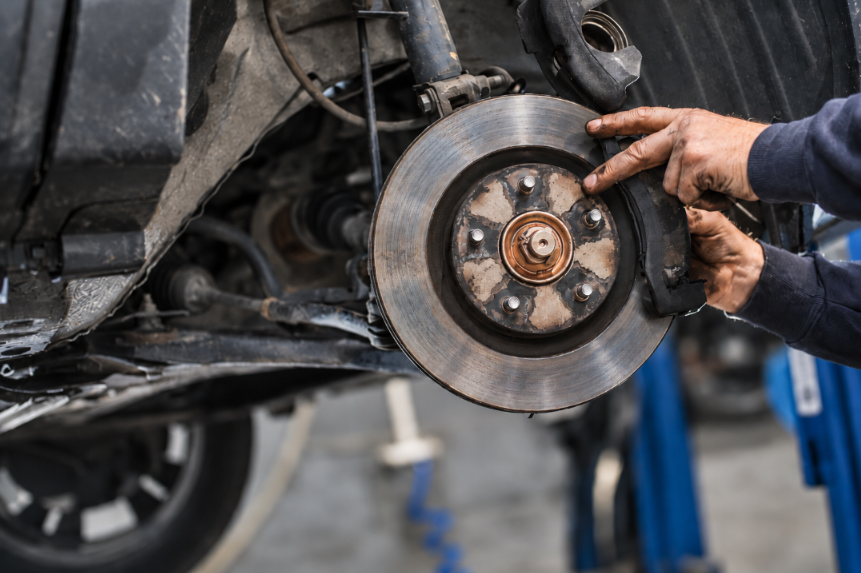
Steel and cast-iron rotors rust when exposed to rain, dew, or humidity, a near-daily reality across Jacksonville, Orange Park, Middleburg, Fleming Island, and Jacksonville Beach. A thin layer of surface rust is completely normal; it typically wipes away within the first few moments of driving as the pads scrub the surface clean.
Problems start when a vehicle sits idle for extended periods, especially in coastal parking spots exposed to salt air. Prolonged inactivity allows pitting to form, and deep pits can lead to noise, vibration, and early wear that eventually turns into warping. If you notice heavier rust after a stretch of heavy rain or a long weekend of coastal parking, it's worth having the system checked before minor surface rust turns into something deeper.
Never apply oils, waxes, sealants, or lubricants to a rotor's friction surface. Doing so compromises braking performance and often introduces the exact noise and vibration issues you were trying to avoid.
Signs Your Toyota's Brakes Need Inspection or Service
Your Toyota often gives early warning signs before a braking issue becomes serious. Knowing what to listen and feel for can help you get ahead of a problem.
Brake Noise and Squealing
A quick squeal after a rainy morning is normal, just surface rust getting cleared off by regular driving. Persistent squealing or grinding, especially at low speeds, tells a different story and usually points to worn pads or an uneven rotor surface. Abnormal, ongoing noise is one of the clearest signals that pads are wearing thin and need a professional look.
Vibration or Pulsation When Braking
A shudder felt through the steering wheel or throughout the car usually means the pads are grabbing unevenly against the rotor surface. Drivers often call this "warping," but technically it's thickness variation across the rotor. Vibration alone doesn't automatically confirm a warped rotor; there are several possible causes, which is exactly why a professional diagnosis beats guessing based on feel alone.
Uneven Pad Wear and Reduced Stopping Performance
When a rotor spins unevenly, the pads riding against it wear unevenly too, which compounds vibration issues over time. Heavy rust can also thin a rotor below its minimum thickness specification, reducing its ability to dissipate heat and handle repeated stops. If it's taking longer to stop than it used to, don't wait. Reduced stopping power is a safety issue, and getting your Toyota inspected as soon as possible is the right move.
Why Brake Cleaner Should Be Used with Caution
Brake rotor cleaner is a genuinely useful product, but it's also an industrial solvent that demands respect. Certain formulations, when exposed to high heat from welding, sparks, or a hot exhaust, can break down into phosgene gas. Manufacturer safety data sheets for these products typically flag them as extremely flammable and pressurized, so brake cleaner should never be sprayed near an open flame, running engine, or hot exhaust component.
Those same SDS documents note that these products can be harmful or fatal if swallowed, pose an aspiration hazard, and can cause nervous system depression from prolonged vapor exposure. Anyone using brake cleaner should do so only for its intended purpose, in a well-ventilated space, wearing gloves and a mask. It's also worth knowing that the EPA has finalized rules restricting trichloroethylene and PCE in chlorinated brake cleaners due to their carcinogen classification, which has shifted many formulations toward non-chlorinated alternatives.
Risks of Improper Use on Rotors and Pads
Only products labeled safe for brake friction surfaces should ever touch pads or rotors. Using the wrong solvent, or applying the right one incorrectly, can damage sensitive sensors near the braking system (such as wheel speed sensors), degrade rubber seals, damage plastic components through overspray, or leave a residue that undermines braking performance rather than improving it. When in doubt about which product or method is appropriate for your vehicle, ask a trained technician instead of experimenting on your own.
Why Rotor and Brake Diagnosis Belongs to Trained Technicians
Cleaning a rotor is one thing. Diagnosing why it's rusted, pitted, or vibrating is a different task entirely, and it requires training, experience, and the right equipment.
The Dangers of DIY Brake Disassembly
An improperly installed pad can create uneven pressure across the rotor, leading to accelerated wear and a repair bill larger than if the job had been done correctly the first time. Incorrect reassembly or a missed underlying issue can lead to brake failure, endangering the driver and everyone else on the road. If you notice warping, pitting, or vibration, or you're simply unsure what's causing a symptom, the safest step is scheduling a professional inspection rather than attempting rotor work yourself.
What a Professional Brake Inspection Covers
A thorough inspection goes well beyond glancing at pad thickness. Technicians check calipers, brake hoses, slide pins, caliper boots, fluid condition, and pad carriers, and they measure whether a rotor can be resurfaced or needs replacement. Best practice is to have your braking system inspected roughly every six months, since problems with calipers or fluid often develop well before pads show obvious wear. Our ASE-certified technicians handle everything from routine inspections to more complex repairs, and if it's been a while since your last checkup, now's a good time to schedule brake service in Jacksonville.
Call a professional rather than wait if you notice any of these:
Deep pitting on the rotor surface that doesn't clear up with normal driving.
Vibration or pulsation that suggests warping or thickness variation.
Rotors measuring close to or below minimum thickness specifications.
Noticeably reduced stopping power or longer stopping distances.
Toyota Brake Pad and Rotor Service at Keith Pierson Toyota
Our service team provides a full range of brake services for Toyota vehicles, using Genuine Toyota parts, pads, calipers, rotors, drums, and shoes included, all built to original equipment standards. That means the parts installed on your vehicle match what Toyota-designed rotors and components were engineered to work with, rather than a generic aftermarket substitute.
We work on vehicles from across Jacksonville, Orange Park, Middleburg, Fleming Island, Jacksonville Beach, and the surrounding North Florida area, and our technicians understand how the region's humidity and coastal exposure affect brake components differently than drier inland climates.
Schedule Your Brake Service in Jacksonville Today
Brake maintenance isn't something to put off, especially in a climate where rust and humidity accelerate wear on rotors and hardware.
Why Drivers Choose Us
ASE-certified technicians who diagnose beyond just pad thickness
Genuine Toyota parts built to original equipment standards
Local expertise in how North Florida's coastal conditions affect brakes
Ready to Book?
If you've noticed noise, vibration, or reduced stopping power, don't wait for the problem to get worse. Schedule service with our team today, or contact us with any questions about what your Toyota's brakes may need.