

Blog / Used Cars

Used Toyota RAV4 Buying Guide for Jacksonville, FL: What to Compare Before You Buy

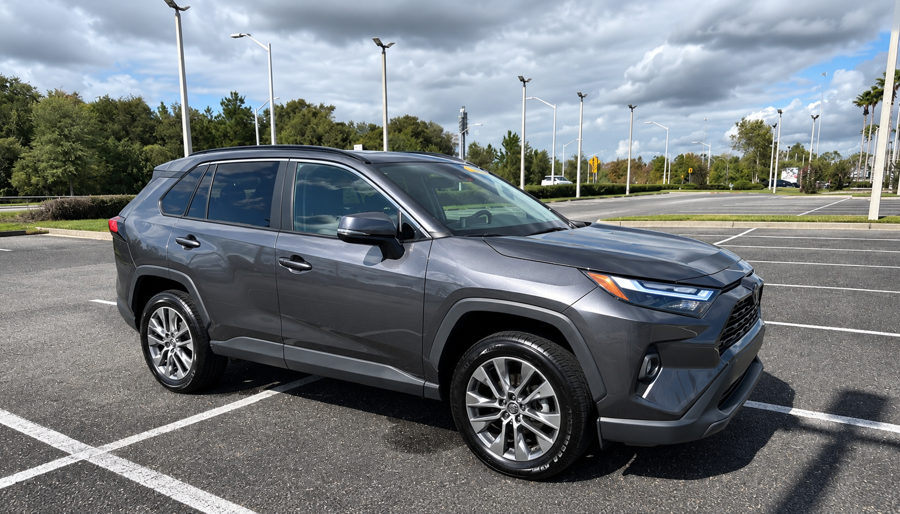
2022 Toyota RAV4 parked at Keith Pierson Toyota dealership lot

A smart used RAV4 purchase comes from comparing generation, trim, mileage in context, history, and Florida-specific wear. The odometer or the asking price alone won't tell you enough. This used RAV4 buying guide stays on the decisions that matter for this model, and you can browse our used inventory any time as you compare.

If you're searching for a used Toyota RAV4 Jacksonville FL drivers can rely on, a few model-specific checks will save you time. We'll cover them below.

Why a Used Toyota RAV4 Fits Jacksonville Drivers

Toyota's RAV4 has a reputation for roomy seating, flexible cargo space, good fuel economy, and dependability. That reputation is a good reason to put the model on your list, but it says nothing certain about any single vehicle.

A compact SUV handles a lot of Jacksonville routines, including the commute over the Buckman Bridge, errands, and weekend trips to Jacksonville Beach. Check seating comfort, parking ease, and cargo access against your own routine. Ride comfort, acceleration, and cabin noise vary by model year and configuration, so a test drive matters.

Used RAV4 Model Years, Trims, and Mileage: What to Compare

Compare model year, generation, trim, powertrain, mileage and condition together, since no single factor tells you whether a vehicle is a good value. Most used RAV4s you'll see come from two generations, and this table shows how they differ.


Model Years / Generation Powertrain Drivetrain Horsepower Fuel Economy (combined) Notable Features
2013–2018 gas (fourth generation) 2.5-liter four-cylinder, 6-speed automatic FWD or AWD 176 hp About 25 to 26 mpg Toyota Safety Sense P standard from 2017
2016–2018 Hybrid (fourth generation) 2.5-liter four-cylinder hybrid Standard AWD 194 hp net combined About 32 to 33 mpg First RAV4 Hybrid; Toyota Safety Sense P standard from 2017
2019–2025 gas (fifth generation) 2.5-liter four-cylinder, 8-speed automatic FWD or AWD 203 hp About 30 mpg (FWD) Toyota Safety Sense 2.0; TSS 2.5 from 2023
2019–2025 Hybrid (fifth generation) 2.5-liter four-cylinder hybrid Standard AWD 219 hp net combined About 37 to 40 mpg Toyota Safety Sense 2.0; TSS 2.5 from 2023
2021–2025 Prime / Plug-in Hybrid (fifth generation) 2.5-liter plug-in hybrid Standard AWD 302 hp net combined About 42 miles of all-electric range Renamed RAV4 Plug-in Hybrid for 2025

Model Year and Generation Differences

The fourth generation (2013–2018) replaced the old side-opening rear door with a liftgate and dropped the V6, leaving a 176-hp four-cylinder. A 2016 refresh added the first RAV4 Hybrid and the SE trim, and for 2017, Toyota Safety Sense P became standard, making 2017 and 2018 the fourth-gen years to target if driver-assist features matter to you. The fifth generation (2019–2025) moved to Toyota New Global Architecture with multi-link rear suspension, a 203-hp engine, an eight-speed automatic, TSS 2.0, Apple CarPlay and available torque-vectoring AWD. The plug-in RAV4 Prime joined for 2021, and a 2023 update brought a new multimedia system, larger available screens and TSS 2.5 on every trim.

The 2026 RAV4 is an all-new sixth-generation, offered only as a Hybrid or Plug-in Hybrid. That means 2025 is the last model year with a gas-only RAV4, a useful point if you specifically want a conventional powertrain.

Trim Levels and Feature Priorities

Trim names are a starting point, because optional packages can change equipment. For example, the SE Hybrid arrived for 2022 with sport-style, fabric-trimmed seats and a 7-inch touchscreen. Its available Weather Package added a heated steering wheel, heated front seats, and rain-sensing wipers with de-icer. The Convenience Package added a moonroof and a height-adjustable power liftgate.

Trim lineups shifted across the years. Fourth-generation RAV4s came in LE, XLE and Limited, with the SE added for 2016 and a top Platinum grade for 2017. The fifth generation expanded to LE, XLE, XLE Premium, Adventure, TRD Off-Road (from 2020) and Limited, plus Hybrid SE, XSE and the 2023 Woodland Edition. For screens, 2023 and newer models have an 8-inch display standard and a 10.5-inch display on upper grades like the Limited and Hybrid XSE, so a late-model Limited is the place to look for the digital gauge cluster, JBL audio and ventilated front seats.

Put daily-use features first. Seat adjustment and visibility matter every drive, and so does smartphone connectivity. If you haul gear often, add cargo access to that list. Pay extra for appearance or premium audio only if you'll use them.

Toyota RAV4 Mileage: What to Weigh Beyond the Odometer

Toyota RAV4 mileage means more alongside age, maintenance consistency, and previous use. Low mileage can still hide a poorly kept vehicle. A vehicle with steady maintenance and a clean inspection can be a better choice than a lower-mileage one with gaps in its records. Weigh mileage with maintenance records and inspection findings. The FTC likewise advises researching mileage alongside model, options, repair records, and safety tests.

Gas vs. Hybrid RAV4 and AWD vs. FWD for Florida Driving

Powertrains vary by year and trim, so confirm the actual powertrain and drivetrain in each listing. A hybrid uses its electric motor at low speeds, which helps fuel use in stop-and-go traffic like I-95 at rush hour, and a conventional hybrid never needs plugging in. Hybrids span both generations, from the 2016–2018 models at about 32 to 33 mpg combined to the 2019–2025 models at about 37 to 40. If a 2021–2025 RAV4 Prime or Plug-in Hybrid joins your list, think separately about charging access. These models offer about 42 miles of all-electric range, which can cover many Jacksonville commutes without using gas.

On drivetrain, AWD isn't needed for snow here, but it can help on wet roads, sandy beach parking and unpaved lots. It won't stop hydroplaning, so tires and cautious driving still matter, and FWD may suit buyers who want to save on fuel. AWD hardware also differs by generation. Fourth-generation gas models use a conventional AWD system. Fifth-generation gas models offer standard AWD or, on grades like the Adventure, TRD Off-Road and Limited, Dynamic Torque Vectoring AWD with Rear Driveline Disconnect. Every RAV4 Hybrid and Prime uses an electric rear motor for its standard AWD.

Quick Decision Guide

  • Commute-heavy driver: consider a hybrid, ideally a 2019 or newer for the best fuel economy.

  • Short daily commute with home charging: a 2021–2025 Prime or Plug-in Hybrid could handle much of it on electricity.

  • Mostly paved roads and fuel savings: FWD may be enough.

  • Frequent beach lots or wet roads: look at AWD.

  • Driver-assist features on a budget: focus on 2017 and newer.

  • Towing or hauling needs: check the specific model's ratings.

Checking Service History, Vehicle History, and Condition

Service records, a vehicle history report, and a physical inspection each show something the others miss, so use all of them. The FTC notes that a vehicle history report may list accident and flood damage but typically won't list mechanical problems, and it is no substitute for an independent mechanical inspection. The FTC also advises asking for a written inspection report that identifies the vehicle by make, model, and VIN with repair cost estimates.

Service Records, Tires, and Brakes

Toyota's maintenance guides, manuals, and service history are available through Toyota's owner resources, so you can compare records against the guide for that year and powertrain. Ask these questions:

  • Were oil changes done at regular intervals?

  • When was the last brake service?

  • Were the tires rotated on schedule?

  • Were all recalls completed? You can check open recalls by VIN.

Use an independent inspection to judge tires and brakes. Replacements needed right away change what the vehicle really costs you.

Interior, Cargo Area, Technology, and Safety Features

Every RAV4 from 2013 on seats five with a 60/40 folding rear seat, and fifth-generation models offer 98.9 cubic feet of passenger volume. Wear shows up differently depending on age, so check these in person:

  • Rear seat folds and latches properly.

  • Cargo area fits your needs.

  • Power liftgate works, if equipped.

  • Touchscreen responds and phone pairing works.

  • Cameras and charging ports function.

Safety tech depends heavily on model year. Toyota Safety Sense P became standard for 2017, adding pre-collision braking, lane departure alert and radar cruise control. The 2019–2022 models have TSS 2.0, and 2023 and newer models have TSS 2.5, which includes Pre-Collision System with Pedestrian Detection, Full-Speed Range Dynamic Radar Cruise Control, Lane Departure Alert with Steering Assist, Lane Tracing Assist and Automatic High Beams. Most 2013–2016 models lack a standard driver-assist suite, so check those listings closely. These systems don't replace attentive driving.

Florida-Specific Checks: Heat, Humidity, Sun, and Coastal Conditions

Summer heat and humidity wear on vehicles, and sudden storms add to it. Here's what to look for, keeping in mind that none of it is a claim about any particular RAV4:

  • Sun-faded dashboards and headlights.

  • Cracked trim or worn weather seals.

  • Musty smells or damp carpet, which can signal humidity or flood exposure. Ask for an inspection rather than guessing.

  • Salt-air corrosion under the vehicle and on brake components, especially if it saw regular beach use.

  • Battery health in heat.

  • Tire age and condition.

Check the history report for flood-related title information, but know it may not reveal every water event. Location alone isn't proof of damage.

Used RAV4 Test-Drive Checklist

Print this and bring it along:

  • Cold start with no warning lights or odd noises.

  • Brake feel, with no vibration or pulling.

  • Steering pull on a straight stretch.

  • AC cooling speed, and whether it stays cold, with no odors.

  • Infotainment lag and phone pairing, tested while parked.

  • Hybrid-to-gas transitions on hybrids.

  • Road noise on I-95.

  • Acceleration and ride quality on city streets and over a bridge like Dames Point.

  • Seat comfort, visibility, and ease of parking.

  • Rear seat and cargo fit for your regular needs.

Write down any concerns and have them inspected before you buy. A good drive is useful evidence but doesn't replace a mechanical evaluation. When you're ready, contact us to set up a drive.

How to Shop Used RAV4 Listings in Jacksonville, FL

When you search for a used Toyota RAV4 Jacksonville FL has to offer, compare vehicles with similar equipment, mileage, and history rather than chasing the lowest advertised price. Verify listing details directly, since photos may be representative and descriptions can contain errors. Ask for an itemized out-the-door price, and keep vehicle price separate from financing terms. A lower monthly payment can come from a longer loan.

If you're trading in a vehicle, you can get an instant cash offer on your trade-in before you shop.

Filters and Comparisons to Use When Browsing Inventory

Start with these filters:

  • Model year range

  • Trim

  • Hybrid or gas

  • Drivetrain

  • Mileage range

  • Color

Then shortlist two or three vehicles for a side-by-side comparison. Confirm availability before making a trip, and ask about certification requirements directly if that matters to you.

Next Steps: Browse Used Inventory and Contact Keith Pierson Toyota

Browse, Compare, and Confirm

To find a used Toyota RAV4 Jacksonville FL shoppers can feel good about, browse our used inventory, save a short list, and contact us to confirm availability, mileage, equipment, and fees. Ask for vehicle history information, available service records, and whether an independent inspection can be arranged. You can also get pre-approved for financing before you decide.

Base your decision on the specific vehicle's condition and documented history, plus the total cost. A monthly payment or the model's reputation is too thin a foundation.

After You Buy

After you buy, our service department can help with maintenance, and you can schedule service online.

Contact Us

Keith Pierson Toyota is a family-owned Toyota dealership at 6501 Youngerman Circle, Jacksonville, FL 32244. Call sales at 888-461-3879 or reach out online.

Posted in:

Recommended Posts

Navy ROTC cadets marching in the Jacksonville Veterans Day Parade

Best November Events in Jacksonville, FL: Family Fun, Fairs and Holiday Activities

Cooler air and lower humidity make fall one of the best times to be outside here. This guide covers the November events Jacksonville FL families will want to know about, including fairground rides and holiday markets. We're a family-owned dealership, so we like helping neighbors plan outings that go smoothly. Details can change, so check each organizer's official page before you head out. Everything below reflects what we confirmed as of October 2026. November Events in Jacksonville, FL: What to Know Before You Go Some events are free and open all day, while others require tickets or run on set start times. Downtown, Jacksonville Beach, Springfield, the Westside and Atlantic Beach sit in different parts of town, so plan around the area too. Event Dates Location Area Cost Type Best For Indoor/Outdoor Greater Jacksonville Agricultural Fair Nov. 5-15 Westside (new fairgrounds) Ticketed Families, rides Both PorchFest Nov. 7 Springfield Free Music lovers Outdoor Super Girl Surf Festival Nov. 7-8 Jacksonville Beach Free with registration Beach families Outdoor Veterans Day Parade Nov. 11 Downtown Free All ages Outdoor Jacksonville Chocolate and Coffee Festival Nov. 21-22 Downtown Ticketed Foodies Indoor Deck the Chairs Nov. 25-Jan. 1 Jacksonville Beach Free Holiday strollers Outdoor UF Health Jacksonville Turkey Trot 5K Nov. 26 Atlantic Beach Paid entry Active families Outdoor Christmas Made in the South Nov. 27-29 Downtown Ticketed Gift shoppers Indoor Jacksonville Light Boat Parade and Holiday River Fest Nov. 28 Downtown Free Evening outings Outdoor Weather, Crowds and Where to Confirm 2026 Details November weather in Jacksonville can swing from crisp mornings to warm afternoons, with stronger wind near the beach and earlier sunsets. Check the National Weather Service forecast and alerts a day or two before you head out. Before you go, run through this quick checklist: Confirm the date and hours on the organizer's page. Check ticket rules, registration needs and refund terms. Look up the forecast and any NWS alerts. Review bag, stroller and pet policies. Decide on a meeting point for your group. Greater Jacksonville Agricultural Fair: Dates, Hours, Tickets and Parking The 71st annual Greater Jacksonville Agricultural Fair runs November 5 to 15, 2026, and for the first time, it's at the new Jacksonville Fairgrounds, 13601 Normandy Boulevard on the Westside. If you've been to the Fair Downtown in past years, set your map app to the new address before you leave. The 82-plus-acre site is the biggest anchor among Jacksonville fall events. Gates open at 5 p.m. on Nov. 5, 9, 10 and 12. Senior Days fall on Nov. 6 and 13, when the gates swing open earlier, at 3 p.m. On Nov. 7, 8, 11, 14 and 15, they open at noon. Nov. 11 is Veterans Day. Advance general admission through Nov. 4 is $10 for adults and $5 for children and seniors. After Nov. 4, it's $15 for adults and $10 for children ages 6 to 12 and seniors 65 and older, and kids 5 and under get in free. The $25 advance JaxFair Mega Pass covers one day of admission plus an armband for most unlimited mechanical rides, though Spaceport and Midway Eye need separate tickets. The pass excludes food, drinks, vendor purchases and JAX Amphitheater concerts. General admission includes grounds entertainment, the 904 Soundstage, Duval Hall Stage and Expo, food vendors, the Marketplace and the barn. Rides and food cost extra. Amphitheater concert tickets are sold separately and include fair admission. Horses & Heroes Rodeo tickets are separate for Nov. 6 and 7. The grounds have over 5,000 parking spaces, plus a Fairfield Way extension at the north end to ease overflow. Rain isn't a dealbreaker, since the grounds include a climate-controlled indoor concert venue and exhibition hall of about 40,000 square feet. Rules to know: Metal detectors sit at the entrances, and bags, purses, coolers and packages are searched. Only service animals are allowed, so leave pets at home. Strollers must be folded and can't be in use during amphitheater shows. Tickets are nonrefundable unless the event is canceled entirely, and official-channel tickets are honored if it's rescheduled. Fall Festivals: PorchFest, Chocolate and Coffee, and More Food and Culture Jacksonville fall festivals bring plenty of music and art, with food in the mix too. Here's what each one offers. PorchFest and Neighborhood Music The 12th annual PorchFest takes over Historic Springfield, just north of Downtown, on Saturday, Nov. 7, from noon to 8 p.m. It's free and family-friendly, with more than 20 performers playing from porches, plus food trucks and an arts market. Leashed dogs are welcome. The route runs from 3rd to 8th Street and Silver Street to Boulevard, and performance streets are closed to traffic. Organizers list free parking options, a complimentary shuttle, street parking and restrooms, including ADA-accessible ones. Bring folding chairs or blankets. Vendors take cash or card. Jacksonville Chocolate and Coffee Festival This indoor festival fills the Prime F. Osborn III Convention Center, 1000 Water St., on Nov. 21 and 22. General admission runs 10 a.m. to 5 p.m. Saturday and 10 a.m. to 4 p.m. Sunday, with a Saturday VIP hour from 9 to 10 a.m. Expect more than 100 chocolate, coffee, gourmet food and artisan vendors in Hall B, with sampling and mascot photo ops. Early sale pricing runs through Oct. 31, so buy before then for the best price. If anyone in your group has food allergies, ask vendors directly. Other Verified Arts, Craft and Cultural Festivals The free Super Girl Surf Festival lands at SeaWalk Pavilion in Jacksonville Beach on Nov. 7 and 8. Surfing and concerts anchor the weekend, along with a festival village, beach sports, fitness classes and food trucks. Advance registration is required, and entry is subject to capacity, so register early. Holiday Kickoffs: Deck the Chairs, Christmas Made in the South and Thanksgiving Fun Jacksonville's holiday events start early. Some are strolls, a few are shopping trips, and there's one early morning run. Deck the Chairs and Early Holiday Displays Deck the Chairs runs Nov. 25, 2026, through Jan. 1, 2027, at SeaWalk Pavilion in Jacksonville Beach. This free holiday arts and entertainment display has decorated lifeguard chairs and community performances, with plenty of student creativity on show. Other options include the Holiday Spectacular at St. Johns Town Center on Nov. 14 and Glowing Gardens at Jacksonville Arboretum & Botanical Gardens, Nov. 27, 2026, through Jan. 3, 2027. Christmas Made in the South and Holiday Markets Christmas Made in the South takes over Prime Osborn Convention Center, 1000 Water St., Nov. 27 to 29. Hours are 9 to 5 Friday, 10 to 5 Saturday and 11 to 5 Sunday. You'll find fine arts, crafts and handmade gifts, along with food and demonstrations. Admission is $10 for adults at the door, and children 12 and under are free. One hand-stamped admission is good all three days. Bring a new, unwrapped Toys for Tots toy for $1 off. Parking includes the main lot, an adjacent grass lot and a lot across the street, but they get tight Friday and Saturday mornings. Overflow options are a free Skyway ride from Central or Jefferson Station, or Water Street Garage at $5 with an eight-minute walk. Thanksgiving Parades, Turkey Trots and Community Events Parades in Jacksonville FL start with the free Veterans Day Parade on Nov. 11 at 11:01 a.m. Downtown. It runs 1.32 miles from Water Street along Hogan and Bay streets to VyStar Veterans Memorial Arena, with first come, first served viewing along Bay Street. Road closures begin early, so check the City of Jacksonville's official page for the full list. On Thanksgiving morning, Nov. 26, the UF Health Jacksonville Turkey Trot 5K brings families to Atlantic Beach. The 5K starts at 7:30 a.m. and the one-mile run at 9 a.m. Entry for the 5K is $55 from Nov. 14 through race day, and packet pickup is Nov. 24 and 25, 10 a.m. to 6 p.m., at Dune House, One Ocean Boulevard. The free Jacksonville Light Boat Parade, now over 30 years running, glides along the St. Johns River Downtown on Nov. 28 at 6:30 p.m. Come early for the Holiday River Fest at Riverfront Plaza, which starts at 5 p.m., then watch the parade from the North or Southbank Riverwalk. The night ends with waterfall fireworks cascading from the Main Street and Acosta bridges. Family-Friendly November Activities: Free, Outdoor and Rainy-Day Options Free admission doesn't mean a free outing, since parking and snacks add up. Free events include PorchFest, Super Girl Surf Festival (registration required), the Veterans Day Parade and Deck the Chairs. Ticketed or paid events include the Fair, the Chocolate and Coffee Festival, Christmas Made in the South and the Turkey Trot. For family events Jacksonville FL offers on a budget, Kids Free November is worth a look. Children under 12 are free at participating attractions, but offers vary, so check which attractions take part. When rain rolls in, go indoors. The Chocolate and Coffee Festival and Christmas Made in the South both work well, and the Fair's 40,000-square-foot climate-controlled exhibition hall offers cover too. Theater options include Mannheim Steamroller Christmas (Nov. 13), A Celtic Christmas (Nov. 14), Frosty: A Musical Adventure (Nov. 18), Home Alone in Concert (Nov. 20) and Cirque Dream Holidaze (Nov. 22). Frosty is a natural pick for younger kids. Smart Planning: Parking, Travel and Packing Tips for Family Outings Parking differs for every event, so follow each organizer's instructions. Rideshare or carpooling can take the stress out of crowded Downtown days. Florida's fall weather swings, so pack with that in mind: Light layers Sunscreen Water Rain gear Cash for vendors Fold-up strollers help at the Fair, and chairs or blankets suit PorchFest. Keep children within sight in crowds, drink water often and watch for weather alerts. If you're carrying chairs, strollers and a cooler, cargo room matters, and many families find Toyota models with flexible rear seating handy for that gear. Heading out of town for the holidays? A quick fuel and tire-pressure check before a long drive takes only a few minutes, and our service team can help if you'd like a closer look. Sample Weekend Itineraries for Families and Groups These plans use confirmed dates. Check drive times in your map app, since venues sit in different neighborhoods. Saturday, Nov. 7: Catch PorchFest in Springfield (noon to 8 p.m.). Then head to the Fair, which opens at noon, or choose the Super Girl Surf Festival at Jacksonville Beach instead. Nov. 21 or 22: Make the indoor Jacksonville Chocolate and Coffee Festival your main event. It suits a cooler or rainy day. Saturday, Nov. 28: Browse Christmas Made in the South (10 to 5), then stay Downtown for the 6:30 p.m. Jacksonville Light Boat Parade. Arrive early at the Riverwalks and pick a meeting spot. Plan Your Jacksonville November with Keith Pierson Toyota Once you've picked from the November events Jacksonville FL has to offer, the rest is getting there comfortably. Keith Pierson Toyota is a family-owned Toyota dealership at 6501 Youngerman Circle, and our service team is available seven days a week. If your family needs more room for strollers, chairs and gear, browse our new Toyota vehicles to see what fits. We just love seeing our neighbors out enjoying the season. If you have questions about service or finding the right vehicle for your family's outings, contact us.

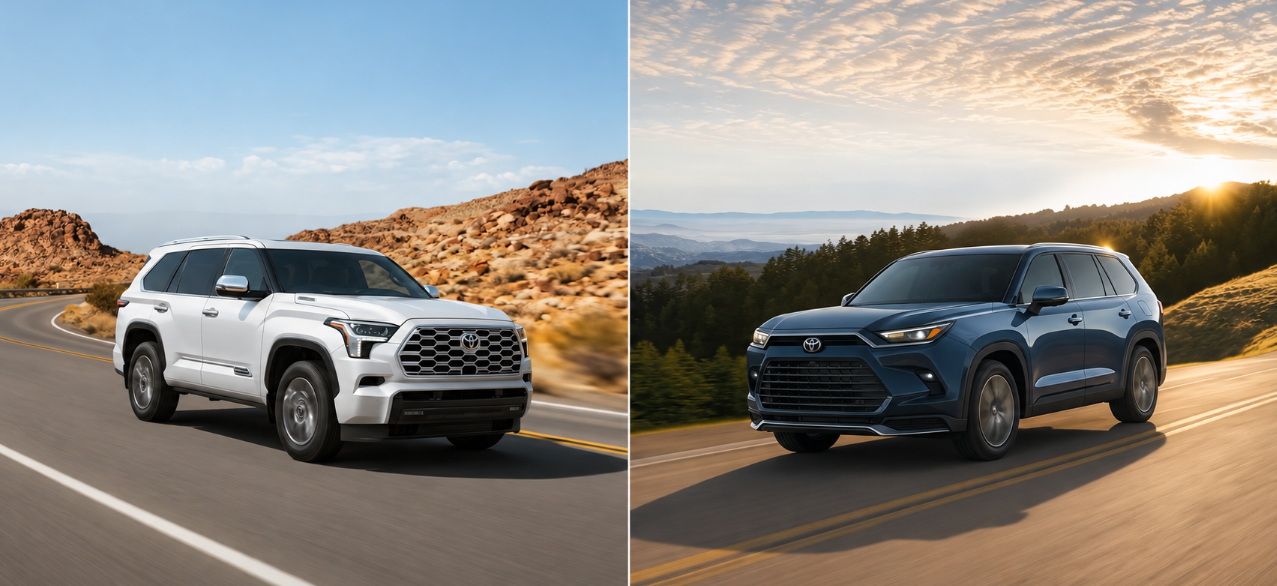
2026 Toyota Sequoia vs. Grand Highlander

2026 Toyota Sequoia vs. Grand Highlander: Which Three-Row SUV Fits Your Family?

The Toyota Sequoia vs Grand Highlander question comes up often at our family-owned Toyota dealership in Jacksonville, FL. Each one seats up to eight and wears a Toyota badge, but they answer different needs. The right pick depends on how you drive and park, and on what you tow. If you'd rather feel the difference than read about it, you can browse our new Toyota inventory and plan a visit. Toyota Sequoia vs Grand Highlander: Quick Comparison for Jacksonville Families Start with your routine: your commute, school pickup, where you park, and how many passengers you carry. Add how often you tow. Those answers usually settle the 2026 Toyota Sequoia vs Grand Highlander debate faster than a spec sheet. Two Three-Row Toyota SUVs, Two Different Use Cases The 2026 Grand Highlander suits most everyday family driving. It has an adult-sized third row and a manageable size, and you can pick gas or Hybrid MAX power, or the standard Hybrid. The 2026 Toyota Sequoia suits families who want heavier towing capability, a standard i-FORCE MAX hybrid powertrain, and available off-road equipment. Spec Grand Highlander Sequoia Powertrain Gas 2.4-liter turbo four-cylinder. Hybrid 2.5-liter. Hybrid MAX 2.4-liter turbo i-FORCE MAX twin-turbo V6 hybrid, 10-speed automatic Drivetrain FWD or AWD (gas and Hybrid). Full-time electronic AWD standard on Hybrid MAX 2WD or part-time 4WD on SR5 and Limited. 4WD standard on 1794 Edition, Platinum, TRD Pro, Capstone Horsepower and torque Gas 265 hp, 310 lb.-ft. Hybrid 245 net combined hp. Hybrid MAX 362 net combined hp, 400 net combined lb.-ft. 437 hp, 583 lb.-ft. Fuel economy (EPA city/highway/combined) Gas 20/26/22 to 21/28/24 by grade and drivetrain. Hybrid 35/31/33 to 37/34/36. Hybrid MAX 26/27/27 4x2 21/24/22. 4x4 19/22/20 Max towing Gas and Hybrid MAX 5,000 lbs. Hybrid 3,500 lbs Up to 9,520 lbs (SR5 2WD); 8,980 to 9,310 lbs on other grades Third-row legroom 33.5 in. 28.1 to 33.7 in. (sliding third row) Cargo (behind 3rd / 2nd / 1st row) 20.6 / 57.9 / 97.5 cu. ft. 11.5-22.3 / 49.0 / 86.9 cu. ft. Seating Seven or eight by grade Seven or eight by grade Length / ground clearance 201.4 in. / 8.0 in. 208.1 in. / 8.6 in. (9.1 in. TRD Pro) Safety system Toyota Safety Sense 3.0 Toyota Safety Sense 2.5 Fuel economy, towing, and cargo figures are manufacturer or EPA estimates. They vary with trim, load, and driving conditions. Size, Parking, and Daily Driving in Jacksonville Daily driving is where the size gap shows. Picture tight parking in San Marco or Riverside, crowded beach lots on a summer weekend, and the stop-and-go stretches of I-95 and I-10. Dimensions, Garage Fit, and Maneuverability The Grand Highlander is 201.4 inches long and 78.3 inches wide without mirrors, on a 116.1-inch wheelbase, with 8.0 inches of ground clearance. The Sequoia measures 208.1 inches long and 79.6 inches wide on a 122.0-inch wheelbase, with 8.6 inches of ground clearance (9.1 on the TRD Pro). That's nearly 7 inches more length and almost 6 inches more wheelbase on the Sequoia, which you'll notice most in tight garages and parking spots. Parking Assist with Automatic Braking is standard on the Sequoia. On the Grand Highlander, it is available on Limited and Platinum, and a Panoramic View Monitor is available by grade. Measure your garage, including mirrors and door-opening room, and practice reversing and parking on your test drive, not just highway cruising. Three-Row Seating, Passenger Space, and Cargo Room Exterior size says little about usable room inside. Check interior dimensions for each row and each seating layout. Second-Row Layouts, Third-Row Comfort, and Car Seat Access Both SUVs seat seven or eight, depending on grade. The Grand Highlander offers captain's chairs on XLE, Limited, Platinum, and the Hybrid Nightshade Edition. An eight-passenger bench is standard on LE and available on XLE and Limited. Its second-row legroom is 39.5 inches. The third row gives 33.5 inches of legroom, 37.2 inches of headroom, and 57.5 inches of shoulder room. There is a support grip for entry and individual USB ports. The Sequoia's second row offers 39.2 inches of legroom. Its third row slides, so legroom ranges from 28.1 to 33.7 inches depending on whether you favor passengers or cargo. Third-row headroom is 35.6 inches, compared with the Grand Highlander's 37.2, while the Sequoia's wider body gives its third row 62.6 inches of shoulder room against the Grand Highlander's 57.5. The Sequoia has a 60/40 bench on the SR5 and Limited and captain's chairs on the Platinum, 1794 Edition, TRD Pro and Capstone, with one-touch third-row access on every grade. Both have lower anchors on the outboard second-row seats. The Grand Highlander adds a third-row tether anchor. Bring your car seats to the dealership and check access and anchor locations yourself. Cargo Space for Strollers and Sports Gear Despite its smaller footprint, the Grand Highlander has more cargo room behind the first and second rows: 97.5 and 57.9 cu. ft., compared with the Sequoia's 86.9 and 49.0. Behind the third row, the Grand Highlander offers 20.6 cu. ft., or room for seven carry-on suitcases. The Sequoia's sliding third row ranges from 11.5 to 22.3 cu. ft., so it can beat the Grand Highlander behind row three, but only when those seats are slid forward. The Sequoia also includes a standard multi-level cargo shelf system. Load your usual gear with the seats set the way you really drive, whether that's a stroller, a cooler or sports bags. If cargo layout is a deciding factor, contact our team, and we'll help you plan a test fit. Hybrid Powertrain Options and Fuel-Economy Considerations Both SUVs offer hybrid power, but they use it differently. A hybrid system pairs the engine with electric motors, which adds power, efficiency, or both depending on how it is tuned. Grand Highlander Turbo and Hybrid MAX Choices The Grand Highlander isn't hybrid-only; the gas model uses a 2.4-liter turbo four-cylinder making 265 hp and 310 lb.-ft. The Grand Highlander Hybrid uses a 2.5-liter engine rated at 245 net combined hp and aims at fuel savings, with a maximum combined rating of 36 mpg. Hybrid MAX favors performance. Its 2.4-liter turbo delivers 362 net combined hp and 400 net combined lb.-ft., with full-time electronic AWD standard, and the Hybrid MAX Limited and Platinum AWD are rated at 26/27/27 mpg. Gas AWD models use Dynamic Torque Control, and Hybrid AWD models use electronic On-Demand AWD. Sequoia i-FORCE MAX Hybrid Performance and Efficiency Every Sequoia grade has the i-FORCE MAX twin-turbo V6 hybrid with a 10-speed automatic, making 437 hp and 583 lb.-ft. The electric assist adds muscle for a large SUV, and it helps with efficiency too. EPA ratings are 21/24/22 mpg for 4x2 and 19/22/20 mpg for 4x4. Towing, heavy loads, and speed can all change what you see in real driving. Towing, Recreational Use, and Family Road-Trip Practicality Towing separates these two SUVs more than anything else. Think of a boat headed toward the St. Johns River or Mayport, or a camper for a weekend away. Boat and Trailer Needs On gas and Hybrid MAX models, the Grand Highlander tows 5,000 lbs, while the Hybrid is rated for 3,500 lbs. The Sequoia tows up to 9,520 lbs on the SR5 2WD, and every other grade still tows between 8,980 and 9,310 lbs, roughly double the Grand Highlander's maximum. Match the vehicle to your trailer's loaded weight, and remember that passengers and cargo count against payload, which ranges from 1,375 to 1,730 lbs on the Sequoia depending on grade. For trailering, the Sequoia comes standard with Blind Spot Monitor with Rear Cross-Traffic Alert and Trailer Merge Warning. It also has Front and Rear Parking Assist with Automatic Braking and a Panoramic View Monitor. The Tow Technology Package adds a digital rearview mirror and Trailer Backup Guide with Straight Path Assist. Off-road gear differs too. Sequoia TRD Pro and models with the TRD Off-Road Package include Multi-Terrain Select, Crawl Control, Downhill Assist Control, and an electronically locking rear differential. The Grand Highlander offers Multi-Terrain Select (Mud & Sand, Rock & Dirt, Snow) on gas AWD and Hybrid MAX. To see what fits your trailer, explore new Toyota inventory and ask us to confirm towing provisions. Long-Distance Comfort, Technology, and Safety Features The Grand Highlander comes with Toyota Safety Sense 3.0, Blind Spot Monitor with Rear Cross-Traffic Alert, a 12.3-inch touchscreen and three-zone climate control with second- and third-row vents. It also has seven USB-C ports and acoustic glass on the windshield and front windows. Its fuel tank holds 17.8 gallons on gas models and 17.2 on hybrids, and the Hybrid's 33 to 36 mpg combined gives it the longer range between stops. Traffic Jam Assist is available on top grades and requires an active Drive Connect trial or subscription. The Sequoia has Toyota Safety Sense 2.5, including Pre-Collision System with Pedestrian Detection, Full-Speed Range Dynamic Radar Cruise Control, Lane Departure Alert with Steering Assist and Lane Tracing Assist. The SR5 has an 8-inch touchscreen, with a 14-inch screen available, and the 14-inch screen is standard from the Limited up, with JBL audio on the Platinum, TRD Pro and Capstone. Wireless Apple CarPlay and Android Auto come on every grade. Adaptive Variable Suspension and Load-leveling Rear Height Control Air Suspension are available, and its 22.5-gallon tank helps on long highway stretches. Driver-assistance systems still need an attentive driver behind the wheel. Which Three-Row Toyota SUV Fits Your Family? Choose the Grand Highlander if: You want an adult-sized third row for everyday passengers. Tight parking and a more compact footprint matter. You like having gas and hybrid powertrains to pick from. Your towing stays at or under 5,000 lbs. Choose the Sequoia if: You tow a heavier boat or camper. You want a standard i-FORCE MAX hybrid powertrain. Available off-road equipment appeals to you. A longer, wider SUV doesn't bother you. Families often ask us whether to pick by size or by power. Pick by how you'll use it. We can set up a back-to-back drive of both SUVs so you can compare third-row access and driving feel with your own family aboard. Browse Toyota SUV Inventory and Contact Keith Pierson Toyota At Keith Pierson Toyota, we're a family-owned Toyota dealership in Jacksonville, FL. If you're searching for a Grand Highlander in Jacksonville, FL or a Toyota Sequoia in Jacksonville, we can help you compare trims, powertrains, drivetrains, and seating layouts. Inventory changes, so we'll confirm what's on hand. Shopping for a family SUV in Jacksonville can also include used vehicles if that fits your plans. Your next step: browse new Toyota inventory, get pre-approved or reach out to our team to schedule a back-to-back drive of both SUVs. FAQs About the Sequoia and Grand Highlander Which has more third-row legroom? The Grand Highlander's third row offers 33.5 inches. The Sequoia's ranges from 28.1 to 33.7 inches. Which tows more? The Sequoia, by a wide margin. It tows up to 9,520 lbs, and every grade is rated for at least 8,980 lbs. The Grand Highlander tows 5,000 lbs on gas and Hybrid MAX models and 3,500 lbs on the Hybrid. Do both offer hybrids? Yes. The Grand Highlander offers Hybrid and Hybrid MAX alongside a gas turbo. Every Sequoia has the i-FORCE MAX hybrid. How many people does each seat? Both seat seven or eight, depending on grade and second-row layout.

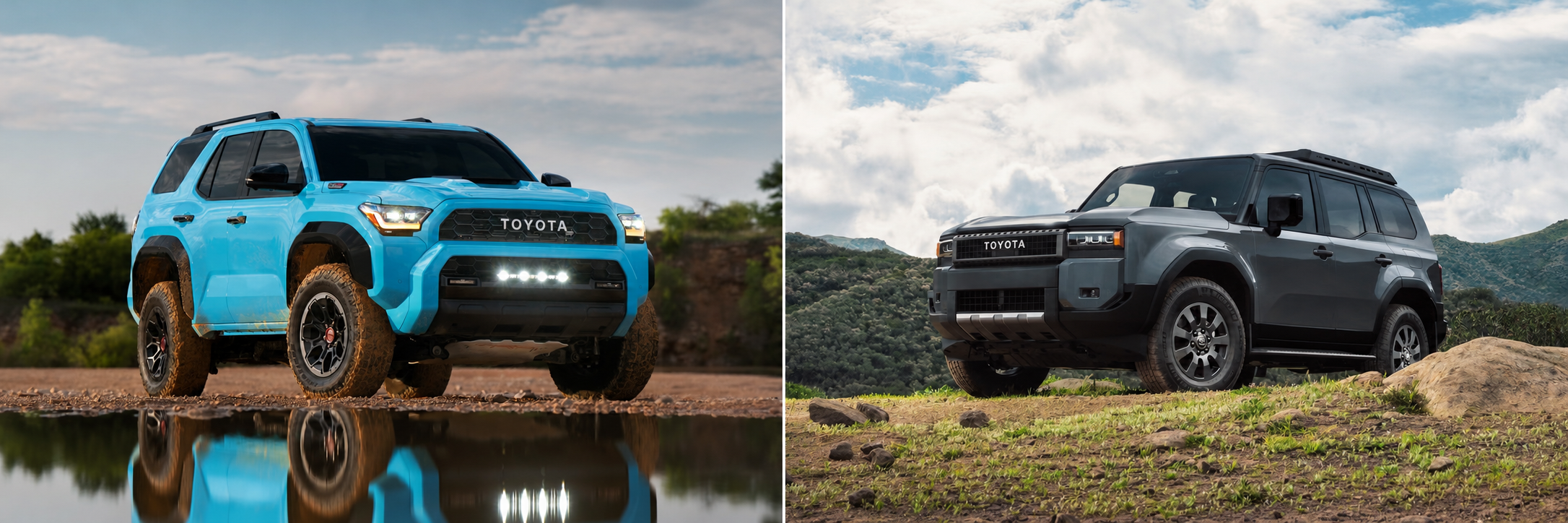
2026 Toyota 4Runner vs. Land Cruiser

2026 Toyota 4Runner vs. Land Cruiser: Which SUV Fits Jacksonville Adventures?

Choosing between the 2026 Toyota 4Runner and Land Cruiser comes down to how you live and play around Jacksonville. Both are body-on-frame SUVs with real adventure credentials, but they're built around different ideas. This guide covers the specs that matter for I-95 commuting, boat ramps and weekend trips, so you can decide by your own priorities. 2026 Toyota 4Runner vs. Land Cruiser: Quick Overview for Jacksonville Drivers The 4Runner offers range, while the Land Cruiser offers consistency. The 2026 Toyota 4Runner spans nine trims and two powertrains, while the 2026 Toyota Land Cruiser comes in two grades, both hybrid with full-time 4WD. The table below uses Toyota's 2026 specifications and EPA estimates. Model/Trim Powertrain Horsepower/Torque Drivetrain Fuel Economy (City/Hwy/Combined) Seating/Cargo 4Runner SR5, TRD Sport, TRD Sport Premium i-FORCE 2.4L turbo four-cylinder, standard, eight-speed automatic 278 hp/317 lb.-ft. RWD or 4WD RWD 20/26/22. 4WD 19/25/21 Seats five. Third row (up to seven) available on i-FORCE SR5. Two-row 90.2 cu ft behind front row, 48.4 behind second. Three-row 84.1/44.8/12.1 behind third 4Runner TRD Off-Road, TRD Off-Road Premium, Limited i-FORCE MAX 2.4L turbo hybrid available, eight-speed automatic i-FORCE MAX: 326 hp/465 lb.-ft. 4WD. Limited full-time 4WD available on i-FORCE MAX TRD Off-Road and Premium 4WD 19/25/21. Hybrid 4WD 23/24/23. Limited RWD 20/24/22, 4WD 20/24/21, Hybrid 4WD 23/24/23 Seats five. Third row available on Limited i-FORCE. i-FORCE MAX 82.6 cu ft behind front row, 42.6 behind second 4Runner TRD Pro, Trailhunter, Platinum i-FORCE MAX, standard, eight-speed automatic 326 hp/465 lb.-ft. 4WD. Platinum full-time 4WD with electronic locking center differential 23/24/23 Seats five. 82.6 cu ft behind front row, 42.6 behind second Land Cruiser 1958 and Land Cruiser i-FORCE MAX hybrid, standard on both grades, eight-speed automatic 326 hp/465 lb.-ft. Standard full-time 4WD 22/25/23 (EPA-estimated) Seats five. 82.2 cu ft behind first row, 46.2 behind second Powertrain Approach: Turbo Four-Cylinder and Hybrid Options Compared Toyota gives the 4Runner two choices, while the Land Cruiser has one. That decision affects fuel economy, and it also changes how a ramp onto I-295 feels. Standard vs. Available Powertrains and Performance The i-FORCE MAX hybrid is standard on the 4Runner TRD Pro, Trailhunter and Platinum, available on the TRD Off-Road, TRD Off-Road Premium and Limited, and standard on both Land Cruiser grades. The non-hybrid i-FORCE is standard on the SR5, TRD Sport and TRD Sport Premium. So match the powertrain first when you compare, since a non-hybrid 4Runner against a hybrid Land Cruiser is a different comparison than two hybrids. The hybrid's extra 148 lb-ft of torque helps most when merging, towing or carrying a full load. Fuel Economy and Daily Driving Feel In combined mpg, the hybrids are a near-match. The Land Cruiser and every hybrid 4Runner rate 23 mpg combined, while the non-hybrid 4Runner ranges from 21 to 22. Real mileage will shift with towing, traffic, tires and driving habits. Ride character differs by trim, from the 4Runner TRD Sport's sport-tuned suspension to the adaptive setups on the Limited and Platinum. A test drive on your own commute tells you more than any spec sheet. Seating, Cargo Space and Everyday Practicality Spec sheets can't tell you whether a cabin fits your family, but dimensions help narrow it down. Seating Layouts and Cargo Flexibility Both SUVs seat five in standard form. The 4Runner adds an available fold-flat third row (up to seven) on i-FORCE SR5 and Limited configurations only. Using that row shrinks luggage space to 12.1 cu ft behind it, so it's a trade-off. Land Cruiser legroom runs 43.0 inches front and 36.7 rear, compared with 41.8 and 34.8 for the 4Runner. Taller drivers should sit in both, since headroom and posture are personal. Size, Parking and Family Use In dimensions, the two are nearly identical. Both share a 112.2-inch wheelbase, and the 4Runner is 194.9 inches long against 193.8 for the Land Cruiser. Width is 77.9 inches on the Land Cruiser and most 4Runner trims, widening to 79.9 inches on the TRD Pro and Trailhunter. Turning radius is 19.7 feet for the 4Runner and 20 feet for the Land Cruiser. In tight Riverside or downtown parking, the differences are small. Check child-seat access, garage fit, and visibility in person. Towing Capability and Four-Wheel-Drive Technology A boat in summer heat tests a drivetrain differently than a dry trail does. Each SUV handles it a little differently. Towing Ratings and What They Mean for Boats and Trailers Maximum towing is 6,000 lb on both the 4Runner and the Land Cruiser, so neither has an edge there. A tow rating is the most a properly equipped vehicle may pull, and it can vary by trim and configuration. Tongue weight is the downward force the trailer puts on the hitch, and it counts against payload. So do passengers and a full cooler. Staying under the tow rating isn't enough if you exceed payload, so confirm limits for the exact vehicle. Equipment helps with a bay boat. A trailer brake controller comes standard on both Land Cruiser grades. On the 4Runner, you can add one, along with Trailer Back-Up Guide with Straight Path Assist. Blind Spot Monitor extends detection to a trailer, and Trailer Merge Warning is standard across 4Runner grades. Four-Wheel-Drive Systems, Locking Differentials and Available Off-Road Tech The 4Runner comes in RWD, part-time 4WD, and full-time 4WD. All i-FORCE MAX models have 4WD, Limited full-time 4WD is available on i-FORCE MAX, and Platinum has full-time 4WD with an electronic locking center differential. The 4Runner's locking rear differential is standard on TRD Off-Road, TRD Pro, and Trailhunter. Both Land Cruiser grades come with full-time 4WD and a two-speed transfer case. Center and rear locking differentials are standard too. Full-time 4WD isn't the same as all-wheel drive, and a center lock and a rear lock do different jobs. Four-wheel drive adds traction but doesn't make a slippery ramp risk-free. Off-Road Features, Beach Access and Outdoor Recreation A rugged look doesn't prove capability. Drivetrain and tires matter, as do suspension, protection, and traction tech, and many are trim-specific. Off-Road-Oriented Trims and Features: Standard vs. Available On the 4Runner, TRD Off-Road adds underbody protection, 18-inch wheels, 33-inch all-terrain tires, and Bilstein shocks. TRD Pro has TRD-tuned FOX shocks. Trailhunter brings Old Man Emu shocks, an onboard air compressor, a roof rack, and high-strength underbody protection. Multi-Terrain Select (mud, dirt, sand) and Crawl Control are standard on TRD Off-Road, TRD Off-Road Premium, TRD Pro, and Trailhunter. Stabilizer disconnect is standard on TRD Pro and Trailhunter, and optional on i-FORCE MAX TRD Off-Road Premium. On the Land Cruiser, Crawl Control is standard on both grades, and the Land Cruiser grade adds Multi-Terrain Select (Mud, Dirt, Sand), an enhanced Multi-Terrain Monitor and Rigid color-selectable LED fog lights. Both grades come standard with a front skid plate protecting the engine, transmission and transfer case, plus front and rear frame-mounted tow hooks. Stabilizer disconnect is available. Ground clearance is 8.7 inches on both Land Cruiser grades. On the 4Runner, it ranges from 8.1 inches (SR5) and 8.8 (TRD Sport, Limited, Platinum) to 9.1 (TRD Off-Road and TRD Off-Road Premium) and 10.1 (TRD Pro, Trailhunter). Approach, departure and breakover angles are 33/24/24 degrees on the 4Runner TRD Pro and Trailhunter and 32/22/23 on the Land Cruiser. Real-World Fit for Florida Trails, Dirt Roads, Beaches and Boat Ramps Florida terrain is mostly soft sand and muddy access roads, plus wet launches. Think Black Creek trails, Guana River approaches, or a St. Johns River boat ramp with kayaks on the roof. Here, traction and low-speed control matter more than extreme angles. Beach driving rules differ by county and beach, including in Duval and St. Johns counties, so check current local regulations before heading out. After salt and sand, rinse and inspect your vehicle, and our service team can help with upkeep for towing and off-road use. Want to talk through your terrain? Contact us and we'll help you compare trims. Daily Comfort, Road-Trip Use and Technology Most miles are on pavement, so comfort and tech deserve as much attention as off-road gear. Ride Comfort, Cabin Design and Long-Distance Travel Trim changes comfort as much as model does. 4Runner front seats are heated and ventilated on TRD Sport Premium, TRD Off-Road Premium, Limited, Platinum, TRD Pro, and Trailhunter. Dual-zone climate control is standard on Limited, Platinum, TRD Pro, and Trailhunter. Platinum adds heated, reclining, tumble second-row seats. The Land Cruiser 1958 has heated front seats, and the Land Cruiser grade has heated and ventilated front seats, with three-zone climate control on both. The Land Cruiser grade's available Premium Package adds a leather-trimmed memory power driver's seat, a power moonroof, a 14-speaker JBL system, a digital rearview mirror, a head-up display and wireless charging. Standard 2400W AC power comes on i-FORCE MAX 4Runners and both Land Cruiser grades. For a 4Runner Limited vs Land Cruiser comparison, check cabin noise and seat support on a run to St. Augustine or Amelia Island. Infotainment, Driver-Assist and Safety Features The 4Runner SR5, TRD Sport and TRD Off-Road have an 8-inch display, while the TRD Sport Premium, TRD Off-Road Premium, Limited, Platinum, TRD Pro and Trailhunter get a 14-inch display with a 14-speaker JBL system. Wireless Apple CarPlay and Android Auto are included. The Land Cruiser 1958 has an 8-inch touchscreen and six speakers, and the Land Cruiser grade has a 12.3-inch touchscreen and 10 speakers. A 12.3-inch screen with 14-speaker JBL audio is available on both Land Cruiser grades. Toyota Safety Sense 3.0 is standard on every grade of both, including Pre-Collision System with Pedestrian Detection, Lane Departure Alert with Steering Assist, Full-Speed Range Dynamic Radar Cruise Control, Lane Tracing Assist, Road Sign Assist, Automatic High Beams and Proactive Driving Assist. Every 4Runner also gets Blind Spot Monitor with Rear Cross-Traffic Alert, Front Cross-Traffic Alert and Traffic Jam Assist as standard. On the Land Cruiser, Front Cross-Traffic Alert and Traffic Jam Assist come with the Land Cruiser grade's Premium Package. These systems support an attentive driver, who stays responsible for the road. Matching Each SUV to Your Buyer Priorities Start with what you do most often, then compare the spec that serves it. Towing a boat: Both max out at 6,000 lb, so compare tongue weight, payload, and the trailer brake controller (standard on Land Cruiser, available on 4Runner). Daily commuting: Compare fuel economy for the exact trim and test drive both on I-95. Family hauling: Check whether you need the 4Runner's available third row or prefer the Land Cruiser's rear legroom. Trail frequency: Compare TRD Off-Road, TRD Pro, or Trailhunter equipment with the Land Cruiser's standard locking differentials. When the 4Runner May Fit The 4Runner may fit if you want to pick your own configuration, need an available third row or prefer a non-hybrid i-FORCE option. Specialized trims like the Trailhunter, with its onboard air compressor and roof rack, add another draw, and every 4Runner includes Front Cross-Traffic Alert and Traffic Jam Assist as standard. When the Land Cruiser May Fit The Land Cruiser may fit if you want the hybrid powertrain, full-time 4WD, and locking differentials on every grade without selecting them separately. Some shoppers also simply prefer its upright design and rear legroom. Whichever you choose, budget for fuel and insurance, and for maintenance on top of the purchase price. Compare Toyota SUVs at Keith Pierson Toyota Explore Current Toyota SUV Inventory and Schedule Test Drives Toyota SUV demand can limit availability, so ask us about current and incoming inventory. We're a family-owned Toyota dealership in Jacksonville, FL, selling new and used vehicles with service, parts, and financing. This 2026 Toyota SUV comparison is easiest to finish in person. Drive both on city streets and highways, and try tight parking spots with your regular passengers. If you plan to tow, bring your trailer details so we can help you confirm limits. Ready to start? Explore our new Toyota inventory or get pre-approved. Contact Our Team Call our sales team at 888-461-3879 or visit us at 6501 Youngerman Circle in Jacksonville, and we'll help you compare the 4Runner and Land Cruiser side by side.