


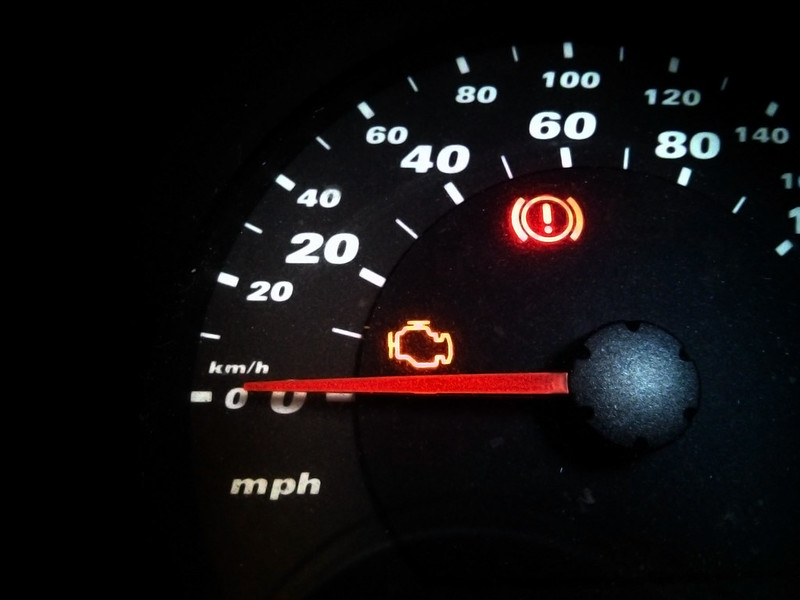
Whether you’re on a scenic road trip or running errands in town, a check engine light can cause problems. This alert, usually located on your speedometer, indicates an issue with one of your car’s engine components. While different car models might be prone to unique issues, there are a few common problems that can turn that light on. Keep reading to find out some of the reasons why your check engine light might be active.
Your Car’s Gas Cap Is Loose or Damaged
One of the most common reasons for a check engine light is also one of the easiest to fix. When your car’s gas cap is loose, hazardous fuel vapors can escape into the air and into other parts of your car. If your car’s check engine light comes on right after you fuel up, check to see if your car’s gas cap is securely fastened. You should hear a clicking sound when you fasten the lid. In many cases, unscrewing the gas cap and replacing it can resolve the check engine light, allowing you to continue with your drive.
Sometimes, dirt or other debris can get stuck in the cap, making a tight seal more difficult. If you don’t hear the clicking sound, carefully wipe the inside grooves of the cap with a clean paper towel before trying again. A gas cap that still won’t click into place might be damaged or worn out from frequent use. Luckily, replacing a gas cap is a fast and inexpensive repair. If the check engine light is still on and you can’t get the cap to seal, take your car to a qualified mechanic right away.
Your Car Needs New Spark Plugs
Spark plugs are small engine components that pass an electrical current between them, providing the “spark” that starts your car’s ignition. These pieces can wear out or break from frequent use, causing the check engine light to switch on. Even though spark plugs are small, they are vital parts of your car’s engine, and if they are faulty this can cause issues with starting and accelerating your car. Worn spark plugs can also decrease your car’s fuel efficiency.
When you take your car to a mechanic, they can run a diagnostic test that detects spark plug issues. Since these pieces often need replacing, they might have your car’s make and model spark plugs available onsite. If you drive a less common car or visit a smaller mechanic’s shop, you might have to order the right spark plugs, which can take a few days. After the spark plugs arrive, though, it’s a quick repair.
Your Car’s Oxygen Sensor is Malfunctioning
When you start your car, a combination of oxygen and fuel in your fueling system combine and ignite, powering the vehicle. The oxygen sensor, or O2 sensor, in your car ensures that your engine gets the right ratio of fuel to oxygen when you’re driving. This keeps your car running smoothly and ensures high fuel efficiency.
A malfunctioning oxygen sensor can cause your car to use too much fuel (rich) or not enough (lean), which can be bad for your engine. Running rich can cause reduced fuel efficiency and clog up your engine parts with extra fuel. Running lean can reduce your car’s power and cause your engine to seize up. If your mechanic detects an oxygen sensor issue, they might replace the part and test it to make sure it’s monitoring your engine correctly. This repair might be more expensive than a spark plug or gas cap, but is still a fairly inexpensive fix.
Your Car’s Mass Airflow Sensor is Faulty
The mass airflow sensor is related to the oxygen sensor, but it measures the total amount of air coming into your car’s engine. The air then passes to the O2 sensor, which ensures the right amount goes into the fuel system. If your car needs a new mass airflow sensor, it might not send the right amount of air to each part of the engine that needs it. You might notice black exhaust or ashy residue on your car’s exhaust pipe, which indicates that there’s too much fuel compared to air.
Like the oxygen sensor, replacing a car’s mass airflow sensor is a fairly inexpensive process. It’s important to have a mechanic look at your engine as quickly as you can once you see a check engine light on. Catching a mass airflow sensor issue early can keep your other engine parts clean, helping you avoid a pricier repair bill in the future.
Your Car Needs a New Catalytic Converter
One of the more expensive problems signaled by a check engine light is a faulty catalytic converter. The catalytic converter refines your car’s exhaust before sending it out through the exhaust pipe. While catalytic converters usually don’t break on their own, they can become clogged or damaged if another part of the engine isn’t working correctly, like the spark plugs or oxygen sensors. Along with the check engine light, you might notice a strong smell, like rotten eggs, when you run your car.
Left untreated, a faulty catalytic converter can cause serious damage to your car. Because the catalytic converter ensures that exhaust passes to the exhaust pipe, a clogged converter can trap exhaust gases in your engine, which can damage key parts, decrease your fuel efficiency, and cause slow acceleration. While replacing a catalytic converter can be expensive, these parts usually don’t need replacing more than once every ten years.
No matter what caused your engine problems, the service department team at Keith Pierson Toyota is here to help. Our expert service team can diagnose your engine trouble and recommend a budget-friendly repair to get you back on the road. If you drive a Toyota, we can order genuine replacement parts so you can feel confident leaving our lot with your new engine parts. You can also schedule regular tune-ups and other services with us, which can lessen the chances of an engine issue.
On [46 of 52] by Chris Isherwood is licensed with CC BY 2.0
Connect with us


Recent Blog Entries
- Toyota Tundra for Sale in Jacksonville, FL: Your Guide to Trims and Features
- Bands from Jacksonville, FL: A Soundtrack for Your Next Toyota Road Trip
- 2026 Toyota Camry vs. 2026 Honda Accord: The Midsize Sedan Showdown in Jacksonville
- Top 5 Free Things To Do in Jacksonville This Summer: Explore with Keith Pierson Toyota
- Jacksonville’s Best Spring Events: Drive There in Comfort with Your Toyota