


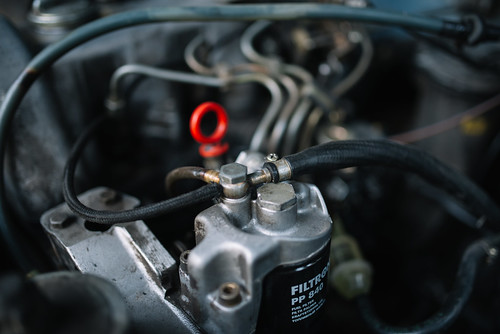
Much like your body has various vital fluids to keep you alive and running well, so does your car. Gasoline is one of the main ones most people know about, but other fluids are just as critical. Knowing what they are and how to check them is imperative to keeping your vehicle in tip-top shape. Taking your vehicle to a Jacksonville service department, such as Keith Pierson Toyota for routine maintenance, including checking the fluids in your vehicle, will prolong its life and improve performance.
Motor Oil
The second most well-known automotive fluid is motor oil. Motor oil keeps all the movable parts in your engine well-lubricated and reduces friction. Without gas, your vehicle doesn’t run, but without oil, the engine will be ruined. Getting oil changes within the recommended time and mileage is crucial as dirty, old oil does not function well, exposing your engine to unnecessary wear and tear.
To check your oil, find the dipstick labeled oil or with a picture of an oil can. Usually, this is located in the front of the engine but can be on the back too. Pull the dipstick out, wipe it clean, put it all the way back in and then remove it again. Look at the end of the dipstick for indicators on the bottom of the dipstick for the range of acceptable levels. Make sure the level of the oil marks on the dipstick is within the acceptable range.
If it’s below or very close to the low bottom line, you should add oil immediately. It could also mean your engine is burning oil or has an engine oil leak, both of which may indicate the need for maintenance.
Transmission Fluid
Transmission fluid is usually red or reddish and should be a thicker liquid. This fluid is responsible for keeping your gears well-lubricated, allowing for smooth shifting. Without it, or if it is past its usefulness, you could damage or ruin your transmission, resulting in a very costly repair. For most vehicles, checking the transmission fluid is similar to checking your oil. It will typically have its own dipstick, usually a different color than the oil dipstick.
Make sure the car is at the normal operating temperature on a level surface. While still running, remove the dipstick, wipe it clean, and reinsert it all the way. Remove the dipstick and check the level compared to the markings on it. If it’s low, add the requisite amount of fluid. If it’s discolored or has metal shavings in it, replacing the fluid or having it serviced by a mechanic is your best bet.
Brake Fluid
This light brown or yellowish liquid provides the hydraulic pressure needed to operate your brakes successfully. The reservoir is usually on top of the engine, towards the rear of the engine compartment. The canister that holds the brake fluid is typically on the driver’s side of the vehicle by the brake master cylinder. It will usually be labeled brake fluid or have an icon that indicates that it is the brake fluid canister.
To check brake fluid, remove the cap and make sure it’s about a half-inch from the cap. If it’s low, add until it gets to this level. Pay attention to the color as well. If it’s black, that indicates the fluid needs to be changed, while metal specks indicate issues with the braking system that need to be addressed.
Anti-freeze
The purpose of this bright green or bright yellow fluid is to keep your radiator from freezing up in the winter and overheating in the warmer months here in Jacksonville. To check this, you’ll need to find the radiator cap, which may read cooling system, or have the warning to be careful not to open when hot as the system is under pressure.
This one is as simple as making sure the fluid is full to the top. There are very different types of coolant that should not be mixed, so make sure you know what’s in your vehicle and, if adding to it, only add the same kind. Trust the professionals at Keith Pierson Toyota to take care of this for you to reduce the risk.
Power Steering Fluid
A vast majority of vehicles on the road today are controlled via power steering, thus requiring power steering fluid, typically reddish or clear in color. Again, this uses hydraulic pressure to help turn the wheels and needs power steering fluid to operate properly. The reservoir is can be found under the hood closer to or on the passenger side, although not always. The cap will usually say steering fluid right on it.
Power steering fluid can typically be checked by looking at the side of the opaque reservoir, which will have low and high indicators right on it. All you need to do is look at the side of the reservoir and make sure the fluid level falls within the acceptable range markings.
Air Conditioning Coolant
Probably more commonly referred to as Freon, this brightly colored fluid allows the air conditioning system to work. Living in Jacksonville, Florida requires working air conditioning in your vehicle. This is a dangerous fluid to work with, so it is probably better to leave this one up to the professionals at Keith Pierson Toyota.
To check your coolant, you’ll need a special tool that measures the pressure of the air conditioning system. You’ll find the low-pressure port, just a cover that screws on and off and then screw the pressure measuring gauge onto the port. If the pressure is low, add more according to the manufacturer’s instructions or those on the Freon can.
Windshield Wiper Fluid
While windshield wiper fluid may not be critical to the overall operation of your vehicle, it does serve the important purpose of keeping your lines of vision open. This one is typically easy to check and fill. It’ll usually be along the edge of the engine compartment and have a windshield wiper symbol on it. Simply remove the cover and add the fluid until full.
Maintaining proper fluid levels and quality is essential to the longevity of your vehicle. Always make sure that the fluids are at the appropriate level and in the proper condition to best service your engine. If not, add to them or replace them, either yourself or at a mechanic, to keep your engine running in peak condition. Visit the service team at Keith Pierson Toyota to have your fluids checked or for any other routine maintenance needs. Give us a call at 888-461-3879 or schedule our services online.
Connect with us


Recent Blog Entries
- 2026 Toyota Tundra 1794 Edition Overview
- 2026 Toyota RAV4 vs. 2026 Honda CR-V: Why the RAV4 Wins for Jacksonville Drivers
- 2026 Toyota Tundra vs. 2026 Ford F-150: Which Full-Size Truck Dominates?
- What’s New for the 2026 Toyota Tundra? A Complete Guide for Jacksonville Truck Shoppers
- What’s New for the 2026 Toyota Camry — A Fresh Take on a Legendary Sedan