

Blog / Toyota Tips

Blog

All Toyota Tips New Toyota Vehicles Local Parts And Service Model Comparison Finance Maintenance Camry Highlander Tundra Corolla Local Events & Community RAV4 Corolla Cross Tacoma Technology EV

Can I Sell My Car To A Dealership?

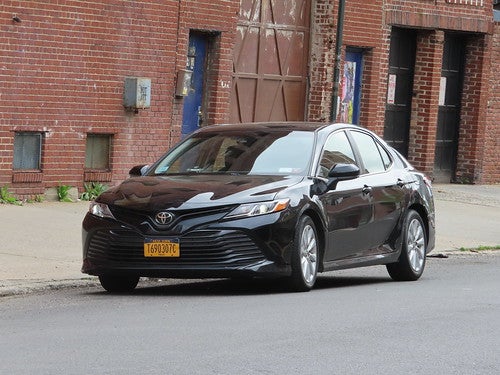
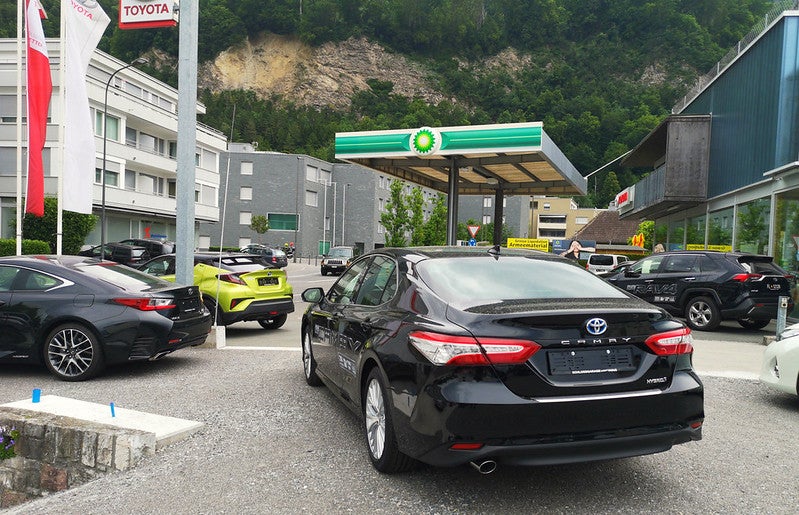
Toyota Camry via Flickr by crash71100 | Licensed by CC0 1.0 Are you looking for a quick and hassle-free way to sell your car so you can buy a new one? If this sounds like you, selling your car to a dealership could be the perfect solution. Here at Keith Pierson Toyota, we can offer you a competitive price for your used car, SUV, or truck. To learn more about our offers, contact us today and tell us a bit about your vehicle. more How Do You Sell Your Car to a Dealership? Selling your car to a dealership is usually a relatively straightforward process. You can get started by using their valuation tool to get an idea of how much your car will be worth. Some dealerships work with valuation services like KBB to provide you with an instant cash offer, which is based on your description of your car. Dealerships typically reserve the right to adjust the offer if they discover that the condition of your vehicle is different from how you described it following an inspection. It may help if you use several online tools to obtain more than one valuation for your vehicle. There are various factors that go into attaching a value to your car, including its make, model, driving mileage, and general condition. In addition, regional variations in price may occur if a particular type of vehicle is especially popular in your local area. By gathering valuations from a few different sources, you can have a better idea of whether the offer you're receiving is competitive or not. If you're happy with the valuation provided for your vehicle, the next step is to bring it to the dealership. When you arrive, explain to a staff member that you're looking to sell your car. They will then arrange for an inspection and go through the necessary paperwork with you. Since dealerships have considerable experience in buying used cars, you may be able to conclude the deal and take care of all the associated paperwork in just one visit. To make sure that the transaction is finalized as smoothly as possible, remember to bring key documents with you to the dealership. These include your title to the car and a piece of ID, like your driver's license. If you're still paying off a loan for the car, you'll need to show the documentation to confirm the lien holder. What Are the Advantages of Selling to a Dealership? The first advantage that comes with selling your car to a dealership is simplicity. From the moment you seek a valuation to the conclusion of the deal, you only have to follow a few steps. Some dealerships can finalize the purchase within a day or two. This swift process contrasts with the lengthy struggle you can have if you're trying to sell your vehicle on the private market. You'll first need to prepare advertising material, including text and photos, and then sort through messages from interested parties when you start receiving them. You may have to take time out for various meetings with people who express an interest in your car. Since they're under no obligation to buy your vehicle, you may have to arrange meetings with several people before you can finalize the purchase. Another major plus when you sell to a dealership is security. You can rely on a reputable auto dealership like ours to promptly pay you for your vehicle once the transaction is finalized. If you sell privately, you may have a longer wait until a check clears, and you'll always have the worry that it may bounce. Are There Benefits to Selling Privately? The main benefit to selling on the private market is that you can often get a better price for your car than a dealership will offer. That's because dealerships generally buy used cars with the aim of carrying out some repairs and selling them on to a new driver. As a result, they typically offer slightly lower prices to cover the cost of the work they will have to invest in the vehicle. Another possible advantage is that you may be able to sell your car to a friend or relative. If this is an option for you, you can avoid having to invest the time in advertising your vehicle and meeting with interested parties. What About Trading in? Choosing to trade in your vehicle is a great way to secure a lower price on your next new or pre-owned car. Our trade-in program allows you to deduct the sales price of your current vehicle from the cost of any of our new Toyota cars and SUVs. Alternatively, you can put the value of your vehicle towards the purchase of one of our well-maintained, used cars. One of the most convenient things about trading in is that you can take care of everything in one place. Bring your existing car to our dealership and we can finalize the sale in no time. Then, you're free to explore the extensive inventory on offer in our showroom. Perhaps you like the look of a Toyota Rav 4 or a Highlander if you need an SUV to accommodate your family. If a compact car with great fuel economy is your priority, check out our range of Corollas or Toyota's range of electric cars. In addition to getting a great price for a new vehicle, opting for our trade-in program can save you money on taxes. That's because you'll only be taxed for the outstanding balance you pay us. For example, if you sell us your vehicle for $7,000 and purchase a new one worth $30,000, you'll only pay sales tax on the $23,000 you have to pay us. Now that you know how easy it can be to sell your car to a dealership and the benefits it can bring, we hope you'll consider making Keith Pierson Toyota your auto sales partner. Whether you just want to sell your car or combine it with a trade-in, we're committed to offering you a fair and competitive price with no obligation for you to accept. If you have any questions about selling us your car or our trade-in program, don't hesitate to reach out. One of our auto experts will be standing by to take your call or to chat with you in person if you swing by our Jacksonville dealership.
2022 toyota corolla vs 2022 honda civic

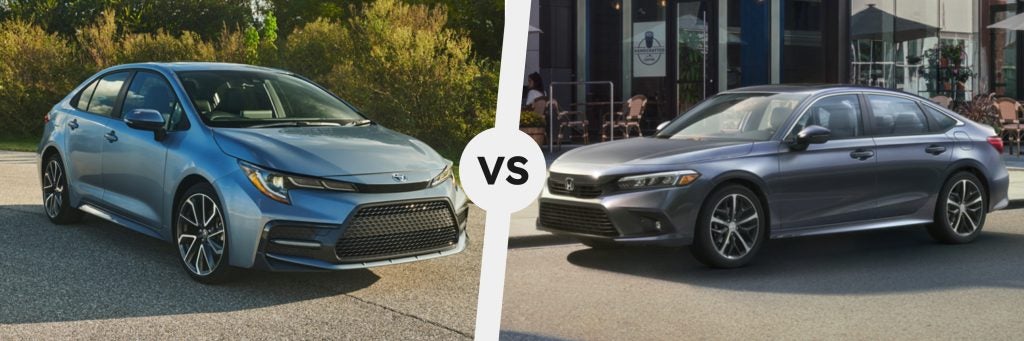
2022 Toyota Corolla vs. 2022 Honda Civic

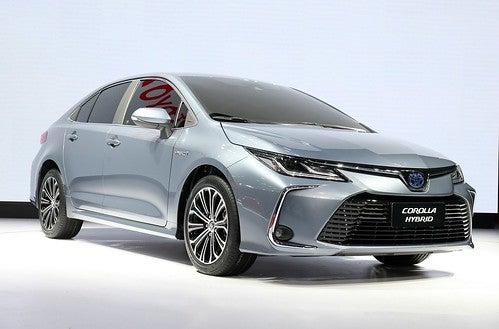
The compact sedan world has benefited from models such as the Toyota Corolla and the Honda Civic. If you're on the hunt for your next style-forward and city-ready sedan in Jacksonville, Florida, you have your work cut out for you. Let's explore how the 2022 Corolla and Civic compare and why we prefer the Toyota. more Trim Levels The 2022 Toyota Corolla and 2022 Honda Civic each have a range of trim levels that allow you to find a price point and style that work for you. As you progress through these trim levels, both models grow more luxurious and offer more exciting features. The 2022 Toyota Corolla has nine trim levels: L. LE. Hybrid LE. SE. SE Nightshade Edition. SE Apex Edition. XLE. XSE. XSE Apex Edition. The 2022 Honda Civic has four trim levels: LX. Sport. EX. Touring. As you can see, the Corolla offers the highest level of customization — a top attribute for drivers who know what they want from their sedan. Let's take a closer look at what these models and their trim levels have to offer. Horsepower and MPG The Corolla and Civic offer unique performance styles that set them apart. The Corolla starts its lineup with a 139-horsepower four-cylinder engine, while the Civic sports a 158-horsepower four-cylinder engine. Both models offer more powerful four-cylinder engines on their respective sport-inspired trim levels. Though the Civic offers a little more upfront strength, the Corolla makes itself the perfect model for commuters and drivers with busy schedules because of its hybrid powertrain. If you want to take your fuel economy to the next level, opt for the 2022 Corolla Hybrid LE. This model allows you to get up to 53 mpg in the city and 52 mpg on the highway. The Civic gets up to 31 mpg in the city and 40 on the highway. However, it does not offer a hybrid powertrain. Value If you want to save some money on your next compact sedan, we suggest going with the 2022 Toyota Corolla. The 2022 Corolla has a starting MSRP of $20,075. The 2022 Honda Civic sedan is notably more expensive as it has a starting MSRP of $22,350. This price difference of over $2,000 and the Civic's ability to save you more gas money during your daily drives with its superior available fuel economy may be all you need to decide which model is the right one for you. Seating Capacity Both the Corolla and the Civic are five-seater compact sedans. Though the Honda Civic offers more room for rear-row occupants, the Corolla aims to keep its front-row riders more comfortable. The Civic's sporty focus has left it with bucket seats aimed more at performance than comfort. The Corolla's seats are cozier and better suited for long-distance and frequent drives. In addition, you'll find upgraded SofTex upholstery for the heated front seats at the Corolla XLE's lower price point. You'll have to pay extra to move away from cloth seats with the Civic. To see how roomy the 2022 Toyota Corolla's interior is, consider these measurements: 38.3 inches of front headroom. 37.1 inches of rear headroom. 42 inches of front legroom. 34.8 inches of rear legroom. 54 inches of front shoulder room. 51.7 inches of rear shoulder room. 53.9 inches of front hip room. 51.3 inches of rear hip room. Here are the measurements for the Honda Civic's two rows: 39.3 inches of front headroom. 37.1 inches of rear headroom. 42.3 inches of front legroom. 37.5 inches of rear legroom. 57 inches of front shoulder room. 56 inches of rear shoulder room. 54.3 inches of front hip room. 48.9 inches of rear hip room. As you can see, the Honda Civic pulls ahead for drivers who need the most space in the back seat. However, the tradeoff of the Toyota Corolla's most comfortable front row makes it a top choice for drivers who want to treat themselves after a long day at work. Technology The 2022 Toyota Corolla and Honda Civic include impressive technology features to improve your drives. Each model starts its lineup with a 7-inch central touch screen that offers Apple CarPlay and Android Auto compatibility. You can use these programs to connect your smartphone directly to your sedan's smart screen so you can easily access many of your favorite phone apps and features. You can get a larger 8-inch touch screen in your Corolla by moving up to the second trim level, the LE. A built-in Amazon Alexa digital assistant comes standard with the Corolla as well. The Corolla comes standard with a six-speaker audio system, while the Civic gives you a four-speaker system. If you're an audiophile looking for the best sound from their sedan, upgrade to the Corolla's nine-speaker JBL sound system, which is available for the XLE, SE, and XSE. The Civic only offers its premium sound system at its top-of-the-line Touring trim level. Smart Safety The Corolla and Civic each offer advanced safety features to keep you safer on the road. Each Corolla comes with Toyota Safety Sense 2.0, which is an extensive collection of driver-assist technologies that include: Pre-Collision System with Pedestrian Detection. Lane Departure Alert with Steering Assist. Automatic High Beams. Road Sign Assist. Lane Tracing Assist. Full-Speed Range Dynamic Radar Cruise Control. You can further upgrade your Corolla with the available Blind-Spot Monitor with a Rear Cross-Traffic Alert for more coverage from your intelligent safety systems. The Honda Civic offers a similar set of offerings through its Honda Sensing suite. Each model comes equipped with features such as: Collision Mitigation Braking System. Road Departure Mitigation System. Adaptive Cruise Control with Low-Speed Follow. Lane-Keeping Assist System. Forward Collision Warning. Lane Departure Warning. As you can see, both models offer an impressive number of advanced safety features. One model happens to give it to you for a more reasonable price than the other. Though it's a tight race, the Toyota Corolla pulls out ahead of the Honda Civic for the victory. If you want to discover everything that makes the 2022 Toyota Corolla a great car, be sure to visit Keith Pierson Toyota in Jacksonville, Florida, and take a test drive. Once you're behind the wheel of the new Corolla, you may quickly understand why so many people choose the model for their commute year after year. Images via toyota.com and honda.com

7910294574_f228ddd8ee

Guide to Car Filters

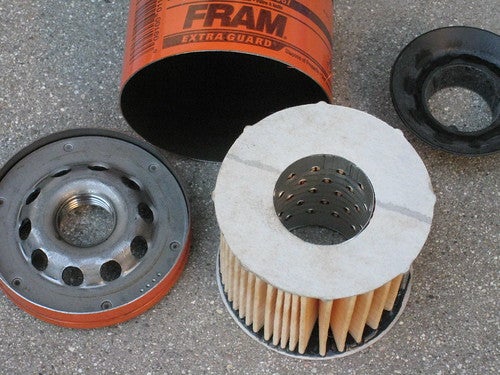
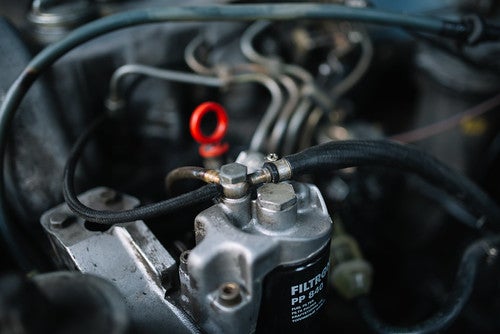
When you buy a new or used vehicle from Keith Pierson Toyota, it will run as smoothly and efficiently as the day it left the factory. But, to keep your car driving like new, it needs to have regular maintenance and servicing. An important element of servicing is having the filters cleaned or replaced. Dirty and clogged filters can affect your car's performance, fuel economy, and even the air that you breathe in the cabin. In this article, we'll take a look at the different types of filters, what they do, and why you need to have them replaced regularly. Types of Car Filters Image via Flickr by joe_no_say Every gasoline- or diesel-powered car has four main filters, or five if it has an automatic transmission. They are the engine oil filter, engine air filter, fuel filter, cabin air filter, and if applicable, a transmission filter. Your car's filters all have the same basic purpose: to catch impurities and ensure the free flow of fluids and air. This includes capturing dirt and contaminants in the car's fuel or oil and removing dust and impurities from the air. Your car needs to breathe as much as you do, and if you don't have the filters replaced regularly when you drive the Jacksonville roads, they will become more and more clogged until they don't work properly. Eventually, that will affect the engine's efficiency and impact the air quality inside your vehicle. Your car will run better and use less fuel if your filters are changed regularly. Oil Filter Your car's engine operates at very high temperatures as the various parts move together to make the vehicle run. Engine oil is essential to lubricate all the moving components to reduce friction and absorb heat from the engine. This ensures the car runs at its best and most efficient, and reduces wear to prolong the life of your engine. As the oil circulates, it can pick up contaminants, such as dirt, metallic particles, and oxidized oil. The oil filter catches these impurities and cleans the oil, so it can continue to circulate efficiently. The filter has sufficient capacity to hold all the impurities while remaining completely functional until the car is due for an oil change. If you wait too long to change your oil filter, it will eventually allow contaminants to pass through. That can result in poor performance, the premature wear of engine components, or even engine failure, meaning an expensive repair. Signs your filter is overdue for replacement include a sputtering or jerky engine, metallic engine noises, and a drop in oil pressure. You should change your car's oil filter (along with the oil) every 3,000 to 7,000 miles, depending on your driving habits and your vehicle's age. The climate in Jacksonville, Florida, can be quite harsh on your engine, so more frequent changes would be preferable. Fuel Filter Fuel is clean when it leaves the refinery, but by the time it has passed through delivery trucks and gas station tanks, it can become contaminated before it even gets to your vehicle. Your car's engine depends on the clean delivery of fuel via the fuel pump and injectors to run well. The fuel filter is a small cartridge that fits inside the fuel line and is designed to catch any impurities before it passes through to the injectors. It helps protect the fuel injectors and maintain the performance and life span of your engine. When the fuel filter becomes obstructed, the flow of fuel is reduced and the pump has to work much harder to draw fuel. You might have trouble starting up your car, notice poor acceleration, or experience misfiring and stalling. The abrasive nature of contaminants in the fuel can cause excessive wear, damage delicate parts, and cause the failure of the fuel pump and injectors. It's generally recommended to replace the fuel filter after 30,000 miles or two years. Check your car's manual or visit our service department at Keith Pierson Toyota for advice. Engine Air Filter For an internal combustion engine to work, it needs a combination of fuel, oxygen, and sparks. The air flowing into the engine needs to be clean for the combustion process to work effectively and to give you efficient power delivery. Air comes into the air intake from the front of the car as you drive. The air filter is situated just behind the intake under the hood and is designed to keep out road grime, dust, sand, bugs, water, and anything else that comes in through the grille from the Jacksonville highways. A clogged air filter can lead to an incomplete combustion process, causing your engine to sputter, blow out black smoke, and use more fuel. This filter is one of the easiest components to remove to clean or replace. Transmission Filter If your car has an automatic transmission, it will also have a transmission filter located just above the transmission fluid pan. The transmission filter prevents dirt, debris, and metal particles from getting into the transmission gears. Changing the transmission filter is a job for one of the expert technicians in our Keith Pierson Toyota service center. Signs that the filter needs to be replaced could be clunky gear changes, strange noises when shifting gear, or a burning smell from the transmission. Cabin Air Filter The cabin air filter is part of your car's heating and ventilation system and prevents air pollutants such as dust and pollen from entering the cabin. If your vehicle has a carbon-activated cabin filter, it will also help keep out exhaust fumes and other odors. The cabin filter helps you breathe cleaner air and extends the life of your car's HVAC system. When you bring your car for a service at Keith Pierson Toyota, our technicians will check and replace the filters according to the manufacturer's recommended schedule. Contact us today to schedule a service or to ask our advice if you have any concerns about your car's filters.

toyota corolla hybrid

Avalon Vs Corolla

If you want to upgrade your Jacksonville, Florida, commute with a new sedan, the Toyota's Avalon and Corolla models have a lot to offer. Their trim configurations and amenities are so many that you might find it challenging to sift through the many features of both vehicles. That's why we've put together this comparison to help you better understand these exceptional cars and make an informed decision. Curb Appeal Image via Flickr by SAUD AL - OLAYAN Toyota's full-size sedan, Avalon, comes in six trim levels, three of which use gasoline power and the rest a hybrid powertrain. Every trim features an aggressive front fascia marked by sharp lines and signature grilles. LED reflector beam headlights and LED daytime running lights also come on every variant. Yet the XSE Nightshade Hybrid and the Touring offer stylish smoked chrome bezels. A low, wide stance, side body contours, and 17-, 18-, or 19-inch alloy wheels in various styles give the Avalon its athletic profile. At the same time, a rear spoiler reinforces the elegance and performance of the rear fascia and its LED taillights. The compact Corolla's seven trims pop with sporty styling cues, from the aggressive front fascia — featuring black front grille with a sport mesh insert — to the low-profile 17- and 18-inch wheels. There are also subtle design differences across the board, though only one trim uses a hybrid powertrain. What's more, The Corolla comes with LED headlights and LED accent lights, which let you see and be seen. Corolla's Apex draws on sport-inspired performance, while the Nightshade boasts black-out trim that turns heads along the boulevard. The top trim, XSE, comes with signature amenities such as a bronze body kit, black flow-form wheels, and a lowered, sport-tuned suspension. Interior Comfort and Convenience Slipping into the Avalon cabin, you're enveloped in the ergonomic comfort of Toyota's SofTex upholstery, a durable yet beautiful synthetic material. The top trim, Limited, comes with premium leather for a refined look and feel. Also, every Avalon has a leather-wrapped steering wheel with all your infotainment and cruise controls. Genuine aluminum and wood trim, ambient lighting, and heated and ventilated seats create a sophisticated ambiance. In-vehicle tech runs through the 7-inch touch screen on the base model and a 9-inch touch screen on the upper trims. Apple CarPlay, Android Auto, and Bluetooth enable hands-free operations. Further, a 10-inch head-up display projects critical driving data onto the windshield before you. Two USB-A and two USB-C ports, plus a wireless charging pad, keep everyone's devices connected and charged. Inside the Corolla, you get premium cloth upholstery on the lower trims, SofTex upholstery on the middle trims, and premium leather seating on the top trims. In addition, a heated, leather-wrapped steering wheel and heated seats come standard on the higher trims and are available as part of a package option on the lower trims. In-vehicle tech operates via the same 7-inch touch screen on the lower trims and an upgraded 8-inch touch screen on the middle and advanced trims. You also get Apple CarPlay, Android Auto, and Bluetooth technology to sync your smartphones. Performance Under the Avalon's hood, you have two engine options. The gas unit uses a 3.5-liter V-6 engine with dual overhead cams, 24 valves with dual injection, and variable valve timing technology. Toyota pairs this engine with their Direct-Shift 8-AT eight-speed electronically controlled automatic transmission. This powertrain puts out an impressive 301 horsepower and 267 pound-feet of torque. And when fitted with this engine, the Avalon posts 22/31 city/highway mpg ratings. Avalon's hybrid powertrain combines a 2.5-liter Dynamic Force four-cylinder engine and dual overhead cams with 16 valves with direct injection and variable valve timing technology. Enhanced by the 88-kW electric motor, this unit produces 215 net hybrid system horsepower and achieves up to 44 miles per gallon. The Corolla features three available engines. The base models have a 1.8-liter four-cylinder engine with dual overhead cams and 16 valves with Valvematic technology. This engine is paired with a continuously variable transmission to produce 139 horsepower and 126 pound-feet of torque. When equipped with this four-cylinder, the Corolla gets 30 mpg and 38 mpg in the city and on the highway, respectively. You can opt for the 2.0-liter four-cylinder engine with dual overhead cams and 16 valves with dual variable valve timing technology. Also, you have the option for a continuously variable transmission or a six-speed manual transmission. This powertrain puts out 169 horsepower and 151 pound-feet of torque. You can expect your Corolla to clock 30 mpg if it uses this engine — an efficient return for any sedan. The hybrid powertrain includes a 1.8-liter four-cylinder aluminum engine with dual overhead cams and 16 valves with variable valve timing technology. It also uses an 88-kW electric motor and an electronically controlled continuously variable transmission to supply 121 horsepower and 105 pound-feet of torque. That said, what it lacks in power, it makes up for with efficiency: A hybrid Corolla returns an incredible 53 mpg in the city. Driver-Assist Technology Your Avalon comes with Toyota Safety Sense 2.5+, a suite of driver-assist systems designed to help you drive safe. The suite includes pre-collision with pedestrian detection, full-speed range dynamic radar cruise control, blind-spot monitor, rear cross-traffic alert, and road sign assist. These systems use radar and optical sensors to monitor the car's surroundings, alerting you to potential hazards. In some cases, these systems will intervene with braking and steering to help you avoid a possible accident. Other times, they help you stay within marked lanes and keep you at a preset speed and distance while in traffic — protective measures to reduce driver fatigue. In contrast, the Toyota Corolla sedans come with Toyota Safety Sense 2.0, an earlier version of the suite described above. One significant change is that the blind-spot monitor and rear cross-traffic alert systems are only optional, not standard as on the Avalon. We hope this article helped you better understand what makes the Avalon and Corolla such great vehicles. At Keith Pierson Toyota, we know what sedan drivers want. That's why we stock an expansive inventory of Avalons and Corollas, all loaded with features you'll love and at prices to fit any budget. If you're ready to elevate your Jacksonville commute, we invite you to browse our inventory online or stop by our dealership at any time. One of our friendly, professional staff will show you the different Avalon and Corolla sedans and let you take your favorite for a test drive.

50207081341_dc4b823d3a

Different Fluids in Cars

Much like your body has various vital fluids to keep you alive and running well, so does your car. Gasoline is one of the main ones most people know about, but other fluids are just as critical. Knowing what they are and how to check them is imperative to keeping your vehicle in tip-top shape. Taking your vehicle to a Jacksonville service department, such as Keith Pierson Toyota for routine maintenance, including checking the fluids in your vehicle, will prolong its life and improve performance. Motor Oil Image via Flickr by shixart1985 The second most well-known automotive fluid is motor oil. Motor oil keeps all the movable parts in your engine well-lubricated and reduces friction. Without gas, your vehicle doesn't run, but without oil, the engine will be ruined. Getting oil changes within the recommended time and mileage is crucial as dirty, old oil does not function well, exposing your engine to unnecessary wear and tear. To check your oil, find the dipstick labeled oil or with a picture of an oil can. Usually, this is located in the front of the engine but can be on the back too. Pull the dipstick out, wipe it clean, put it all the way back in and then remove it again. Look at the end of the dipstick for indicators on the bottom of the dipstick for the range of acceptable levels. Make sure the level of the oil marks on the dipstick is within the acceptable range. If it's below or very close to the low bottom line, you should add oil immediately. It could also mean your engine is burning oil or has an engine oil leak, both of which may indicate the need for maintenance. Transmission Fluid Transmission fluid is usually red or reddish and should be a thicker liquid. This fluid is responsible for keeping your gears well-lubricated, allowing for smooth shifting. Without it, or if it is past its usefulness, you could damage or ruin your transmission, resulting in a very costly repair. For most vehicles, checking the transmission fluid is similar to checking your oil. It will typically have its own dipstick, usually a different color than the oil dipstick. Make sure the car is at the normal operating temperature on a level surface. While still running, remove the dipstick, wipe it clean, and reinsert it all the way. Remove the dipstick and check the level compared to the markings on it. If it's low, add the requisite amount of fluid. If it's discolored or has metal shavings in it, replacing the fluid or having it serviced by a mechanic is your best bet. Brake Fluid This light brown or yellowish liquid provides the hydraulic pressure needed to operate your brakes successfully. The reservoir is usually on top of the engine, towards the rear of the engine compartment. The canister that holds the brake fluid is typically on the driver's side of the vehicle by the brake master cylinder. It will usually be labeled brake fluid or have an icon that indicates that it is the brake fluid canister. To check brake fluid, remove the cap and make sure it's about a half-inch from the cap. If it's low, add until it gets to this level. Pay attention to the color as well. If it's black, that indicates the fluid needs to be changed, while metal specks indicate issues with the braking system that need to be addressed. Anti-freeze The purpose of this bright green or bright yellow fluid is to keep your radiator from freezing up in the winter and overheating in the warmer months here in Jacksonville. To check this, you'll need to find the radiator cap, which may read cooling system, or have the warning to be careful not to open when hot as the system is under pressure. This one is as simple as making sure the fluid is full to the top. There are very different types of coolant that should not be mixed, so make sure you know what's in your vehicle and, if adding to it, only add the same kind. Trust the professionals at Keith Pierson Toyota to take care of this for you to reduce the risk. Power Steering Fluid A vast majority of vehicles on the road today are controlled via power steering, thus requiring power steering fluid, typically reddish or clear in color. Again, this uses hydraulic pressure to help turn the wheels and needs power steering fluid to operate properly. The reservoir is can be found under the hood closer to or on the passenger side, although not always. The cap will usually say steering fluid right on it. Power steering fluid can typically be checked by looking at the side of the opaque reservoir, which will have low and high indicators right on it. All you need to do is look at the side of the reservoir and make sure the fluid level falls within the acceptable range markings. Air Conditioning Coolant Probably more commonly referred to as Freon, this brightly colored fluid allows the air conditioning system to work. Living in Jacksonville, Florida requires working air conditioning in your vehicle. This is a dangerous fluid to work with, so it is probably better to leave this one up to the professionals at Keith Pierson Toyota. To check your coolant, you'll need a special tool that measures the pressure of the air conditioning system. You'll find the low-pressure port, just a cover that screws on and off and then screw the pressure measuring gauge onto the port. If the pressure is low, add more according to the manufacturer's instructions or those on the Freon can. Windshield Wiper Fluid While windshield wiper fluid may not be critical to the overall operation of your vehicle, it does serve the important purpose of keeping your lines of vision open. This one is typically easy to check and fill. It'll usually be along the edge of the engine compartment and have a windshield wiper symbol on it. Simply remove the cover and add the fluid until full. Maintaining proper fluid levels and quality is essential to the longevity of your vehicle. Always make sure that the fluids are at the appropriate level and in the proper condition to best service your engine. If not, add to them or replace them, either yourself or at a mechanic, to keep your engine running in peak condition. Visit the service team at Keith Pierson Toyota to have your fluids checked or for any other routine maintenance needs. Give us a call at 888-461-3879 or schedule our services online.

2552715259_e7f2d35445

ToyotaCare

When you buy a new Toyota, you get a high-quality, reliable vehicle. You also get peace of mind and confidence on the road. You can enjoy your new car knowing your vehicle's routine maintenance is covered for two years or 25,000 miles. You can also rest assured that you'll have help in the event of a roadside emergency. Visit Keith Pierson Toyota here in Jacksonville, Florida, and test-drive the Toyota lineup of cars, minivans, trucks, crossovers, and sport utility vehicles. Know that ToyotaCare is here for you no matter which vehicle you choose. What Is ToyotaCare? When you buy a new Toyota, you get a three-year/36,000-mile warranty that covers everything except normal wear and tear and routine maintenance. Toyota owners also get impressive ToyotaCare coverage, a comprehensive no-cost maintenance plan for every new vehicle. It covers all manufacturer-recommended routine maintenance tasks for the first two years or 25,000 miles in service, depending on which milestone you hit first. Maintenance tasks under ToyotaCare take place every 5,000 miles or six months. Here are the routine services Toyota recommends for your new vehicle in the basic ToyotaCare coverage: At six months or 5,000 miles, technicians perform a tire rotation, comprehensive inspections, and fluid adjustments on all systems. At 12 months or 10,000 miles, your vehicle gets an oil change, tire rotation, inspections, and a fluid adjustment. At 18 months or 15,000 miles, the appointment includes tire rotation, inspections, and a fluid adjustment. At 24 months or 20,000 to 25,000 miles, you get an oil change, tire rotation, inspections, and a fluid adjustment. For your confidence and peace of mind, all work under the ToyotaCare plan is performed by Toyota-trained professionals and includes genuine Toyota parts. These practices ensure your warranty coverage stays in place and the manufacturer stands behind the work. ToyotaCare will even send you friendly maintenance reminders so you can schedule your service appointments and keep your vehicle up to date. When you have your car maintained at a Toyota Service Center like ours here at Keith Pierson Toyota, we keep a complete service history on your vehicle. The records are available in the owner's section of the Toyota website if you ever need them. Having an easily accessible record of your car's maintenance history is also important if you ever decide to sell the vehicle. ToyotaCare doesn't stop at covering routine maintenance. You also get 24-hour, seven-days-a-week Roadside Assistance service for the first two years, no matter how many miles you drive. Help is at your fingertips in any of these vehicle emergencies: Jump-starting a dead battery. Getting locked out of your car. Running out of gas. Replacing a flat tire with your inflated spare. Towing your vehicle to the nearest Toyota dealership or the dealership of your choice within 25 miles of the nearest Toyota dealership. Winching your vehicle out of a ditch, mud, sand, or snow back onto the road. Though your new Toyota is one of the most reliable vehicles on the road, some things are beyond your control. Road conditions, human error, weather, and other factors can still leave you stranded. If that happens, your ToyotaCare plan has you covered every day of the calendar, around the clock. Your ToyotaCare roadside assistance is good even if another member of your family is driving the car, so the peace of mind extends to times when other family members are behind the wheel. Ask any parent of a teenage driver, and they'll tell you the value of this roadside coverage. What Is ToyotaCare Plus? Image via Flickr by wallen7 If your car has fewer than 31,000 miles and is within 37 months of the date it first went into service, you have the option to purchase ToyotaCare Plus. This plan includes coverage for the same maintenance tasks and roadside assistance as ToyotaCare but for the first four years or 45,000 miles from the date the vehicle goes into service. ToyotaCare Plus also includes additional maintenance tasks such as transmission, driveshaft, and fuel line system inspections every 15,000 miles starting at 30,000. You have several options to choose from when you purchase your ToyotaCare Plus plan, so you can select one that suits your driving habits. The Federal Highway Administration estimates men drive 17,000 miles each year and women drive about 10,000. If your driving habits put you on the higher side of those averages, you might want to choose a ToyotaCare Plus plan with a higher mileage level. If you don't drive that much, a plan with a lower mileage limit might be just fine. At Keith Pierson Toyota, we can help you assess your driving patterns to choose the best plan for you and your new vehicle. These include: Three years and either 35,000 or 45,000 miles. Four years and either 45,000 or 60,000 miles. Five years and either 60,000 or 75,000 miles. Why Do You Need ToyotaCare? While most new car manufacturers provide warranties on their vehicles, it's essential to understand those warranties cover defects in materials or workmanship and not routine maintenance. ToyotaCare takes your car's warranty protection an extra step by covering free maintenance for two years or 25,000 miles and providing roadside assistance. ToyotaCare Plus can add years and miles to that protection at a reasonable price. How Keith Pierson Toyota Can Help ToyotaCare Clients Here at Keith Pierson Toyota's service department, we're happy to take care of ToyotaCare clients, no matter where you purchased your vehicle. Our friendly and knowledgeable team has all the training necessary to use the latest technology to service your car. We pride ourselves on technical competency and outstanding customer service. At Keith Pierson Toyota, we want you to enjoy every minute and mile of driving your car, so whether you're getting routine care or significant repairs, we make every effort to get you back on the road quickly and efficiently. Service is available seven days a week with hours to accommodate your busy schedule. Contact us today, and let us show you what it's like to get world-class Toyota service in Jacksonville.

new toyota jacksonville fl

What is the Best Car for A College Graduate?

We congratulate students upon graduating college. You've put in years of study and earned your degree in a field you enjoy. So what comes next for the college graduate? You can say goodbye to the dorm and campus life and begin the next phase of your life. That means you must find your own place to live, which necessitates a job to pay for it, and of course, now you need a car to get you to and from work. Welcome to adulthood. Keith Pierson Toyota understands what the next few years represent to recent college graduates living in Jacksonville, Florida. So many former students have loans to pay off, jobs to find, and, yes, cars to buy to make adult life possible. So, we've created this list of the best cars for college graduates to help you make an informed decision that enables you to build a solid foundation for the next decade or longer. Should You Buy a New or Used Car? Image via Flickr by Jyle Dupuis New graduates ask this question a lot, and there's no right or wrong answer. A new car offers you more long-term reliability. You get to drive the vehicle in its peak condition, without any prior wear and tear, and with the protection of a manufacturer's warranty. Your new life requires a dependable car. If you'd rather not worry about repairs and maintenance, buying a new car makes sense. In addition, Keith Pierson Toyota currently offers a $500 rebate to college graduates. New cars cost more money, though. They also depreciate faster, making them less valuable in the short term. So if you plan on upgrading your vehicle in the next three years, you could end up underwater on a new car loan when you go to trade it in. In that case buying used can save you money. New cars depreciate the most during the first three years of ownership. Some brands will lose as much as 40% while Toyota models depreciate around 20%-25% over the same timeframe. Purchasing a used car that's beyond this depreciation point will save you money at the time of purchase. After a few years, the used car will hold its value better, making it worth more when it's time to trade-in and trade up. So, when shopping for cars, buying a new or used Toyota makes more sense than other brands. Many dealerships sell extended warranties on used cars, protecting you against future breakdowns and repairs. For example, at Keith Pierson Toyota, we have an expansive inventory of used Toyota models. Also, we offer a lifetime warranty on all of our used cars that have less than 50,000 miles and are under 10 years old. You won't find coverage like that at other dealerships in Jacksonville. Features To Look For in a Used Vehicle As a recent college graduate, are not likely to have an extensive driving history. However, experience comes with time, and that's okay. Statistics show that drivers under the age of 25 are three times more likely to be involved in a crash than older drivers. Therefore, you should look for a safe vehicle. Car safety comes in many forms, such as seat restraint systems, air bags, crash crumple zones, and steel cabin cages. Modern vehicles have advanced mechanical systems like anti-lock braking systems that help reduce the risk of an accident. In addition, many cars produced in the last 5-10 years have driver-assist technologies that alert drivers to certain hazards and help mitigate or prevent crashes. New graduates should be concerned with fuel economy as well. After all, you've got student loans to pay off along with rent, utilities, and other bills you didn't have while in school. Why pay more in gas if you can avoid it? In addition, most young people connect with the world through technology. Recent graduates have social media accounts on multiple platforms, use various audio and video streaming services, and have spent most of their lives searching the web for answers. In this scenario, finding a car with the latest connectivity makes sense. Toyota Prius The Toyota Prius may not win the Indy 500, but when it comes to safe, reliable, economic performance, the Prius checks all the boxes. You can find a used Prius for around $15,000 that has the advanced safety and driver-assist features to keep you safe and the in-vehicle tech to keep you connected. Plus, the Prius' hybrid powertrain can get you up to 50 mpg, which will keep your fuel costs low. A new Toyota Prius starts at around $24,000, keeping your monthly payments affordable when you decide to take out a loan. The latest hybrid range and charging technology can turn your daily commute entirely electric, too, saving you even more money. Cutting-edge connectivity and driver-assist systems make the Prius a great option for new graduates. Honda Civic Honda has long had a reputation for building dependable vehicles, and the Civic lives up to the brand expectation. You can find a late-model Honda Civic for under $20,000 if you'd rather buy a used model. While the Civic is not as inexpensive as the Prius, you will still have an affordable monthly payment. Also, the Civic comes in a gas-only powertrain, which is the most significant difference between the Civic and the Prius. If you want a new Civic, be prepared to pay around $25,000, but as Honda doesn't offer a hybrid Civic model, you won't see the same fuel economy. Toyota Corolla The Corolla comes in both sedan and hatchback models. In either case, you can find a late-model Corolla with low mileage for under $20,000 that has modern technology, driver-assist systems, and over 40 mpg on the highway. For instance, Keith Pierson Toyota has several Corolla models from 2017 and newer with less than 50,000 miles and priced under $20,000. As you take this next important step in life, you need a vehicle you can rely on. At Keith Pierson Toyota, we have a vast inventory of new and late-model Toyota cars, trucks, and SUVs with the latest tech, safety features, and comfortable amenities that fit your budget and lifestyle. In addition, we have many other brands available in our used inventory that make sense for new graduates. We encourage you to browse our inventory online. Then, when you're ready for a personalized demonstration, you can visit our dealership on Youngerman Circle. One of our friendly, professional staff will show you around and let you test drive your favorite Toyota model.

tire care tips toyota dealer keith pierson toyota

Tire Care Tips

A car is a complicated piece of machinery. Almost every piece and part has a job to do to keep the car moving forward. Some parts, like the tires, are more important than others. Keeping your tires in the best possible condition can improve fuel efficiency and allow you to feel safer on the road. The team at Keith Pierson Toyota has put together this guide of tire care tips to show what you can do to help. How Long Do Tires Last? Although their technology has improved tremendously over the years, tires don't last forever. Unfortunately, there is no single answer to how long they last. Tires will vary from manufacturer to manufacturer and are impacted by variables such as driving style, climate, and road conditions. Tires on a car that's driven around town are probably going to last longer than those on a vehicle driven consistently at high mileages across the country. If you drive on average between 12,000 and 15,000 miles a year, you should be able to get about three to five years out of your tires, according to both Bridgestone and Goodyear. As your tires age, that's when you should pay particular attention to some of these preventive care tips. You want to replace tires before they get into critical condition. Michelin says that tires should never be driven beyond 10 years no matter their condition. Avoid the Potholes Image via Flickr by JoshuaDavisPhotography You can't control the conditions of the roads you drive, but you can adjust how you approach them with an eye toward extending the life of your tires. Stay vigilant for potholes and other types of road hazards, and try to avoid them if you can. At a minimum, take them at lower speeds to reduce the wear and tear on your drywalls. Another preventive measure for tire wear is planning out your route so you can be sure you're driving on roads in good condition. Don't drive on roads that you know need smoothening, and stay away from uneven or unpaved surfaces. Every time you drive over or through a roadside hazard, you can accelerate tire damage and reduce a tire's life span. Certain driving habits can also hasten the decline of your tires. Consistently driving at a high rate of speed, hitting the brakes hard, and going around corners with reckless abandon can all cost you tread in the long haul. Eliminate these habits and you may add miles to the life of your tires. Keep Them Filled Inflation is bad for the economy, but it's good for the lifespan of your tires. Each tire comes with a recommendation from the manufacturer on how many pounds per square inch of air they should carry. Falling substantially short of or going over that recommendation can be disastrous. Under- or over-inflation creates unnecessary friction at the point of contact between the tire and the roadway, which leads to greater wear on the rubber. Under- or over-inflation can also cost you at the pump — as you won't be getting optimal gas mileage — or cause safety hazards. That said, you cannot check your tire pressure too often; a good rule of thumb is to take out the tire gauge at least twice a month. Rotate Regularly Tires do not exhibit wear and tear uniformly. They break down at different rates and in different patterns, based largely on their position on the car and whether you have an all-wheel drive or front-wheel drive vehicle. Those transmissions distribute power and deal with force in different ways. Regularly rotating your tires can help extend their lifespan by making sure that the wear is distributed evenly across all four tires. If you always keep your tires in the same position, some will age more quickly than others and, as a result, might need replacements sooner than you think. Rotating your tires at regular intervals is a good habit to start. Keep the Car in Alignment Your tires work with the car's suspension as a system, with the elements operating together in harmony as the car goes down the road. Everyday driving or just hitting a pothole wrong can cause the system to fall out of alignment. This means the tires are no longer sitting straight in the suspension system and you might have to angle the steering wheel to make sure the car moves forward as normal. Let this go long enough and you will start to see your tires wear unevenly, which reduces their lifespan. If your car's steering wheel vibrates, or the car drifts right or left even though you're on a straight road, it might be time to invest in a professional realignment. Doing so will help extend the useful life of your tires. Maintain Balance Another structural issue involving the suspension that can cause premature tire wear is when your tire or wheel assemblies carry different weights. As you might imagine, having one assembly weigh more or less than the others can cause imbalances in how the car runs. Unfortunately, it's your tires that shoulder this imbalance, leading to uneven wear and tear. Having an unbalanced car can cause other mechanical problems. Unusual vibrations inside the car, either in the steering wheel or through the seats, can be a prime indication of balance problems. Keeping your car in balance can help keep your tires in service longer. Keep Your Car in Top Shape at Keith Pierson Toyota Whether you need routine maintenance or unexpected repairs, trust the service technicians at Keith Pierson Toyota, serving Jacksonville and other areas of North Florida. We can help keep your car on the road for as long as possible. While our team specializes in Toyota models, we service cars of any make. Keith Pierson Toyota is a full-service dealership. We offer new Toyota sedans, crossovers, full-size SUVs, and trucks, as well as one of the area's largest inventories of used or pre-owned vehicles from all the major manufacturers. Need help with financing? The experienced professionals in our finance center maintain relationships with major local lenders and can get you a payment that works for your budget. Family-owned and -operated, we offer two years of complimentary maintenance on every new vehicle. Call us or contact us online to discuss your needs. We'd love to see you.

toyotacare in jacksonville fl

What Is ToyotaCare?

If you're shopping for a new vehicle in Jacksonville, Florida, consider getting a Toyota at Keith Pierson Toyota. Toyota cars, SUVs, minivans, and trucks are known to be exceptionally reliable and long-lasting, meaning they make your money go further. However, even the most dependable vehicles still need proper maintenance to stay in good shape for the long haul. Fortunately, Toyota has that covered with its free ToyotaCare plan. Find out more about ToyotaCare in this comprehensive guide. What Is ToyotaCare? Image via Flick r by JLaw45 ToyotaCare is a complimentary auto maintenance program that comes with any new Toyota model. Whether you decide to buy the well-rounded Toyota Camry, the family-friendly Toyota Highlander, or the brawny Toyota Tacoma, this maintenance plan is included in the purchase price of your new vehicle. For almost every Toyota vehicle, ToyotaCare provides free factory-scheduled service for two years or 25,000 miles. It covers maintenance at a six-month or 5,000-mile interval, meaning you'll receive four free services throughout the duration of the program. If you purchase the hydrogen fuel-cell Toyota Mirai, you'll enjoy coverage for three years or 35,000 miles. In addition, your ToyotaCare plan includes complimentary 24-hour roadside assistance for two years and unlimited miles. Your Toyota dealership will provide timely reminders to ensure you won't forget your service dates. They also keep records of all the services your vehicle has undergone. You'll be able to see your car's complete maintenance history in the owners' section of Toyota's official website. ToyotaCare is transferable to private buyers of Toyota vehicles as long as it hasn't expired. Therefore, if you buy a Toyota model that's less than two years old, you may be entitled to free auto maintenance. What Are the Auto Services Included in ToyotaCare? As a beneficiary of the ToyotaCare program, you won't have to pay for standard auto services during a scheduled maintenance visit. These services include: Engine oil and filter changes: ToyotaCare's free oil and filter changes can go a long way in keeping your Toyota's engine in tiptop condition. They ensure your engine will stay clean, cool, and well-lubricated so that it'll be able to run smoothly and deliver peak performance. Besides improving your car's performance, changing your engine oil and filter regularly can also lead to better fuel economy and longer engine life. Tire rotations: Usually, the front tires of a vehicle bear more weight and wear faster than the rear ones. If left unattended, uneven tire wear can lead to poorer handling and braking, which increases your chances of getting into an accident. Regular tire rotations at a Toyota-certified service center can help prevent your tires from wearing unevenly, resulting in better road grip and less frequent tire replacements. Fluid top-ups: Other than the engine oil, your Toyota relies on a variety of other fluids to remain in good working order, such as engine coolant, brake fluid, and transmission fluid. As part of the ToyotaCare program, you'll receive free fluid checks and top-ups with every maintenance visit. Multi-point inspections: While you still have ToyotaCare coverage, you can rest assured your vehicle won't have any undetected issues. When you take your car to a service center for scheduled maintenance, the technicians will perform a multi-point inspection to make sure everything is working properly. If they detect a problem, they'll fix it promptly to prevent it from escalating into a major issue. This can help prevent costly repairs in the future. If you're stranded in the middle of nowhere or get involved in an accident, ToyotaCare provides complimentary 24-hour roadside assistance to help you get out of trouble. This program includes the following services: Spare tire installation. Battery jump-starts. Lockout protection. Emergency fuel delivery. Towing. Winching. What Does ToyotaCare Not Cover? With ToyotaCare, you'll only receive free maintenance once every six months or 5,000 miles. If you want to service your vehicle more often, you have to bear the costs of the additional visits. Also, you need to pay for any auto services that aren't covered under the plan, such as brake pad changes, battery replacements, windshield wiper replacements, or transmission repairs. What Is ToyotaCare Plus? Image via Flickr by crash71100 After your ToyotaCare expires, you can extend your free maintenance plan by opting for ToyotaCare Plus. Unlike the standard program, ToyotaCare Plus comes at a cost. You have three time limits and six mileage options to choose from, which are as follow: Three years or 30,000 miles. Three years or 45,000 miles. Four years or 45,000 miles. Four years or 60,000 miles. Five years or 60,000 miles. Five years or 75,000 miles. To choose the right ToyotaCare Plus plan, you need to take your driving habits into consideration. If you drive more than the average American, who racks up about 12,000 miles a year, you may be better off picking the higher mileage limit regardless of your preferred coverage period. However, if you don't drive often, the lower mileage limit should suffice. Additionally, ToyotaCare Plus includes roadside assistance for the entire duration of your chosen plan. Another benefit of getting ToyotaCare Plus is that it covers more auto services than the standard plan. It includes inspections of the driveshaft, transmission, and fuel-line system, as well as any recommendations outlined in the maintenance plan for your Toyota vehicle. To be eligible for ToyotaCare Plus, your Toyota must be less than 37 months old and have fewer than 31,000 miles on its odometer. If you purchase this plan, you're allowed to cancel it within 30 days as long as you haven't started using the coverage. Similar to ToyotaCare, ToyotaCare Plus is also fully transferable to the next owner. However, you're required to pay a fee of $50 to transfer it. If you're interested in buying a Toyota vehicle, you can view and test drive any of the latest models at Keith Pierson Toyota. Our dealership is the best place in Jacksonville to shop for a new Toyota because of our competitive prices, attractive finance and lease specials, and outstanding customer experience. In addition, we have a state-of-the-art Toyota-certified service center and factory-trained technicians to provide top-notch ToyotaCare services. Feel free to contact us if you have any inquiries.

Image via Pixabay by PhotoMIX-Company

Why Buy Used?

When deciding to buy a car, most people have a set budget and need to make a choice between a new or a used one. While making this choice is a purely personal decision, there are some major advantages that come from choosing the latter. You'll Be Spending Less Money The most obvious reason for buying a pre-owned vehicle is the fact that it's less expensive than when it was new. Although an item losing some of its value after being used is normal, most vehicles have a depreciation rate that's far steeper than the depreciation in quality. It's estimated that cars lose around 20% of their value each year, meaning that a 3-year-old car can cost around 40% of its original value while still being in tiptop shape. Also, if you decide to sell it in a few years, you won't be losing as much money as you would be if you had been its original owner. There are also other ways in which you can save money by choosing to buy a used vehicle instead of a new one. Some unavoidable costs, such as insurance premiums, are proportional to the car's estimated value, so you would be paying much less for a car that's a few years old than for a new one. Also, when buying a new car there are other costs that you need to keep in mind, such as registration fees. When buying a used one, the only thing you have to pay upfront is its asking price. At Keith Pierson Toyota, you have the option to trade in your vehicle to help offset the costs of purchasing one of our used vehicles! It's Better for the Environment While the case for protecting the environment by buying a gas-powered car may seem like a bit of a stretch, buying used instead of new does exactly that. The manufacturing process for making a vehicle from scratch is a very complex one and involves mining prime resources, making components, assembling them, shipping the final product to the dealership, and numerous other steps along the way. When you're buying a vehicle that's already been on the streets for a few years, all those steps have already been covered. From that moment on, the only environmental impact comes from directly using it. You'll Be Getting a Much Better Car Another major advantage that you can benefit from when buying used is the fact that, for the same budget, you can buy a significantly better car. Due to the earlier-mentioned depreciation rate, you can get a premium pre-owned vehicle for the price of a lesser-equipped new one. Even if you have your heart set for a particular make and model, getting a used one instead of a new one can get you many more premium features, like leather upholstery, a more powerful engine, more safety features, extended infotainment functions, and much more. If You Buy From a Dealer, You'll Get a Thoroughly Inspected Vehicle Although a new car comes with a full warranty from the manufacturer, returning to the dealer to fix various faults that may occur is still a major hassle. If you buy a used car from a certified dealer, however, you can be sure that it has been thoroughly inspected by certified technicians and that the odds of something happening to it in the foreseeable future are very slim. Image via Unsplash by shadowmousses Although its original manufacturer's warranty may have expired, when buying a used vehicle from a dealer you usually benefit from the dealer's own warranty. Also, you can be sure it's in their best interest that you're satisfied with your purchase because they want you to choose them again in a few years' time when you are ready to change your vehicle again. You'll Know Much More About That Particular Model When buying a new car, you're usually getting the latest model. While this has its obvious advantages, such as you getting the latest automotive technology, that particular model hasn't yet passed the test of time. When that car model you're buying has been on the market for a few years, you can extensively research it online, consulting user and manufacturer statistics to determine how reliable and safe it is. Having the opportunity to research user and expert reviews can help you make a better decision, as you can research multiple models and see which one is more appreciated by its owners and by industry experts. You also have access to plenty of advice on how to get the most out of your vehicle, how to take advantage of various upgrade and tuning options, and other similar perks. It Can Improve Your Credit Score If you decide to buy a used car with the help of an auto loan, not only will the payments likely be more affordable than for a used one, but you can also improve your credit score. The most important aspect of your credit score is making all your payments on time; simply doing that for the duration of your loan can work wonders for your rating. Your credit score is also influenced by your credit mix, which means that it's important to show you can manage multiple credits at the same time. Adding an auto loan to your existing loans can improve this credit mix, helping you access better credit conditions in the future. Modern Cars Tend To Last Longer The main concern for people who consider buying a used vehicle is the fact that it may break down more quickly than a new one. While this was a real issue a few decades ago, modern cars last longer, with modern cars lasting an average of 11.8 years. This means that if you buy a pre-owned car that's a few years old you can realistically expect it to function without any major issues for about a decade. It also means that you may be getting a good deal if you decide to sell it in a few years. While buying a new car has its own obvious advantages, there are still plenty of reasons why you'd be better off buying a used one. If you're looking for a large selection of pre-owned vehicles in great condition, visit us at Keith Pierson Toyota and check out our used car inventory! We also are always cycling through various used specials, so be sure to check back frequently!

toyota-5909443_640

2021 Toyota 4Runner

The 2021 Toyota 4Runner marks another year for this long-running, highly dependable and flexible SUV. It was introduced to the market in 1984, which makes the model almost 40 years old. Toyota has kept the 4Runner current while building its legacy as a model that can take a beating and keep running for a long time. When you're ready to buy a new 4Runner, or any Toyota for that matter, come to Keith Pierson Toyota to check out what's available. In the meantime, here's a look at what the 2021 4Runner has to offer. The 2021 4Runner: A Veteran SUV That's Kept Current Image via Pixabay by joshuavanhierden Toyota's introduction of the 4Runner in 1984 represented an entry into the SUV market in an era where SUVs weren't much different from pickup trucks. The 4Runner was a departure from the rough-riding four-wheel-drive vehicles that weren't comfortable, handled poorly, and had spartan interiors. The 4Runner offered the desired qualities of an SUV, was smaller and easier to handle, and had four-wheel drive, a powerful engine, and a nicely appointed interior. Toyota has kept updating the 4Runner through the years, but there's not a lot of change from 2020 to 2021. For 2021, the body retains its boxy, upright shape and gets a little more lighting in the form of LED low-beam headlights and fog lamps, but not much else has changed. The real changes come in the form of the new Trail special edition models that make the innate capabilities of this on- and off-road vehicle stand out. But don't count out the base model and available trim levels for the 2021 4Runner. Those who like to get away from it all will find that the 4Runner makes it almost too easy to escape from civilization with its beefy build quality. Interior and Technological Details of the 2021 Toyota 4Runner Toyota has equipped the 4Runner with multiple features that make the car comfortable to drive while keeping you connected to the world around you. The entry-level SR5 trim level includes creature comforts such as: Standard air conditioning. Backup camera with projected path. Fabric-trimmed seats with power-adjustable settings for the driver and passenger. Center console storage. Overhead console. Optitron instrument panel with digital and analog displays. Leather-trimmed tilt and telescopic steering wheel with audio and phone controls. 12V DC Auxiliary power outlets. First aid kit. 8-inch touch screen with Apple CarPlay, Android Auto, and Amazon Alexa compatibility. USB ports in front and rear. The 2021 4Runner offers plenty of storage and holding convenience with 10 cup and bottle holders throughout the interior, an available sliding rear cargo deck with under-floor storage compartment, and a glove box for all of your overflow needs. A Look at What's Under the Hood and the Drivetrain All trim levels of the 2021 Toyota 4Runner feature the same engine: a 4.0L V-6 engine with a five-speed automatic transmission. Toyota has been offering this engine for some years, and some may feel it's outdated. However, the engine gets decent gas mileage for its size, reaching 16 mpg in cities, 19 mpg on highways, and 17 mpg combined. Toyota is sticking with an older engine design for the 4Runner because of its proven performance and power to overcome obstacles on and off the road. The drivetrain features a locking rear differential with electronic control to help you maneuver the vehicle on uneven terrain. This is complemented by an available Crawl Control option that automatically modulates the throttle and brakes when the car is in a low-speed setting, enabling you to focus on the road ahead. All trim levels feature active traction control and a part-time four-wheel-drive system. Downhill assist control is available on some trim levels. Safety Features of the 2021 Toyota 4Runner Toyota left nothing out when loading the 2021 4Runner with safety features. The eight standard air bags include driver and front passenger TAP (thorax, abdomen, pelvis) protection, knee air bags for the driver and front passenger, and all-row air bags for passengers in the rear. Roll-sensing side curtain air bags deploy in the event that the 4runner is in a rollover accident. The 4Runner is equipped with Toyota's Safety Sense P (TSS-P) safety monitoring system. The vehicle alerts the driver to obstacles, pedestrians, and other vehicles through a pre-collision system, a lane departure alert, a dynamic radar cruise control that maintains a distance between you and the car in front of you, and automatic high beams that turn on or off depending on oncoming traffic. Trim and Package Options for the 2021 Toyota 4Runner Toyota has seen fit to provide the 2021 4Runner with plenty of trim options and special edition packages that let you buy the 4Runner of your dreams. The SR5 is the base model, but it's loaded with features that make it feel like much more than an entry-level option. Looking for something different? The special editions add extra flavor that make them more than just the average 4Runner. SR5. SR5 Premium. TRD Off-Road. TRD Off-Road Premium. Limited. Trail Special Edition. Nightshade Special Edition. Venture Special Edition. Those who like to spend a lot of time exploring the back roads, swamps, and forests in and around Jacksonville are going to like what the Trail Special Edition has to offer. The Trail Special Edition features a matching 40-quart cooler in the cargo area that's mounted on a sliding tray, 17-inch wheels, all-weather floor mats, rear-wheel or four-wheel drive, and black seats with tan stitching. Can't get your hands on the Trail Special Edition? The SR5 trim is an equivalent but doesn't have the wheels, cooler, or mats. Whether it's time for your next Toyota 4Runner, Camry, or Prius, come see us at Keith Pierson Toyota and check out our selection of new models. Our salespeople are here to show you the details of the cars and what you can expect from their performance. They're happy to discuss the experience you'll get during your ownership. If you're not ready to come in but still want to get a new car, take a look at our online inventory and start the process of buying your next car online for the easiest car-buying experience you'll ever have.

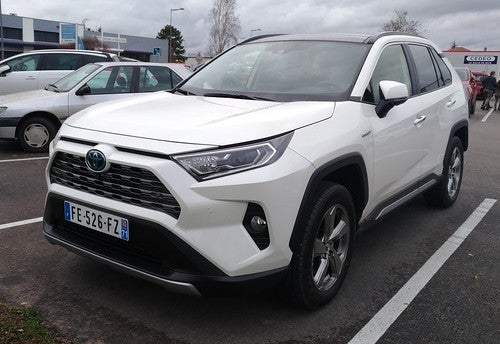
a white toyota rav4 is parked

Toyota RAV4 vs Nissan Rogue

If you're shopping for an SUV, you may be wondering whether the 2021 Toyota RAV4 or the 2021 Nissan Rogue is the better option. These two crossovers are highly sought after because of their excellent fuel economy, generous passenger and cargo space, and extensive standard features. However, they're different in many ways. Find out how the 2021 Toyota RAV4 stacks up against the 2021 Nissan Rogue in the following departments: Trim Levels and Prices Image via Flickr by crash71100 The 2021 Toyota RAV4 is a compact SUV that comes in six trim levels, which include the entry-level LE, the XLE, the XLE Premium, the off-road-ready Adventure and TRD Off-Road, and the range-topping Limited. In addition, it offers five hybrid models. The starting prices of RAV4 trims range from $26,250 for the LE to $37,330 for the Limited Hybrid. The mid-size 2021 Nissan Rogue is available in only four trims: the base S, the SV, the SL, and the top-of-the-line Platinum. This SUV doesn't have a hybrid version. The S has a base price of $25,850, while the Platinum costs at least $35,630. Exterior Both the Toyota RAV4 and Nissan Rogue are handsomely styled vehicles, but they look markedly different from one another. The Toyota SUV appears sportier and more rugged with its wide stance, muscular curves, and steeply raked front and rear windshields. It also has roof racks and squared-off wheel arches that further accentuate its outdoorsy appeal. In contrast, the Nissan Rogue features a mostly understated exterior design. Its blocky body and almost-vertical front end give it an imposing appearance, while its muscular curves and stout shoulder line add a touch of ruggedness. It's instantly recognizable because of its unique two-tiered headlamps. Power If you're looking for an SUV that delivers an energetic driving experience, you'll be better off choosing the 2021 Toyota RAV4. This crossover is fitted with a 2.5-liter four-cylinder engine that generates 203 horsepower. Mated to a slick-shifting eight-speed automatic transmission, this engine provides plenty of power for daily driving and quick enough acceleration for overtaking and highway merging. The Nissan Rogue uses a 2.5-liter four-cylinder engine rated at only 181 horsepower. Paired with a continuously variable transmission, this engine is adequately powerful for driving around town, but it may feel underwhelming in some situations. It's slow to respond when you try to get up to highway speeds quickly. Handling Image via Flickr by automobileitalia When it comes to handling, the Toyota RAV4 and Nissan Rogue are equally impressive. Both SUVs are able to soak up uneven surfaces well to deliver a smooth and comfortable ride. Additionally, they demonstrate great agility and composure around turns and along twisty roads, making them feel somewhat sporty. However, if you regularly drive away from the pavement, the RAV4 is a better option. This crossover has two off-road-oriented models that come with the necessary equipment for tackling rough terrain, namely the Adventure and the TRD Off-Road. Fuel Economy The 2021 Toyota RAV4 delivers slightly better fuel economy than the 2021 Nissan Rogue. It returns 28/35 mpg (city/highway) with front-wheel drive and up to 27/34 mpg with all-wheel drive, making it one of the most efficient compact SUVs. In comparison, the Nissan delivers 27/35 mpg with front-wheel drive and 26/33 mpg with all-wheel drive. Interior Both the Toyota RAV4 and Nissan Rogue can seat up to five people in two rows. Regardless of which of the two SUVs you choose, you and your passengers will enjoy supportive and well-cushioned seats with plenty of legroom and headroom. The cabin of the RAV4 is comparable to that of a luxury vehicle, featuring a modern design, aesthetically pleasing and durable materials, and many soft-touch points. The Rogue also has a nice cabin with an excellent fit and finish. Cargo Capacity If you decide to buy the Toyota RAV4, you'll have 37.6 cubic feet of storage space behind the second-row seats and 69.8 cubic feet behind the front seats. The Nissan Rogue, on the other hand, offers 31.6 cubic feet behind the rear seats and 74.1 cubic feet behind the front seats. Infotainment Features The Toyota RAV4 and Nissan Rogue are both equipped with plenty of infotainment features to provide a great in-vehicle experience. Nonetheless, the Toyota has a larger selection of standard tech features, which include the Entune infotainment system with a 7-inch touch-screen display, a USB port, a Wi-Fi hot spot, a six-speaker sound system, Bluetooth, satellite radio, Apple CarPlay, Android Auto, and Amazon Alexa. You can also opt for upgrades such as an 8-inch touch-screen display, four extra USB ports, an 11-speaker JBL audio system, a wireless device charger, and navigation. Standard infotainment features in the Nissan include an 8-inch touch-screen display, two USB ports, Bluetooth, satellite radio, Android Auto, Apple CarPlay, and a four-speaker sound system. This SUV also has a wide range of available tech features, such as a 9-inch touch-screen display, a Wi-Fi hot spot, a wireless device charger, a six-speaker sound system, a 10-speaker Bose audio system, two rear USB ports, a 12.3-inch digital instrument cluster, navigation, and wireless Apple CarPlay. Safety Features The 2021 Toyota RAV4 has the same number of standard active safety features as the 2021 Nissan Rogue. However, the Nissan offers more optional safety features. Every model of the RAV4 comes with forward-collision alert, automatic high-beams, pedestrian monitoring, road-sign recognition, automatic emergency braking, lane-departure alert, lane-tracing assistance, lane-keeping assistance, adaptive cruise control, and a rearview camera. Available features include blind-spot detection, rain-sensing windshield wipers, rear cross-traffic warning, a surround-view parking camera system, and parking sensors. The Rogue helps you stay safe with standard driver-assistance features such as forward-collision alert, forward and reverse automatic emergency braking, pedestrian and cyclist monitoring, automatic high-beams, lane-departure alert, blind-spot detection, rear cross-traffic warning, a rearview camera, rear parking sensors, and driver-drowsiness detection. Additionally, it offers optional features such as a head-up display, traffic-sign recognition, lane-keeping assistance, adaptive cruise control, front parking sensors, a surround-view parking camera system, and Nissan's ProPilot Assist. If you want to know whether the 2021 Toyota RAV4 can meet your expectations, feel free to stop by Keith Pierson Toyota for a test drive. Contact us today to make an appointment.

Contact Us

Fill out this form below and we'll contact you shortly
*Required Fields