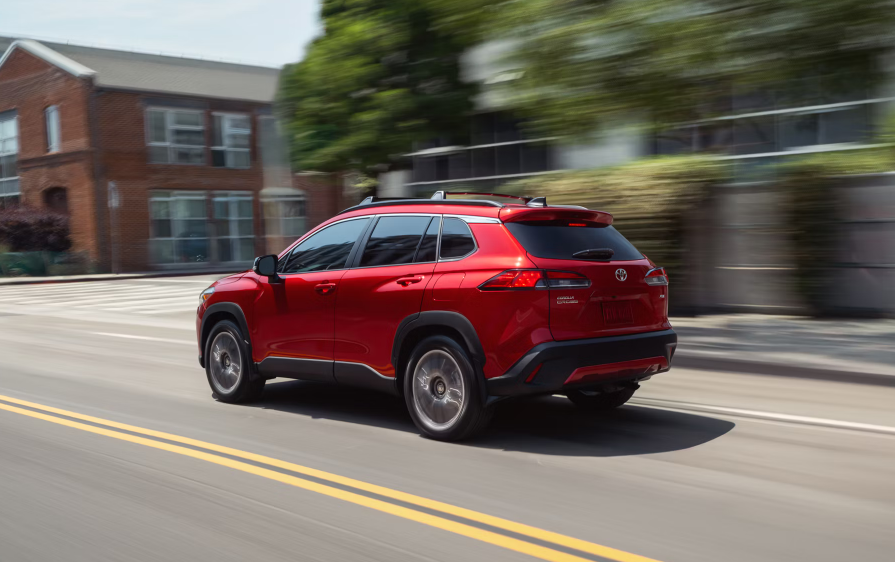


Compact SUVs have basically taken over Jacksonville driveways at this point. Makes sense, really. They handle downtown traffic without feeling cramped, swallow beach gear for Jacksonville Beach weekends, and still sip fuel efficiently on the daily commute. If you're cross-shopping the 2026 Toyota Corolla Cross vs 2026 Honda HR-V, you're looking at two of the most capable small SUVs on the market. The right pick really just depends on how you use your vehicle day to day. Below, we'll cover the specs, safety scores, and where each one falls short in daily use, so you can browse the 2026 Corolla Cross inventory in Jacksonville with a clear idea of what you're getting. 2026 Toyota Corolla Cross vs. Honda HR-V: Comparing Jacksonville's Popular Compact SUVs The Corolla Cross rides on Toyota's TNGA-C platform, slotting neatly between the RAV4 and the Corolla sedan in size and price. It measures 176 inches long, 72 inches wide, and 65 inches tall, with 8.0 to 8.1 inches of ground clearance depending on trim. The HR-V is slightly longer at 179.8 inches, matches the Corolla Cross in width at 72.4 inches, and stands up to 63.8 inches tall on a 104.5-inch wheelbase. Honda builds the HR-V in three trims, LX, Sport, and EX-L, while Toyota offers the Corolla Cross in L, LE, and XLE, plus three Corolla Cross Hybrid trims (S, SE, and XSE). Both target the same buyer: someone who wants SUV versatility without a full-size footprint. City Driving, Handling, and Parking in Jacksonville Whether you're heading through downtown on I-95 or squeezing into a tight spot near San Marco Square, maneuverability matters. The Corolla Cross has a notably responsive steering feel that many drivers find reassuring in stop-and-go traffic. The HR-V leans toward a smoother, more relaxed ride that suits longer stretches like the Southside-to-Beaches commute. Both SUVs are compact enough for tight parking garages downtown, and each includes visibility aids, though the HR-V's greenhouse design gives it a slight edge in outward sightlines. Neither vehicle feels unwieldy in Jacksonville traffic, so this comparison often comes down to personal preference in ride feel. Fuel Economy and Everyday Running Costs The Corolla Cross with FWD earns an EPA-estimated 31 city, 33 highway, and 32 MPG combined; AWD models come in at 29/31/30. The Corolla Cross Hybrid is the standout, rated at 46 city, 39 highway, and 42 MPG combined. The HR-V is gas-only across its lineup, with 2WD models rated 26/32/28 and AWD models at 25/30/27. The Corolla Cross Hybrid's 42 MPG combined rating beats anything the HR-V lineup offers, which makes it the stronger pick for high-mileage Jacksonville commuters. If you're putting real miles on I-295 every week between Mandarin and downtown, that hybrid advantage adds up fast at the pump. If fuel costs are a top priority, exploring 2026 Toyota Corolla Cross details is a good next step before you decide between the HR-V or Corolla Cross. Cargo Space and Passenger Comfort Interior Room and Seating The Corolla Cross offers a full inch more front legroom at 42.9 inches versus the HR-V's 41.9, though the HR-V's total passenger volume, up to 98.7 cubic feet on LX and Sport trims and 97.3 on EX-L, edges out the Corolla Cross's 93.8 to 94.9 cubic feet. The trade-off shows up in the back seat: the Corolla Cross gives rear passengers 39.1 inches of headroom against the HR-V's 38.0. Rear legroom favors the HR-V at 37.7 inches to the Corolla Cross's 32.0. The Corolla Cross cabin uses quality materials, with SofTex, heated seats, and a 10-way power driver's seat standard on the XLE. Dual-zone climate control is also available, which matters during Jacksonville's humid summer months. Spec Corolla Cross Honda HR-V Platform TNGA-C Honda global subcompact platform Trims L, LE, XLE, Hybrid LX, Sport, EX-L Length 176" 179.8" Width 72" 72.4" Height 65" up to 63.8" Ground Clearance 8.0" hybrid / 8.1" gas 7.0" LX and EX-L / 7.3" Sport Cargo Capacity for Errands and Road Trips With rear seats folded, the HR-V offers 55.1 cubic feet of cargo space, compared to 46.9 cubic feet for the FWD Corolla Cross and 44 cubic feet for AWD models. Behind the rear seats, cargo figures are closer: 24.4 cubic feet for the HR-V versus 24 cubic feet for the FWD Corolla Cross. Both use a 60/40 split rear seat for flexibility, and a power liftgate is available on the Corolla Cross XLE. If you regularly haul youth-sports gear or oversized items, the HR-V's folded-seat capacity is worth noting. The HR-V wins on maximum cargo volume, no question, but the Corolla Cross holds its own for everyday errands and grocery runs. Technology and Infotainment Features Honda equips every HR-V trim with a 9-inch touchscreen, a 7-inch driver display, wireless Apple CarPlay and Android Auto, and a wireless charging pad. Audio is where the trims separate: the LX gets four speakers, the Sport six, and the EX-L eight. The Corolla Cross comes standard with an 8-inch touchscreen and a 7-inch digital gauge cluster, with a 10.5-inch display available on the LE and standard on the XLE, alongside a 12.3-inch digital cluster on XLE models. Toyota also includes standard wireless Apple CarPlay and Android Auto across the lineup, with six speakers standard and nine-speaker JBL audio available on higher trims. If you want the largest standard screen without upgrading trims, the HR-V has the edge; step up to the XLE and the Corolla Cross moves ahead on both screen size and cluster. You can browse the 2026 Corolla Cross inventory in Jacksonville at Keith Pierson Toyota to see these features in person. Safety Features and Driver-Assistance Systems Toyota Safety Sense on the Corolla Cross Every 2026 Corolla Cross trim comes standard with Toyota Safety Sense 3.0, which bundles a pre-collision system with pedestrian detection, proactive driving assist, full-speed dynamic radar cruise control, lane departure alert with steering assist, automatic high beams, lane tracing