

Blog

All New Toyota Vehicles Local Parts And Service Toyota Tips Model Comparison Finance Maintenance Camry Local Events & Community Highlander Tundra Corolla RAV4 Corolla Cross Sienna Tacoma Technology EV Vehicle Comparisons
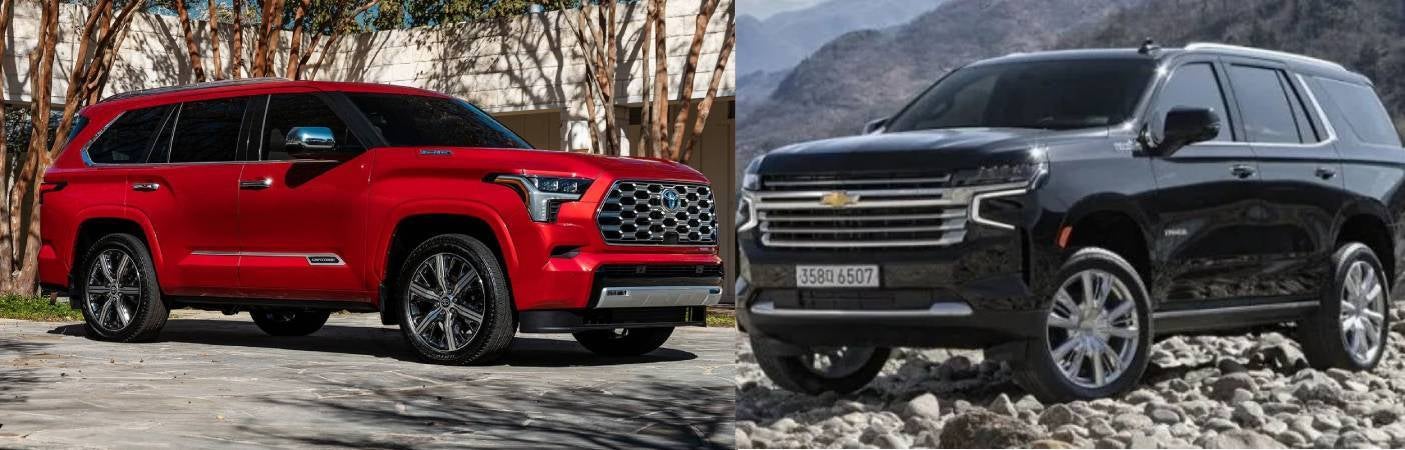
Rendering of the 2024 Toyota Sequoia and 2024 Chevy Tahoe

2024 Toyota Sequoia vs. 2024 Chevy Tahoe

If you plan to purchase a three-row full-size SUV soon, you probably have the 2024 Toyota Sequoia and 2024 Chevrolet Tahoe on your shortlist. These two SUVs can be difficult to choose between, as they both excel in almost every department, from performance to comfort. However, if you take a closer look at their specifications and features, you should be able to determine which one is a better fit for you. In this head-to-head comparison, find out how the Toyota Sequoia stacks up against the Chevrolet Tahoe. Trim Levels Although Toyota and Chevy haven't confirmed the trim options for their upcoming full-size SUVs, the 2024 Sequoia and 2024 Tahoe are expected to have the same trim lineups as their predecessors. In this case, the Toyota will be available in five variants: the entry-level SR5, Limited, Platinum, the adventure-ready TRD Pro, and the top-of-the-line Capstone. However, the Chevrolet comes in six trims: the base LS, LT, the sporty RST, the off-road-focused Z71, Premier, and the range-topping High Country. Exterior The Toyota Sequoia and Chevrolet Tahoe are good-looking vehicles that appeal to different tastes. The upcoming Sequoia shouldn't undergo any significant exterior updates since it underwent a major refresh for the previous model year. The Toyota SUV continues to make a bold statement on the road with its imposing stance, boxy shape, and rugged styling. A dominant grille and ridged hood resemble a truck from the front, while deeply sculpted lines and muscular haunches contribute to an aggressive profile. In contrast, the Tahoe appears sleeker and more futuristic with its refreshed exterior design. The most notable update is a full-width lighting strip that underlines the hood. It adds a dash of illumination while making the SUV look broader than it is. Below the lighting signature, there's a set of horizontal grille slats with polished trim pieces that add a touch of elegance. Performance Regarding power and capability, the 2024 Toyota Sequoia has the upper hand over the 2024 Chevrolet Tahoe. This Toyota model offers only one powertrain option: a hybrid system comprising a 3.5-liter twin-turbo V-6 and an electric motor. This setup, rated at 437 horsepower and 583 lb-ft of torque, enables the SUV to tow up to 9,520 pounds, which is the second-best rating in its segment. There are rumors that the Sequoia may receive a gas-powered engine option for 2024, but this has yet to be confirmed. The Tahoe has three engines for you to choose from: the base 355-horsepower 5.3-liter V-8, a 420-horsepower 6.2-liter V-8, and a 277-horsepower 3.0-liter turbo-diesel inline-six. When properly equipped, the Chevrolet SUV has a tow rating of 8,400 pounds. Despite being large vehicles, both the Sequoia and Tahoe handle nicely. They come with well-weighted and responsive steering and a compliant suspension that soaks up most bumps, making them relatively easy to drive. However, the Chevrolet may feel slightly bouncy when moving over large potholes in Jacksonville. Strong brakes help the two SUVs deliver a confident driving experience. Fuel Economy Thanks to its hybrid powertrain, the Toyota Sequoia returns better fuel economy than most other full-size SUVs, giving you 21/24 mpg (city/highway). Both the V-8 engines of the Chevrolet Tahoe are very thirsty, but the turbo-diesel delivers an impressive rating of up to 21/28 mpg. Interior Whether you pick the Toyota Sequoia or Chevrolet Tahoe, you'll have a handsomely styled and well-built interior. However, the Sequoia seems to look and feel more upscale than its rival thanks to its abundance of high-quality materials and soft-touch surfaces. Even in higher trims, the Tahoe has many visible hard plastics that make its interior less appealing. Both these SUVs can accommodate up to eight people. The Toyota's seats aren't as spacious as those of the Chevrolet, but they're well-cushioned and supportive enough to keep you relaxed on long road trips. Some critics say that the Tahoe's seats are on the firm side. Infotainment Features The 2024 Toyota Sequoia has an intuitive and feature-packed infotainment system to keep you entertained and connected behind the wheel. It comes standard with an 8-inch touch-screen display, a 12.3-inch digital instrument cluster, multiple USB ports, a Wi-Fi hotspot, an eight-speaker sound system, Bluetooth, wireless Android Auto and Apple CarPlay, satellite radio, and navigation. For a better experience, you can opt for upgrades such as a 14-inch touch-screen display, a wireless device charger, and a 14-speaker audio system. Not to be outdone, the 2024 Chevrolet Tahoe also boasts an impressive list of tech features. However, it offers navigation as an option and a 10-speaker sound system as its top-tier audio unit. Then again, it's expected to receive a revised setup that includes a new infotainment screen and digital gauge cluster, which may give it an edge over the Toyota. Driver-Assistance Features Similar to other new Toyota vehicles, the 2024 Sequoia is equipped with an extensive array of standard driver-assistance features to reduce your risk of accidents. These features include blind-spot detection, adaptive cruise control, forward collision alert, automated emergency braking, pedestrian and cyclist monitoring, lane departure alert, automated high-beam headlights, rear cross-traffic warning, parking sensors, and a 360-degree parking camera system. There are also plenty of driver aids in the Tahoe to keep you safe, but the Chevrolet doesn't come standard with adaptive cruise control, blind-spot detection, rear cross-traffic warning, and a surround-view parking camera system. So, if safety is one of your main considerations, you may be better off choosing the Sequoia. Stay Updated on the 2024 Toyota Sequoia With Keith Pierson Toyota The 2024 Toyota Sequoia is expected to go on sale sometime in the fourth quarter of 2023. If you want to buy this amazing full-size SUV, consider getting in touch with Keith Pierson Toyota. Our team will fill you in on the latest news about the upcoming Sequoia and let you know when pre-orders open. When it comes time to purchase your dream SUV, you can rest assured that we'll give you the best deal you can find in the Jacksonville area. Contact us today to get updates on the all-new Toyota Sequoia.
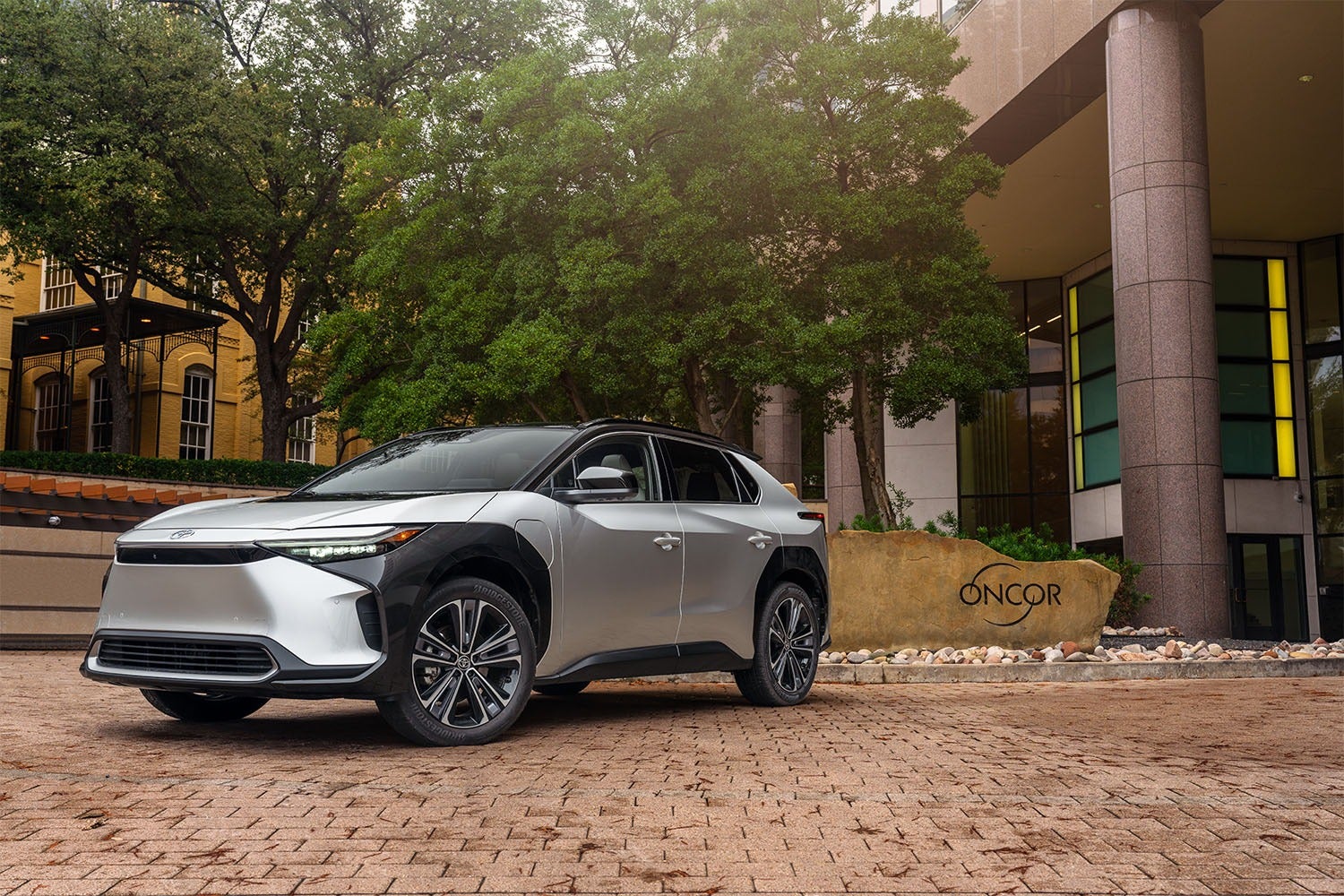
A Toyota EV ready to be charged in Jacksonville, FL

EV Charging Stations in Jacksonville, FL

f you live in Jacksonville, Florida, or are just visiting, you'll find electric car charging stations in parking garages and nearby attractions, hotels, and shopping outlets. The city of Jacksonville offers 197 public charging station ports (Level 2 and Level 3) within about 15 miles. While some are free, some are run by companies that charge a membership fee for free or deeply discounted charging at all their stations. Take a look at this list of electric charging stations in Jacksonville and other useful information. Coggin Nissan at the Avenues You can find this charging station at 10859 Philips Highway in Jacksonville, Florida. Although it's not networked, it offers one J1772 port, one CHAdeMO port, and one J1772 combo port. There is also one Quick Charger and one Level 2 charger in the front of the showroom. Just keep an eye out for the green-painted parking spots near the chargers. A second Level 2 charger is located to the left of the service door, and the Level 2 charger is located on the building's south side. If this option is along the way for you during business hours, it could be a good place to recharge. Just remember that after the dealership's business hours, the chargers are not accessible. The Avenues Mall This Electrify America 150 kW DC charging station is accessible 24 hours a day, seven days a week. It's a convenient location for you to charge your electric vehicle while shopping at the mall. You can find this charging station at 10300 Southside Blvd., Jacksonville, Florida. There are two connectors here: Combined Charging System (CCS)/Society of Automotive Engineers (SAE) (four plugs) at 150-350 kW and CHAdeMO (one plug) at 50 kW. Pass+ membership ($4 monthly) is required for the lowest rates possible, such as $0.36/kWh. Caravan parking is available here, and it's well lit and free of charge. Gate Parkway Supercharger Available 24/7, this charging station is situated at 4866 Gate Parkway, Town Center and Gate, Jacksonville, Florida. You'll receive a Tesla Supercharger with eight outlets and 150 kW of power. Parking is free at this charging station, and you can enjoy shopping, Wi-Fi, lodging, parking, dining, and restrooms nearby. St. Augustine Supercharger This charging station is situated at 2700 FL-16, St. Augustine, Florida. It includes a fast Tesla Supercharger with six plugs that are capable of producing up to 150 kW. You'll find them in the St. Augustine Premium Outlet Mall on the west side of I-95. They're located northeast of the main mall's food court, on the southeast side of the smaller building that houses the Eddie Bauer and Gap stores, directly behind the Gap Factory Store. Make sure you're not searching the other mall on the east side. If arriving after hours, take the "Toms Road" exit off FL-16. Be aware that the chargers are not lit up or accessible after closing time, which is 8 p.m. Daydream Avenue Parking This charging station is located at 235 E. State Road 200, Yulee, Florida. It's open 24 hours a day, seven days a week, and charges $0.30 per kWh. It includes a total of six Florida Power & Light (FPL) EVolution Fast Chargers. Be sure that you've downloaded the FPL EVolution app for full charger functionality. Four 200 kW chargers and two 360 kW chargers are available, and you can take advantage of the trailer-friendly pull-through parking. Normandy Square EVgo is the largest public electric vehicle fast-charging network in the United States, and it's proud to be powered entirely by renewable energy. You can find a well-lit EVgo charging station with three different types of outlets on 7991 Normandy Blvd., Jacksonville, Florida. You can use one of six CCS/SAE plugs at 100 to 350 kW, six CHAdeMO plugs at 100 kW, and two Tesla fast plugs at 100 kW. Register with EVgo via the EVgo app or website for the best rates. Hilton Garden Inn Jacksonville Airport This charging station, situated at 13503 Ranch Road, Jacksonville, Florida, is made up of six Tesla stations and four J-1772 chargers. This charging station is available 24/7. As a customer of the hotel, you can also use the business center, on-site fitness center, free Wi-Fi, facilities for meetings, an on-site restaurant, and room service. Tips for Electric Charging in Jacksonville, Florida There are even more charging stations accessible in the parking lots of various companies across Jacksonville, Florida. Their accessibility varies depending on the policies of those lots. Overall, charging procedures are simple for the ordinary commuter, and charging before ever reaching 30 percent or lower helps prevent you from running too low. Other ideas include: Try to keep your electric vehicle out of direct sunlight throughout the summer, such as in a garage or parking lot. Use global positioning system navigation, and plan your trips efficiently ahead of time. Avoid using the highest available charge type, such as Level 2 or 3, too often, as this might be taxing on the battery. Charge up to 80% instead of 100%. This is better for the battery and allows you to use regenerative braking properly. Don't keep your automobile plugged in after it's been properly or fully charged. It may be a good idea to have memberships with multiple charging station businesses. Along with lowered rates, having memberships can also help provide the latest updates on charging station availability. Compared to always finding a place to charge at publicly accessible, completely free charging stations, the expense of having at least one network membership is generally worth it. Even though more electric charging stations are being established around the country, the majority of electric car charging is done at home. Most households will need substantial expenditure to install the required infrastructure to charge an electric vehicle and important accompanying technology, such as solar panels. However, more businesses and public locations are adding charging stations, especially in massive cities such as Jacksonville. Bookmark These Charging Stations in Jacksonville, Florida Please save our list of charging stations in and around Jacksonville, Florida, to peruse at your leisure. If you live in Jacksonville or neighboring Lakeside, Palm Valley, or Yulee and need a new car or automobile servicing, Keith Pierson Toyota is the place to go. We encourage you to browse our new Toyota inventory, and we invite you to visit our dealership or call us when you have the time. Toyota Electric Vehicles photo courtesy of Toyota.com

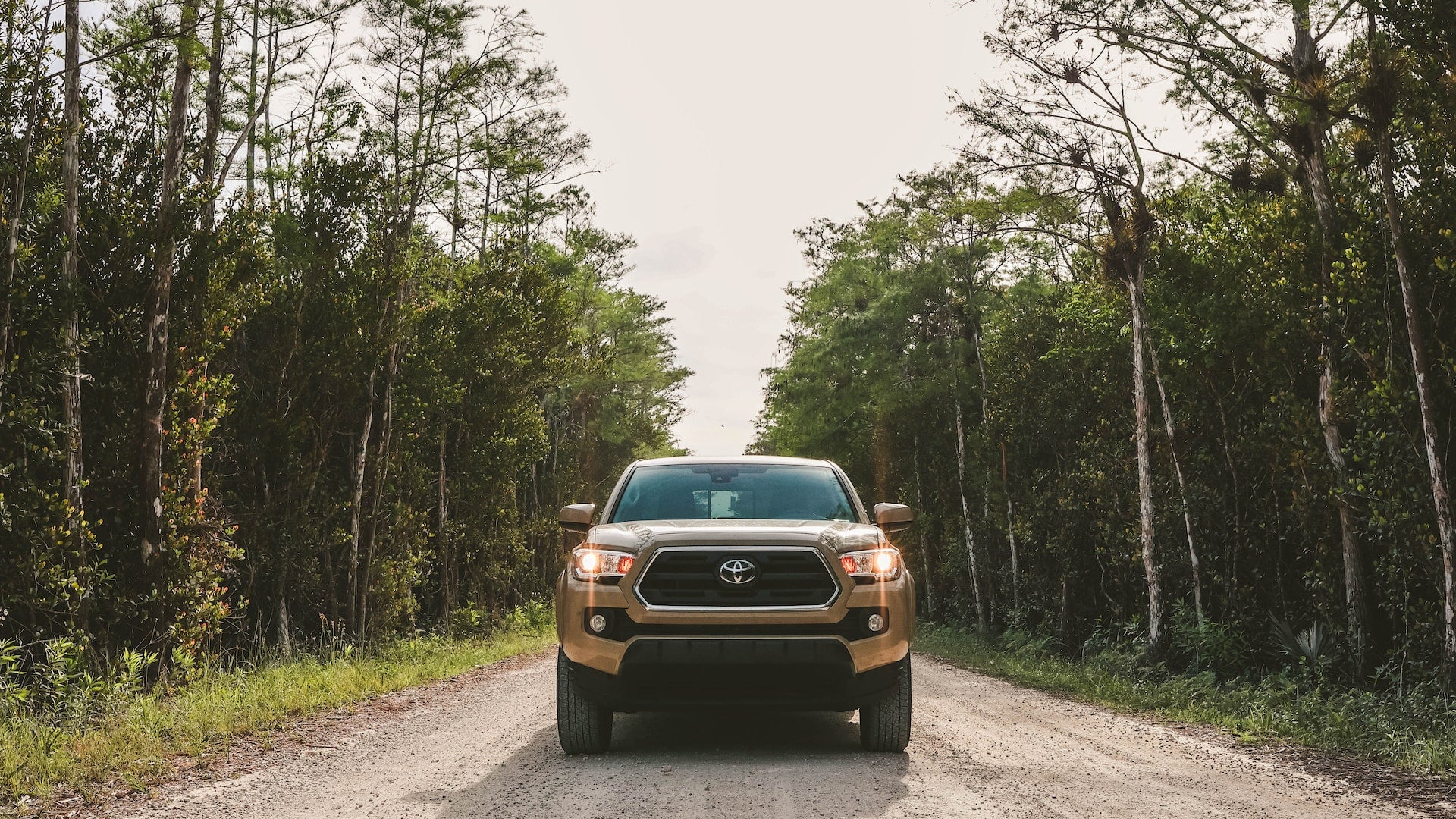
A Beige Toyota driving down the middle of a dirt road with tall trees on each side.

Toyota Tacoma Oil Change Guide

The Toyota Tacoma stands as a symbol of dependability, allowing you to conquer challenging terrains and embrace countless adventures. An important way for you to unlock its full potential lies in vehicle maintenance. Regular service and oil changes are essential to keep your Tacoma running smoothly. What Is the Best Oil to Use for the Tacoma? The recommended oil type and viscosity for the Toyota Tacoma may vary depending on the specific model year and engine variant. It runs well on synthetic oil with a grade of SAE 0W-20 or SW 5W-20.To ensure accuracy, it is crucial to consult your owners manual for the correct oil type. If you don't have access to your manual or need to double-check, our service center at Keith Pierson Toyota in Jacksonville, Florida, is ready to assist you. How Often Does the Tacoma Need an Oil Change? The recommended oil change interval for the Toyota Tacoma is every six months or every 5,000 to 7,500 miles, whichever comes first. However, it's important to note that the specific interval may vary based on factors such as the model year, engine type, driving conditions, and the type of oil used. In newer Toyota models, a maintenance reminder system is often installed, which monitors driving conditions and oil life to indicate the need for an oil change. There are several signs that indicate the need for an oil change, including smoke emitting from the exhaust, unusual engine noises, or vibrations when the engine is idle. Check your oil levels and texture using the dipstick provided with your vehicle. If you observe low oil levels or oil that is too thick or thin to flow properly, it's time to change the oil, even if it's not due for a scheduled service. Why Should You Change the Oil in Your Tacoma? It's important that your motor oil has the appropriate consistency for your engine to perform at its best. Motor oil serves multiple vital functions, such as lubricating the various moving parts to prevent friction and potential damage from scraping. It also plays a vital role in reducing heat buildup within the engine, preventing the risk of overheating. Regularly changing your oil and filter is essential for extending the lifespan of your engine and ensuring it remains free from blow-by contaminants. These refer to the combustion gases that get past the piston rings into the crankcase. While oil additives may provide some benefits by extending the time between oil changes, it's important not to neglect this maintenance task beyond a certain point. Failing to address oil changes on time can have a snowball effect, potentially leading to severe mechanical issues down the line. How To Change the Oil To change the oil in your Tacoma, you can follow a similar process as you would for any other vehicle. Here are the steps to successfully perform this service. Prepare Your Tools Begin by gathering the necessary tools and materials, which include rags, a new oil filter, a wrench, a ratchet, socket extensions, an oil drain pan, a funnel, gloves, and new oil. Raise Your Tacoma You have a few options available in raising your vehicle. If you prefer using car ramps, it's crucial to drive up the ramps slowly, ensuring you position the vehicle accurately without rolling over the ramp's edge. To prevent any backward movement, place a wooden block behind each of the rear wheels. Alternatively, if you opt for a car jack, consult your owners manual for the specified lifting point. Once you achieve the correct height, it's recommended to place two jack stands underneath your Tacoma for added safety. Before beginning the oil change, ensure that your vehicle is parked on a level surface, the engine is turned off, and the parking brake is engaged. If necessary, use wheel chocks for further security. By employing a suitable lifting method, you'll have ample space underneath the Tacoma to comfortably perform the oil change. Open the Hood Open the hood and secure it with the hood prop rod. Find the hood release latch inside the car, positioned beneath the steering wheel. Next, locate the engine oil cap and unscrew it to facilitate faster oil drainage before performing the next step. Drain the Oil Place the oil pan beneath the drain plug and use your wrench to loosen the plug. As the oil begins to drain out, be aware that it may come out quickly before the flow gradually slows down. Be careful of warm oil (if the engine was running) when you move the pan to catch the old oil. When the oil has drained out, place the drain plug back in position. Replace the Filter To replace your vehicle's engine filter, locate it on the passenger side of the engine bay. Use your wrench to gently remove the old filter. Before installing the new one, clean the filter's housing unit thoroughly. Rub some oil on the gasket of the new oil filter, then screw it back into place. Refill the Engine Oil Insert the funnel into the engine oil opening, carefully positioning it. Gradually pour the appropriate amount and type of new oil into the funnel to prevent any oil from dripping onto other engine bay components. If needed, use extra bottles of oil, making sure to adhere to your vehicle's specific quart requirement. After refilling the oil, examine the drain plug and oil filter for any leakage. Wipe away any oil spills and confirm that all components are secure. Check the Oil Level Check the oil level with your dipstick and add more oil if necessary. Reinstall the skid plate, start your vehicle, and perform an oil pressure test to ensure that the oil reaches the correct level. Lastly, turn off the engine and securely close the hood of your vehicle. Schedule an Oil Change for Your Toyota Tacoma Today If you prefer to take your Tacoma for an oil change, schedule an appointment with Keith Pierson Toyota today. Our qualified service technicians are available to perform anything else you may need, such as brake and battery checks. We look forward to serving you. Schedule Service View Tacoma Inventory Image by Brian Beckwith is licensed with Unsplash License

A hand holding four Credit Cards against a white background

Can I Buy a Car With Bad Credit?

It's possible to buy a car even if you have bad credit. However, it's important to understand how your credit score can impact your financing options. Credit agencies use an algorithm that considers your debt, income, available credit, and payment history to calculate your credit score. Higher scores indicate a lower risk to lenders, while lower scores indicate a higher risk. So a low credit score won't prevent you from securing a loan. However, banks may impose higher interest rates and offer smaller loan amounts due to the increased risk. Even with the credit scores and common practices associated with issuing loans, no standard exists that the industry must follow. This means that each lender has its own policies, which may result in approval by one lender and denial by another. Credit Scores Explained Lenders rely on the three major credit bureaus, Experian, Equifax, and Trans Union, to obtain your credit score, which indicates your creditworthiness. Scores range between 300 to 850 points, and each agency will have a different score for you based on the information they access and their algorithm. However, auto lenders typically use the FICO Auto Score to determine the creditworthiness of borrowers. It ranges from 250 to 900 points and puts more emphasis on responsible debt management, considering factors such as payment history, available credit, and debt-to-income ratios. As a result, a higher FICO score will produce a lower interest rate on a higher loan amount and vice versa. Suppose you fall within the 20% of consumers with a top-tier FICO score of 800 to 900 points. In that case, you can expect fast approval on a loan with an interest rate of 0% to 3%. Twenty-five percent of buyers have FICO scores between 740 and 799 points. This range is still a very good score. So you can expect loan approval with a 3% to 6% interest rate if you fall in this category. Scores between 670 and 739 points fall into a middle category where lenders vary slightly more on approvals and interest rates. If approved, you likely will have an interest rate between 5% and 8%. For scores ranging from 580 to 669 points, lenders are more selective about approval, and the interest rates can be between 7% and 12%. Any score falling below 580 presents the highest risk to lenders. Securing an auto loan with a score below 580 is still possible. However, interest rates start at 13% and can go much higher than that, depending on the circumstances. How To Raise Your Credit Score The credit bureaus' algorithms measure many factors, and scores usually take time to move. However, you can do a few things that can have an immediate and significant impact on your score. First, you need a copy of your credit report to see what's on it. Many people review their credit reports and find credit history that belongs to someone else. And it's almost always negative. Getting these removed from your report can change your score dramatically. If there are any late payments on your credit report, you can contact the lenders who reported them and ask for their removal. Most lenders are willing to do this if you've been consistent with your payments since the late ones occurred. Of course, they don't have to, but they never will if you don't ask. Credit utilization is another factor in your credit score. Unfortunately, most people have yet to learn what this means and how it works. Simply put, your credit utilization is how much you owe on credit cards compared to how much credit you have left to borrow against. For instance, if you have a credit card with a $1,000 limit and owe $500, your credit utilization is 50%. However, most lenders want to see your credit utilization under 30%. So in this example, if you paid $250 on this account, your rate drops to 25%, and you're now in the range lenders like to see. You can also use Experian Boost to increase your credit score. Experian Boost allows you to apply on-time rent and utility bills such as gas, electricity, and telephone to improve your credit score. Keith Pierson Toyota Finance Department At our Keith Pierson Toyota dealership, we believe everyone has the right to own a vehicle, regardless of their credit. Our finance managers have decades of experience finding loans for buyers in all credit categories. To help you get started, we encourage you to complete our online pre-approval application. You'll receive an answer in minutes, including your loan amount, interest rate, monthly payment, and terms. We know some people prefer a face-to-face meeting to discuss their financing options. Feel free to visit us at 6501 Youngerman Circle if this sounds like you. One of our finance managers will answer your questions and help you through the process. We also have a convenient online vehicle valuation tool to get an accurate price for your current vehicle as part of a trade-in. It's quick and easy. You input the relevant information about your car's make, model, mileage, and condition, and in seconds, you'll get a fair offer. We'll purchase your car whether or not you buy another vehicle from us. If you're curious about how a deal might look, we have an online calculator that lets you estimate your costs based on variable loan amounts, trade-in values, down payments, interest rates, and terms. With this information, you can shop confidently, knowing what you can afford. Explore Your Car-Buying Options Today in Jacksonville A less-than-perfect credit score shouldn't deny you the privilege of vehicle ownership. That's why our finance department provides expert advice and transparent pricing models so you can make an informed buying decision, regardless of credit history. We invite you to shop our virtual inventory to see what you like and speak with one of our loan specialists to explore your financing options. Image by Avery Evans is licensed with Unsplash License

Toyota 4Runner on a beach near Jacksonville, FL

What to Look for When Buying a Used Toyota

Are you thinking about buying a used car in Jacksonville, Florida? At Keith Pierson Toyota, we understand that purchasing a pre-owned vehicle can be an exciting and budget-friendly option. However, it's best to approach the process with caution and ensure you make a wise investment. Let's take a look at some valuable tips and insights on what to look out for when buying a used car and important factors to consider during your purchase. Research the Perfect Vehicle for Your Needs Before diving into the used car market, it's essential to do your homework. Take the time to research your needs, your budget, and the specific make and model of vehicle that you're interested in. Be realistic about what car you'd like, how practical it is, and how much you can spend. Set Your Budget Make a smart financial decision by realistically determining your budget for your used car purchase. Don't only look at the initial buying price but also look out for the extra costs, which include insurance, maintenance, and fuel consumption. By setting a realistic budget and sticking to it, you can avoid overspending and focus on finding the best value for your money. Vehicle History Check Uncover the truth and ensure that you have full transparency. Make an informed decision by obtaining a comprehensive vehicle history report. These reports provide essential information about past accidents, maintenance records, ownership history, and mileage verification. If the vehicle doesn't have a report, it's worth spending the money to get one. The minimal cost is well worth knowing the full history of the car. Don't be afraid to ask questions about the vehicle. This includes things such as how many owners has the vehicle had and what part of the country does the vehicle originally come from? Ask about the warranty and whether you can buy an extended warranty. Make sure that the vehicle manual is available. Do a Thorough Physical Inspection A meticulous physical inspection is crucial when buying a used car. Look for signs of deterioration on the vehicle that you're considering. Give yourself the time to thoroughly examine the vehicle from the exterior to the interior, including the engine, the mechanical components, and the undercarriage. Be on the lookout for any signs of repainting, dents, rust, or excessive wear. Leaks under the car could indicate future problems. While checking the vehicle, also pay close attention to the frame. Is the vehicle level on the ground? Is the undercarriage free of anything hanging from it? Look at the condition of the bumpers and make sure to look in the hood and the trunk for any obvious new bolts or any warping. These could be signs of previous accidents. After you've carried out a visual inspection, take the used Toyota on a test drive. Listen for any unusual sounds while driving and make sure to drive in different conditions, such as the suburbs, the city, and on the highway. Are there any strange smells pointing to an exhaust leak or transmission troubles? Test the car's acceleration, maneuverability, and braking. Find somewhere to parallel park, as it's the best way to find any blind spots in the vehicle. Vehicle Identification Number (VIN) Verification Although Toyotas are known for their reliability, the state of each used Toyota will depend on its vehicle history. To ensure the authenticity of the used car, verify that the VIN on the car matches the number on the title and registration documents. Inconsistencies may indicate tampering or fraudulent activities. Additionally, ensure the VIN plate is intact and hasn't been altered in any way. It's a good idea to run the VIN through a paid service, which will report whether the car has been involved in an accident, whether there are any liens on it, and whether there are any recalls on the model. Pre-Purchase Inspection Get expert advice by arranging a pre-purchase inspection by a qualified mechanic. They can identify hidden issues and give an evaluation of the vehicle that's objective. This step is particularly important when purchasing from a private seller. Our certified technicians are available to conduct thorough inspections to help you make your decision. An auto technician will see if the car has any areas of concern that might create a problem in the future and they could save you a fortune in the long run. Choose a Trusted Seller For reliability and trustworthiness when buying a used car, it's important to choose a reputable seller or dealership. Research the seller's reputation, customer reviews, and business history. At Keith Pierson Toyota, we've been serving the Jacksonville community for over 20 years, offering exceptional customer service, a wide selection of reliable pre-owned vehicles, and a dealership experience you can trust. Negotiations and Documentation Once you've found a suitable vehicle, it's time to negotiate the price and seal the deal. Your best tool for negotiating is knowledge, so your previous research comes in at this point. Consider the condition of the car, its market value, and any identified issues during the inspection before you agree on the price. Financing and Trade-In Options Purchasing a used car in Jacksonville, Florida, requires careful consideration and thoroughness. By following the tips provided and using our resources, you can find your way around the used car market more confidently. We can also help you decide what to do with your old vehicle through our different trade-in options. Once you've decided on your options our finance department will guide you through the entire process, which will be quick and hassle-free. Ready To Find Your Next Toyota? With these steps, you can avoid being caught out, make a wise choice based on research, and find a reliable used car. Start your journey with Keith Pierson Toyota today and experience our commitment to customer satisfaction and quality pre-owned vehicles. We believe in fair and transparent pricing, ensuring you get the best deal possible. Our knowledgeable sales team can guide you through the process and ensure that you find the best vehicle for your needs. Car camping in the PNW is quite easy by Kyle Grozelle is licensed with Unsplash License

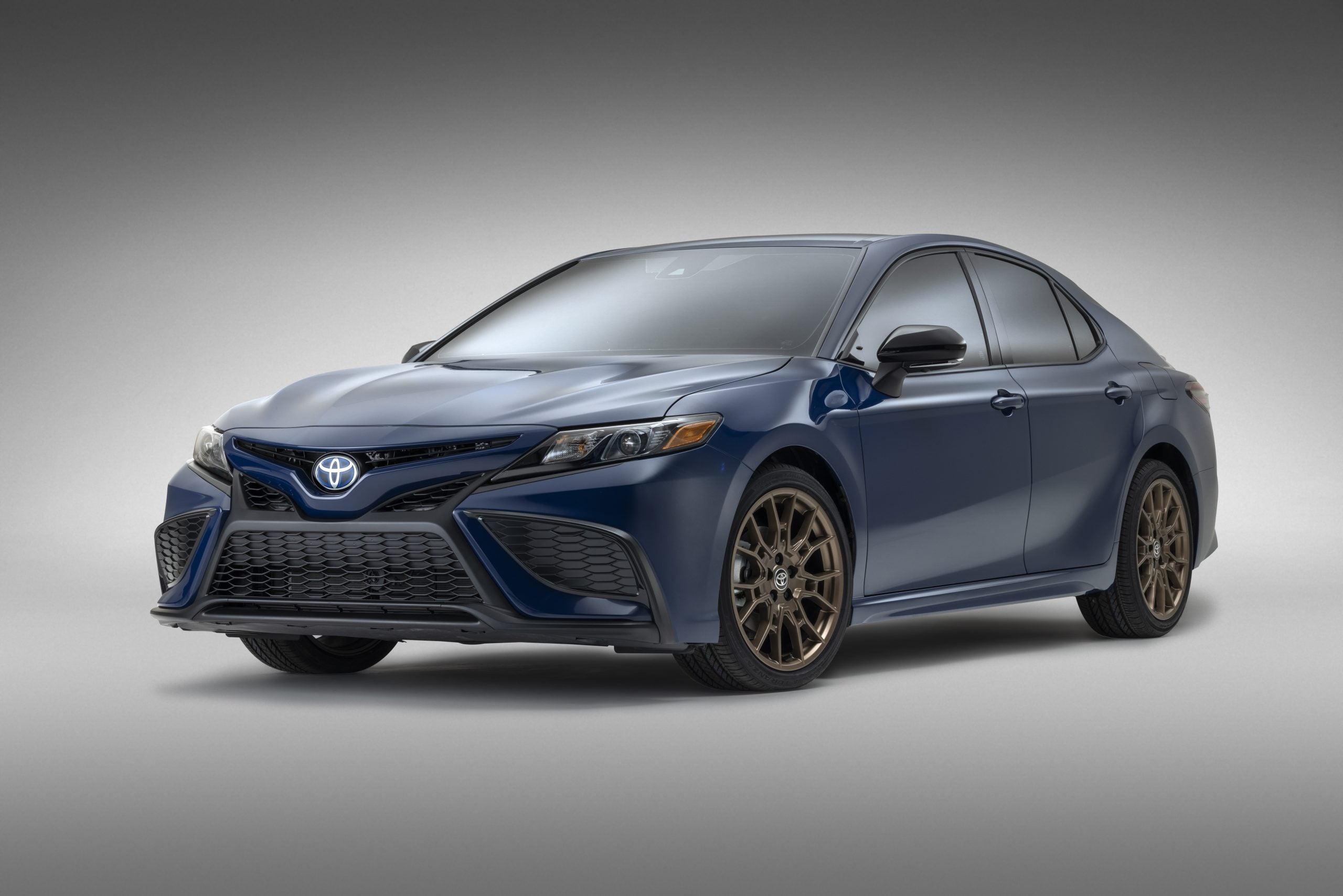
The 2023 Toyota Camry Hybrid

2023 Toyota Hybrid Lineup: Camry, RAV4, and More

Hybrids were once a curiosity, with many wondering if they would be reliable or even safe. But today, hybrids are widely accepted as a bridge between conventional and fully electric vehicles. Hybrid cars offer the best of both worlds, combining an internal combustion engine with battery-powered electric motors. They're designed to operate more efficiently than traditional gasoline vehicles, save on fuel costs, and reduce overall emissions. Toyota has been an innovator in the hybrid car segment, with over 20 years of experience in mass production. Its 2023 hybrid lineup is a testament to its commitment to the technology and future of mobility. Toyota has something for everyone, from the dependable Corolla Hybrid to the power-packed Prius Prime Hybrid. Whether you're on the prowl for a small hatchback for your daily commute or an SUV to take the family on weekend road trips around Jacksonville, Toyota's 2023 lineup has you covered. Let's take a closer look at Toyota's 2023 hybrid lineup and all the features that make each model unique. 2023 Camry Hybrid The 2023 Toyota Camry Hybrid is the latest iteration of this classic sedan, offering hybrid performance and environmental sustainability. Featuring a new 2.5-liter four-cylinder engine and an advanced hybrid system, the Camry Hybrid has a combined output of 208 horsepower. It also boasts exceptional fuel economy, up to 51 mpg in the city and 53 mpg on the highway. Regarding safety, the Camry Hybrid comes with Toyota's Safety Sense 2.5+ suite of driver-assist features such as adaptive cruise control, traffic-sign recognition, blind-spot monitoring, lane-keeping assist, and more. The Camry can seat up to five passengers and boasts impressive interior features, including the following: Apple CarPlay/Android Auto. Heated and ventilated front seats. Wireless device charging. Navigation system. Premium audio system. 2023 RAV4 Hybrid The 2023 Toyota RAV4 Hybrid is a mid-size crossover SUV that perfectly balances capability, style, and fuel efficiency. The hybrid system comprises a 2.5-liter four-cylinder engine and two electric motors, producing 219 horsepower. The RAV4 Hybrid is the perfect vehicle for weekend road trips, achieving up to 41 mpg in the city and 38 mpg on the highway. The RAV4 Hybrid offers many safety features, including Toyota's Safety Sense 2.5 suite of driver-assist technologies. The 2023 Toyota RAV4 Hybrid exterior has a sleek, modern look with LED headlight accents and an integrated aerodynamic rear spoiler. The interior is equally impressive, with comfortable seating for five and a myriad of amenities, including the following: Wireless Apple CarPlay and Android Auto integration. Wi-Fi hotspot. Heated and ventilated front seats. Dual-zone automatic climate control. Navigation system with voice recognition. View RAV4 Hybrid Inventory 2023 Toyota Corolla Hybrid The Corolla has long been one of Toyota's most popular cars and an icon of reliability. The 2023 Toyota Corolla Hybrid carries on this tradition, offering an impressive level of economy and efficiency. The hybrid system is powered by a 1.8-liter naturally aspirated four-cylinder engine and two electric motors, producing 138 horsepower. Fuel economy is the Corolla Hybrid's strong suit, with up to 53 mpg in the city and 46 mpg on the highway — almost double that of a conventional gasoline-powered Corolla. The Corolla Hybrid also offers an abundance of safety features via Toyota's Safety Sense suite, as well as a variety of comfort and convenience features, including the following: Automatic climate control. Revised power steering for a sportier feel. Wireless Apple CarPlay and Android Auto. Sunroof. Wireless smartphone charger. 2023 Toyota Prius Prime The Toyota Prius is the original hybrid, and the 2023 Prius Prime continues to set the standard for fuel-efficient vehicles. The plug-in hybrid system combines a 2-liter four-cylinder engine and two electric motors, producing 220 horsepower. Fuel economy is also outstanding, with up to 53 mpg in the city and 51 mpg on the highway. The Prius Prime also features standard Toyota Safety Sense 3.0 with pedestrian detection, full-speed range dynamic radar cruise control, and more. The interior is comfortable and modern, with an impressive list of standard and optional features that include the following: Wireless Apple CarPlay and Android Auto. Wireless charging pad. Rain-sensing windshield wipers. Heated steering wheel. Automatic climate control. Height-adjustable front seats. 2023 Toyota Highlander Hybrid The 2023 Toyota Highlander Hybrid is for Jacksonville, Florida, drivers that need the SUV capability of the RAV4 Hybrid but with more room for passengers and cargo. The Highlander Hybrid boasts three rows of seating, with space for seven or eight passengers depending on the configuration. The hybrid powertrain consists of a 2.5-liter four-cylinder engine and two electric motors, producing 243 horsepower for plenty of power, plus a unique all-wheel-drive system for the hybrid system to tackle terrain that other hybrids wouldn't dare go near. Fuel economy is also impressive, with an estimated 36 mpg in the city and 35 mpg on the highway. The 2023 Toyota Highlander Hybrid also comes with the latest version of Toyota Safety Sense 2.5+ and a suite of creature comforts, such as: Heated and ventilated front seats. Heated steering wheel. Rain-sensing windshield wipers. Cloud-based navigation. Tri-zone climate control. Power liftgate. Eight-way power-adjustable driver's seat. Apple CarPlay and Android Auto compatibility. 2023 Toyota Tundra Hybrid The Toyota Tundra is the brand's flagship pickup truck, and the 2023 Toyota Tundra Hybrid adds impressive efficiency to the mix. The hybrid system combines a 3.5-liter turbo V-6 engine producing an impressive 437 horsepower and a powerful electric motor for even more oomph. Fuel economy is an estimated 20 mpg in the city and 24 mpg on the highway, making it one of the market's most efficient full-size pickup trucks. Safety is also top of the line, with standard features including automatic emergency braking, lane departure warning, and adaptive cruise control. The Tundra Hybrid also comes with a full suite of modern features and amenities, including the following: Dual-zone automatic climate control. Power vertical-sliding rear window. Tow package with Class IV trailer hitch. Tailgate release button mounted to driver's side taillight. Dual-zone climate control. Trailer backup guide system. Save With a Toyota Hybrid Car From Keith Pierson Toyota Whether you're looking for a versatile and efficient SUV like the Highlander Hybrid, a fuel-sipping hatchback like the Prius Prime, or a powerful hybrid pickup truck like the Tundra Hybrid, our extensive inventory of Toyota hybrid vehicles has something for every Jacksonville, Florida, driver's needs. And with competitive pricing and excellent financing options, you can save even more on your next Toyota hybrid car. Contact us to schedule a test drive and experience the efficiency of Toyota hybrid vehicles for yourself.

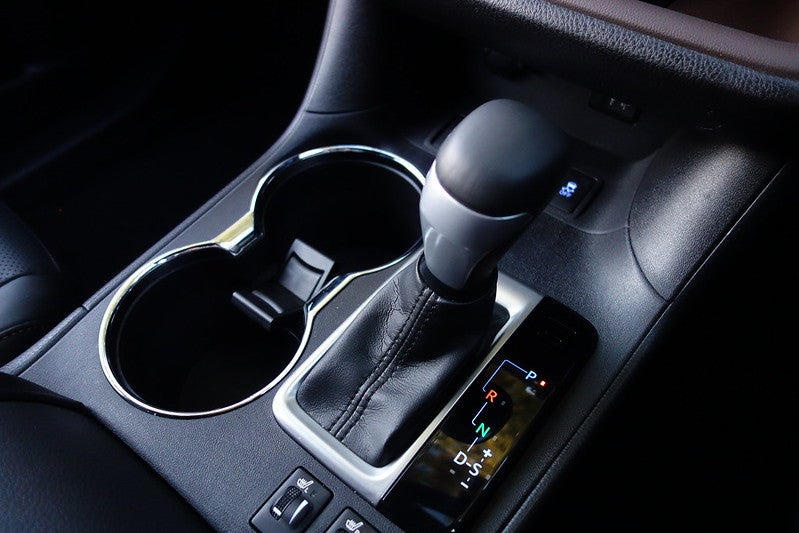
A manual transmission stick on a Toyota

Highlander Transmission Fluid Change Guide

Checking your Toyota Highlander’s transmission fluid is a straightforward process when you follow the correct steps and inspect both condition and level. Transmission fluid should generally be changed around every 30,000 miles or every two years, though severe driving conditions may require shorter intervals. Warning signs such as grinding noises, slipping gears, difficult shifting, and unexpected surging can point to contaminated or low transmission fluid. The transmission is an integral part of your Highlander, transferring power from the engine to the wheels as you drive. It's responsible for converting the right amount of power to achieve the desired speed, so even a minor problem in the transmission can significantly affect your vehicle's performance. Getting your Highlander's transmission checked and serviced regularly is essential to stay on top of any potential issues. With proper maintenance, you can expect your Highlander to have fewer transmission problems over its life span. Keeping the transmission fluid clean and topped up is one of the most important aspects of maintaining your Highlander's transmission. The transmission fluid lubricates and cools the transmission's internal components. Without it, the transmission can't function properly. Over time, dirt and debris contaminate the fluid, and you'll need to replace it to prevent potential transmission damage. Fortunately, changing the transmission fluid on your Highlander is relatively straightforward. Read below as our team at Keith Pierson Toyota in Jacksonville, Florida, shares this informative guide with all the information you need to successfully replace your Highlander's transmission fluid and keep your vehicle running smoothly. How Do You Check Transmission Fluid in a Toyota Highlander? Checking the automatic transmission fluid on your Toyota Highlander is an easy process. Follow the steps below: Park the vehicle: Ensure it's on a level surface, engage the parking brake, start the engine, and let it run for a few minutes to warm up. Locate the transmission fluid dipstick: If you're having trouble locating it, consult the owner's manual. It's typically on the right side of the oil dipstick. Pull out the dipstick: Wipe it clean with a piece of cloth, then reinsert it. Remember to keep the engine running and the car in Park with the parking brake engaged. Check the fluid: Smear a bit between your finger and thumb to test its consistency; it should be bright red, transparent, free of particles, and smooth. You'll need to schedule a complete fluid change if you notice any abnormalities. Clean, reinsert, and remove the dipstick again: This time, check the fluid level. Ensure it reaches the "Full" line on the dipstick, or add more fluid. How Do You Change Transmission Fluid in a Toyota Highlander? Changing the transmission fluid involves more than checking it, but it's still doable. Generally, having a certified technician change it is best. But if you prefer doing it yourself, follow these steps: Park your Highlander on a level surface with the parking brake engaged. Elevate the car using ramps or jack stands to safely raise the vehicle to give you access to the transmission pan. Locate and remove the transmission oil pan to drain the fluid. Place a drain pan underneath it to catch all the drained fluid. Replace the filter and reinstall the pan using a new gasket, securing all bolts tightly. Refill the transmission with new fluid using a funnel to avoid spills. Ensure you're using your Highlander's correct transmission fluid type, which you'll find in the owner's manual. Replace the transmission dipstick into its hole and check that it registers correctly on the gauge. Recheck your work and ensure you've tightened all screws properly before starting your vehicle. Lower the car and start the engine to check for leaks around the oil pan. How Often Should I Change My Highlander's Transmission Fluid? Maintaining the health of your car's transmission is essential to ensure your vehicle runs smoothly. While knowing when to do a transmission fluid change may seem overwhelming, it's quite simple. The recommended change interval for your Highlander's transmission fluid is usually around 30,000 miles or every two years, whichever comes first. Shorter intervals may be necessary if you drive in more demanding conditions, such as regularly towing heavy trailers or dealing with the frequent stop-and-go traffic in Jacksonville. Refer to the owner's manual for specific recommendations, which can vary depending on your vehicle's model year. How Do You Know When To Change Your Highlander's Transmission Fluid? While regular maintenance is essential, a few warning signs indicate you may need to change your Highlander's transmission fluid sooner than expected, including the following: Unusual noises coming from the transmission (e.g., whining, grinding): When driving your vehicle, if you notice your transmission grinding or making strange noises, stop immediately and check the transmission fluid level while the engine is still running. Your vehicle most likely requires a transmission flush if the transmission fluid level is normal. Slipping gears: If you experience gear slippage when accelerating or shifting, it could be because of a lack of transmission fluid or the presence of dirt and grease. Either way, you'll need to change the transmission fluid to get your vehicle back up and running at full performance. Difficult shifting: If your car takes too long to shift between gears, it could indicate a dirty transmission filter, which can cause your vehicle to respond slowly and result in jerky, rough shifting. Changing the transmission fluid and filter is the best remedy. Unexpected surging: Dirt and contaminants in your vehicle's transmission can lead to an inconsistent flow of clean transmission fluid, causing the unexplainable surging of your vehicle. It may jump or surge forward and fall backward for no good reason, which is a clear sign it's time to change the transmission fluid. Schedule Your Transmission Fluid Change at Keith Pierson Toyota Although you can change your Toyota Highlander's transmission fluid yourself, taking it to a certified technician at Keith Pierson Toyota is the best way to ensure your vehicle receives the proper care and attention it requires. Our experienced technicians can accurately assess the transmission fluid's condition and recommend a course of action. And if you're due for an upgrade, we offer a wide selection of quality pre-owned and new Highlander models. Contact us today to book a service appointment to keep your Highlander's transmission fluid running at its best. Toyota Highlander GXL by Ilam Toyota is licensed with CC BY 2.0 Frequently Asked Questions How do you check transmission fluid in a Toyota Highlander? Park on a level surface, warm up the engine, locate the dipstick, wipe and reinsert it, then inspect both the fluid’s condition and the level against the “Full” line. How often should Highlander transmission fluid be changed? This guide recommends changing your Highlander’s transmission fluid about every 30,000 miles or every two years, though severe driving conditions can shorten that interval. What are signs your Highlander may need a transmission fluid change? Common warning signs include grinding or whining noises, slipping gears, difficult shifting, and unexpected surging while driving.

unique summer activities in jacksonville, fl

12 Unique Things To Do This Summer in Jacksonville, FL

Coatimundi by Del Adams is licensed with CC BY-ND 2.0 Summers in Jacksonville, Florida, usually involve days enjoying the sand and surf at Jacksonville Beach, rocking out at Beachella Music & Arts Fair, and watching the Independence Day fireworks downtown. But why not do things a little differently this year? These unique summer activities are perfect for shaking things up. Hit Bullseyes with Axes The summer sun isn't for everyone. If you'd rather beat the heat indoors, why not throw some axes? Jacksonville has several cool axe-throwing facilities, butbour favorite is Axe Champs in Murray Hill. Axe throwing is great fun and an excellent way to relieve the stress of the workweek. It also makes a fun bonding activity for families, friends, and colleagues. If you've never thrown an axe before, don't worry. All venues have coaches who'll school you on your technique and safe throwing practices. Newcomers aren't just welcome; they're encouraged. Meet Unusual Animals Catty Shack Ranch Wildlife Sanctuary is best known for its tigers, but it's also home to several exotic animals you've probably never heard of before, let alone seen. During your visit, you'll meet coatimundis called Cody and Squeakers, servals called Gracie and Merlin, and a sweet caracal called Baby. You're welcome to take a self-guided tour any afternoon between 1 p.m. and 3 p.m. or attend a night feeding at 6 p.m. on Friday or Saturday. Try Frog Legs If you're like most people in Jacksonville, you spend your summers enjoying fresh seafood, such as fish, shrimp, and crab. They're delicious but also a little bit run-of-the-mill. This summer, why not broaden your horizons and try frog legs? Some say this French delicacy tastes like chicken, but we think it has a flavor that's all its own. You can try them for yourself at Sam's St. John's Seafood or Crystal River Seafood. Visit an Authentic Tiki Temple You've probably enjoyed classic cocktails and beers at Jacksonville's bars, but we bet you've never experienced anything quite like Secret Tiki Temple. Steeped in Chinese tradition, it offers an immersive tiki bar experience. Dress in your best tropical attire, and enjoy the cocktails and tasty dishes including chicken potstickers and crab rangoon in fun themed spaces, such as the Elvis Cove or Tiger Cove. Join a Scavenger Hunt While the drag queen pub crawl was a strictly adults-only affair, scavenger hunts are unique Jacksonville tours that the whole family can enjoy. Businesses, including 3Quest Challenge, Let's Roam, and Zombie Scavengers, all offer app-based scavenger hunts with clues that guide you toward locations around Jacksonville. It's a really fun way to see the city and get your step count up during summer. Try Disc Golf You might have played a few rounds of golf or thrown a Frisbee before, but what about combining the two? That's disc golf, an exciting new game that's fun for all ages. You can try it for yourself at Ed Austin Regional Park, which has an 18-hole course designed to test new and more experienced players. Professional players regularly visit the course and are always happy to offer pointers. If you enjoy the game, consider signing up for one of the park's tournaments. Meet Wrestling Royalty Jacksonville Fairgrounds Expo Center hosts River City Wrestling Con, an annual celebration of one of America's most beloved and off-the-wall sports. Held from June 10 to 11, this year's event will feature appearances from colorful characters, such as Low Ki, Cha Cha Charlie, Simon Sez, and Tiny Tanaily Lopez. All wrestling stars will meet and greet fans and participate in the River City Rumble, a massive wrestling tournament on center stage. Autograph packages and one-day, two-day, and VIP weekend passes are available from the River City Wrestling Con website. Strap On Your Skates Most people think of ice skating as a winter activity, but it makes the perfect summer day out. When the temperature soars, time on the ice at Community First Igloo will cool you right down. Special tots and youth sessions help younger skaters gain confidence. Community First Igloo also runs learn-to-skate summer classes through July 29. To save money, keep an eye on Community First Igloo's calendar for $9 public skating sessions. Bounce Around at Flight Adventure Park Flight Adventure Park claims it's the coolest trampoline park in Jacksonville. With hoops for airslam basketball and space for bouncy games of dodgeball, it's hard to argue with that. The trampolines are the main draws, but there are plenty of other exciting activities. Launch yourself into the foam pits, swing on the trapeze, and put your skills to the test on the ninja obstacle course. Flight Adventure Park also offers summer passes, which let you visit every single day from Memorial Day weekend to Labor Day weekend for a massively discounted price. Participate in a Fishing Competition You might have spent some time fishing in Jacksonville, but have you ever tried competitive fishing? From July 17 to 22, Sisters Creek will host the 43rd Annual Greater Jacksonville Kingfish Tournament, one of the largest tournaments of its kind in the Southeast. The event attracts amateur and professional anglers, and there are separate competitions for ladies and juniors. The food festival, boat display, and live entertainment in the Liars' Tent add to the fun. Get a New Summer Ride From Keith Pierson Toyota When you've got summer plans, you don't need an unreliable vehicle slowing you down. If your car has seen better days, summer is the perfect time to upgrade at Keith Pierson Toyota. Our Jacksonville dealership is open every day of the week until late for your convenience. Come visit us to browse our range of new and used vehicles, and tell our team what you've been up to this summer.

how long do toyota batteries last?

How Long Do Toyota Batteries Last?

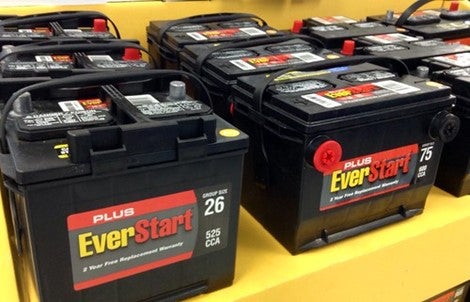
Has your car battery ever died on you? If so, you understand how stressful and annoying it can be — especially when stranded on the roadside. The battery in your Toyota is a critical component; it stores and supplies the power to start up the engine and run its many electrical and electronic systems. Over time, battery efficiency gradually decreases with use and exposure to the elements, affecting its ability to accept and hold charges and start the engine. Consequently, monitoring, maintaining, and replacing your battery when necessary is essential to keep it in optimal condition. But the question is, how long will a car battery last? Defining a Toyota Battery's Service Life Walmart EverStart Car Batteries, Battery by Mike Mozart is licensed with CC BY 2.0 The lifespan of your Toyota battery depends on its type. Conventional lead-acid and hybrid batteries have different lifespans due to their different operating principles. Here's a quick overview of how long each type lasts: Conventional lead-acid batteries With proper maintenance, these batteries can last between three and five years. You use conventional lead-acid batteries in cars that run at least partially on gas. They utilize a combination of lead and lead dioxide plates submerged in a liquid mixture of one-third sulfuric acid and two-thirds water. While the car's running, the alternator works to recharge the battery, but it'll slowly lose its charge when it's not in use. Hybrid batteries Hybrid batteries usually last 10 to 15 years. Some hybrid vehicles, such as the Prius, use two different batteries: a conventional lead-acid one and a lithium-ion or nickel-metal hydride hybrid one. Meanwhile, the Mirai has hydrogen fuel cells and a conventional battery. You must replace the conventional battery every three to five years, but the hybrid one lasts much longer. Factors That Affect a Toyota Battery's Longevity Although your Toyota battery's service life depends mainly on its type, numerous factors can affect its longevity. Here are a few to keep in mind: The climate you live in Extreme heat and cold can significantly decrease your car battery's life span. Hot climates, such as those here in Jacksonville, Florida, can cause water to evaporate from the battery's liquid electrolytes and accelerate corrosion inside the battery. Conversely, cold temperatures below 32 degrees can reduce your battery's strength by up to 35%, making it work much harder to get your car started. How often you drive Contrary to popular belief, the more you drive your car, the better off your battery will be. The battery can drain if you take it out infrequently and leave it idle. Taking it out for a 30- to 40-minute drive each week allows the battery to charge up and maintain its capacity. Your car accessories Using your car's accessories can impact your battery's longevity, as doing so draws power from it. To maximize your battery life, avoid running the radio or air conditioner while idle, and double-check that all lights are off when you leave the car. Your car care schedule Routine battery maintenance is an essential part of your car care schedule. At our Keith Pierson Toyota dealership, our technicians can visually inspect the battery, clean its cables and clamps, and check its electrolyte levels and voltage to ensure it's at the correct charge. Tips to Help Extend the Life of Your Toyota's Battery While regular car maintenance is your best defense against an old or weak battery, these quick tips may help you get a few more months out of yours. Minimize the number of short rides: Try to do all your errands at once so you're not taking multiple short trips. This helps your battery charge fully each time. Park in a garage: Scorching sunshine and frigid weather are terrible for car batteries. Store your car inside a garage to protect it from extreme temperature fluxes, if possible. Clean off battery corrosion: Corrosion appears as white or granular buildup around cable ends and terminals. You can remove it with a soft-bristled toothbrush and baking soda, then coat the connectors in petroleum jelly. Secure your battery in the mounting bracket: Ensure the battery is snugly fit in the bracket to avoid internal damage when driving on rough roads. Turn off lights and unplug devices: Avoid anything that drains your battery while your engine is idle. Turn off headlights and internal lights, and unplug any devices you've been charging in the USB port. Regularly inspect the battery: Check it often and get an expert to inspect it during regular maintenance. Watch out for signs of a failing or near-dead battery, such as slow startups, low or flickering lights, and warning lights on the dashboard. If you recently replaced your battery and are still having problems, you may need to have your alternator inspected. Battery Services Offered at Keith Pierson Toyota Our battery services typically include an inspection of the battery and its cables and terminals and a thorough cleaning. We also perform open circuit voltage and load tests and treat the battery terminals to help prevent corrosion. Battery cables are essential for transferring power to the entire vehicle. Replacing them can provide longer battery life and optimize alternator operation. We provide a complete battery replacement service that includes removing the old battery and installing a new one, cleaning the battery holder, and properly tightening hold-down clamps and cables. This service enables proper alternator operation, quicker engine ignition, and peace of mind that your car will start when needed. We'll also treat the battery terminals to help stop corrosion. Schedule Your Next Toyota Battery Service at Keith Pierson Toyota Do you need car battery maintenance? Are you looking to replace your current one with a genuine Toyota battery? Or are you simply curious about our technicians' opinions on the matter? Whatever the case, our team at Keith Pierson Toyota is here to help. Our painstakingly trained technicians can provide the best advice and service regarding your Toyota. Contact us to schedule your battery service appointment and get answers to all of your questions.

how often should i change brake pads on my toyota camry

How Often Should I Change Brake Pads On My Toyota Camry?

Well-maintained brakes are an essential part of your car's safety features. They ensure that you come to a swift stop when you hit the brake pedal and can make all the difference between you either having or avoiding an accident. Changing your brake pads at the right time is one of the most important brake maintenance tasks you can perform. Here at Keith Pierson Toyota in Jacksonville, Florida, our service team has extensive experience with brake pad replacements and have put together some tips for you to follow. How Often Do the Toyota Camry's Brake Pads Need Changing? Most brake pads will need changing somewhere between 30,000 and 70,000 miles of driving. The wide disparity is because the way you drive affects how long your pads will last. For instance, if you spend a lot of time on city roads with heavy traffic, your brake pads will wear out more quickly. That's because you'll be braking more often in stop-and-go traffic. In contrast, your pads will last longer if the majority of your driving time is spent cruising on the highway. Many drivers will notice that the life span of their brake pads fall somewhere between these two extremes. Your brake pads generally wear down at the same pace on both sides of your vehicle. If you have a front-wheel-drive Camry, you may notice that the pads on the front wheels wear down more quickly than those on the rear wheels. All-wheel-drive Camrys may be different. If you've lost track of your maintenance schedule, you can usually look out for a few warning signs to figure out when you're due for a replacement. For example, you may hear a squeaking or screeching noise. If you'd like more advice on when to change your brake pads, you should consult your Camry owner's manual. This manual will provide you with a maintenance schedule that you should follow, including a recommendation on when to replace your pads. The recommendation may be influenced by such factors as whether your Camry has front-wheel or all-wheel drive and the type of engine under the hood. If you can't find your owner's manual, our Toyota-certified technicians here at Keith Pierson in Jacksonville will be happy to share their expert advice on brake maintenance. Why Is It Important to Change Your Camry's Brake Pads? Brake pads wear down over time with use, and they'll become less effective if you don't change them on time. If your pads are wearing thin, you may find that you have to apply more pressure on the brake pedal before you get a response, which can increase the distance you'll need to bring your Camry to a stop. This can be dangerous not only for yourself but also for all motorists around you. Failing to change your pads on time can also cause severe damage to other brake components. For example, if you let your pads wear through completely, your rotors could become deformed. This may happen if the metal rotors scrape directly against the brake calipers once there's no pad left for protection. Your calipers could also become damaged and require replacing. Extensive brake repairs will be significantly more expensive than a new set of brake pads purchased at the right time. Other Camry Brake Maintenance Issues In addition to getting your brake pads changed, there are several other brake maintenance tasks that you may have to get a service technician to take care of. Brakes are operated by fluid that moves through your brake lines to create the necessary pressure to apply the brakes when you hit the pedal. The fluid can get contaminated, and you may need to flush it. You may also need to replace your lines if they get damaged or wear through. If your brakes require flushing, you'll have to remove all of the fluid. You'll then have to seal the system before you can add new fluid. This is necessary to prevent air getting into your braking system, which can reduce your car's braking performance. Poor car maintenance may also result in you having to repair or replace your rotors. In addition, you may need to repair your calipers if they become damaged due to worn-out pads and excessive metal-on-metal friction with your rotors. Why Choose Keith Pierson Toyota for Your Camry Brake Maintenance If your brake pads need replacing or you need another brake-related issue taken care of, we're here to help. At Keith Pierson Toyota's Jacksonville service center, our team of auto mechanics change Camry brakes on a regular basis for our loyal customers. You can reserve your maintenance appointment using our online booking tool and purchase new brake pads from our well-stocked parts department. Alternatively, you can swing by our dealership during our opening hours and let us take care of the rest. While you're visiting our service center, we can help you with a range of additional maintenance services. For starters, we'll carry out a multipoint inspection to check whether there are any issues with your Camry. The inspection allows our technician to identify any problems before they get serious so we can carry out preventative maintenance. Common maintenance tasks we handle include oil changes, tire rotations, fluid top-ups, and battery tests. Before you stop by our service center with your Camry, don't forget to look at our service specials. These incentives may include discounted prices for brake pads or the labor cost for installing them. Our deals change on a regular basis, so don't forget to check back often in the lead-up to your service appointment. These incentives are a great way to save money while keeping your Camry well maintained. If you have any additional questions or would like to book an appointment at our service center, don't hesitate to contact us today. Our service center experts are standing by to take your call or chat to you in person if you choose to swing by. Once your car is in our care, we'll get to work replacing your brake pads and doing anything else that's necessary so that you can get back on the road as soon as possible.

toyota corolla oil change guide

Toyota Corolla Oil Change Guide

The Toyota Corolla is a popular compact sedan ideal for navigating the busy streets in Jacksonville, Florida. It's also very fuel efficient, which is great for long drives when you want to escape the city. As part of the regular maintenance your Corolla needs so you can get the most out of it, you'll need to perform regular engine oil changes. Our team of service experts here at Keith Pierson Toyota in Jacksonville, FL have compiled a guide for when to change your Corolla's oil and how to go about it. If you have any questions, don't hesitate to contact our friendly team today or use our convenient appointment scheduler to reserve a spot at our service center. Toyota Corolla Oil Change Schedule Man fixing car engine by Malte Luk is licensed with Pexels License If you run your Corolla on standard engine oil, you'll need to change it every 5,000 miles of driving or every six months, whichever comes first. Corollas running on synthetic engine oil need oil changes every 10,000 miles. Sticking to these guidelines is essential to ensure your Corolla's engine performs at its best. Otherwise, you risk exposing it to unnecessary wear and tear. Contaminated oil can also cause more serious damage to certain engine components if you don't change it frequently. Whether you run your Corolla on standard or synthetic oil depends on its engine type. Lower-powered engines are generally well suited to standard engine oil, which is cheaper than synthetic oil. Turbocharged engines or engines with higher horsepower ratings benefit from synthetic oil, which is more durable than the standard varieties. If you're unsure which type of engine oil your Corolla needs, check the owners manual for a recommendation or talk to one of our Toyota service experts. How To Change Your Corolla's Engine Oil It's important to let your Corolla sit for a while after turning off the engine before you change the oil. The engine gets hot when it's running, so you don't want hot oil spraying out of the oil drain and burning you. If you're changing the oil at home, collect the tools you'll need, including a new quart of engine oil, a rag, an oil pan, a dipstick, a new oil filter, and a wrench. Place the oil pan under the oil drain so the old oil has somewhere to go when you open the cap. Next, loosen the cap with the wrench before removing it with your fingers. Keep your face and other body parts away from the oil drain to avoid getting covered in oil. Let the oil collect in the pan, then set it aside to dispose of later. Next, replace the oil cap so the new oil stays in the engine compartment when you add it. Then, remove and dispose of the old oil filter. Before you replace it with a new one, dab it with some motor oil using your rag. You can now pour in the new engine oil. Wait a few minutes before testing the oil level with the dipstick to ensure you've added the right amount. How To Tell When the Oil Needs Changing The easiest way to tell when it's time to change the oil in your Corolla is to track the time since the last oil change. If you've lost track of the oil change schedule, there are some visual signs you can look out for that'll let you know it's time for an oil change. A brief engine inspection will identify them. The first obvious sign is if the oil has changed color. It may appear darker than usual, which indicates it's burnt because of overexposure. Or you may notice it's begun to form into a sludge on some of the engine's components, which suggests the oil has broken down or become contaminated. A further indication of oil contamination is if you see dirt or debris floating in it. These particles could have come from an external source or parts within the engine compartment that have worn down. You may notice a few other things indicating that the oil needs replacing. For example, if a burning smell comes from the engine, this is a typical symptom of old oil that needs replacing. You may also hear unusual sounds from the engine if the oil doesn't provide enough lubrication to ensure the parts move smoothly. Why Should You Choose Keith Pierson Toyota for an Oil Change in Jacksonville? If you don't feel confident enough to change the engine oil yourself or don't have the tools to do it, our service team here at Keith Pierson Toyota can help. Our experienced auto technicians take care of engine oil changes daily, so we'll be able to get you back on the road in no time. You can reserve your oil change appointment online or drop by our Jacksonville dealership when it's convenient. While you're visiting our service center, we can also perform other key maintenance tasks, such as tire rotations and brake pad replacements. During each service appointment, one of our team members can perform a multi-point inspection of your vehicle, an important measure to help us implement preventive maintenance. If the inspection identifies any potential problems, we can put them right before there's any further serious damage to your Corolla. If any repairs are required immediately, our parts center can supply Toyota original equipment manufacturer components for our expert technicians to install. And if you'd like to order parts in advance, you can use our online form. We hope you better understand how to change your Corolla's engine oil and when you should do it. If you still have any oil-related questions or queries about your Corolla's maintenance schedule, feel free to contact us today. Our service department can provide expert advice on car maintenance and repairs and help you get your Corolla back to its best. We're looking forward to welcoming you to our Jacksonville dealership for your next Corolla maintenance appointment, whether you're a new or returning customer.

jacksonville jazz festival

Everything You Need to Know About the Jacksonville Jazz Festival

One of the hottest events of the year for music lovers is coming up this Memorial Day weekend: the Jacksonville Jazz Festival. The festival has taken place in downtown Jacksonville for over 40 years, but you may not have heard about it or explored all it has to offer just yet. If you want to attend this year but aren't sure what to expect, then read this handy little guide we created to help you figure it all out. We'll tell you where to find the best dining and lodging options by the riverfront and make sure you see the best artists. Meet the Artists Eric Roberson by fave :) is licensed with CC BY-SA 2.0 The main draw for any music festival is the talented, award-winning artists who come to perform. The festival has two main stages: the Swingin' Stage and the Groovin' Stage, and both stages have artists performing at the same time. Some of the most anticipated artists include Charlie Wilson, The Dirty Dozen Brass Band, Ulysses Owens Jr. and Generation Y, Larry Carlton, and Samara Joy. Even if you haven't heard of these artists before, rest assured they're some of the most talented jazz singers and musicians from across the country. After you see them play live, you won't be able to get the beautiful sounds and catchy melodies out of your head. You can find the festival stages and Florida Theatre at the following Jacksonville locations: Jacksonville Jazz Piano Competition: Presented by Keyboard Connection at the Florida Theatre: 128 E. Forsyth St., Suite 300, Jacksonville, Florida, 32202. Swingin' Stage: Riverfront Plaza: 2011 Independent Drive, Jacksonville, Florida, 32202. Groovin' Stage: At Ford on Bay: 288 E. Bay St., Jacksonville, Florida, 32202. Jacksonville Jazz Festival: The Basics Before we dive into the dining options, lodging options, and other logistics, you're probably wondering how you can attend the event. The official festival takes place from Friday, May 26, to Sunday, May 28, from 4 p.m. to 11 p.m. on Friday and Saturday, and 4 p.m. to 10:30 p.m. on Sunday. On the Thursday night before the festival starts, you can also attend the Jacksonville Jazz Piano Competition at the Florida Theatre, which is presented by Keyboard Connection - The Piano Place from 7 p.m. to 10 p.m. At the competition, you can cheer on and listen to five finalists, all of them talented jazz musicians, try to outdo each other on the keys. Tickets and Premium Experiences Best of all, if you want to head to the festival, you don't have to worry about tickets, as the festival is free to attend. However, if you prioritize ease, comfort, and access as you make your way around the festival, you can purchase the VIP or Preferred Experience, meaning you won't have to lug around a folding chair or sit on the grass. Purchase single-day preferred seating for $89 and get access to designated padded seats, an exclusive bar where you can skip the long lines, and private bathrooms (with air conditioning — a must in May in Jacksonville). For an even more exclusive ticket, you can purchase the VIP Full Festival Experience for $499 or the VIP Single-Day Festival Experience for $199. The former comes with $150 in credit for food and drinks, while the latter comes with $30 in credit. The VIP tickets give you access to an even more exclusive bar, comfortable seats for each concert right near the stage, a variety of à la carte dining options, reserved parking, and guaranteed access to the Jacksonville Jazz Piano Competition, which tends to fill up fast. Where Can You Stay To See the Jacksonville Jazz Festival? If you're coming from out of town or have family and friends coming from out of town for the festival, you'll find plenty of great hotel options to put you close to the heart of the action. The recommended hotels include the Hyatt Regency Jacksonville Riverfront, Marriott Jacksonville Downtown, and Southbank Hotel on the Jacksonville Riverwalk. All of these hotels offer great amenities, comfortable rooms, wonderful dining options, and easy access to the Jacksonville Jazz Festival. The Hyatt Regency Jacksonville Riverfront is arguably the most upscale of the lodging options, offering luxury suites, five-star dining options, a rooftop pool, and a 24-hour gym, which also makes it more on the pricier side. The Marriott Jacksonville Downtown is also a great option, and both chain hotels offer views of the river and the downtown area. If you want a more boutique experience, head on over to the Southbank Hotel. Though the Hyatt and Marriott are closest to the stages, just a few minutes away by foot, the Southbank Hotel is only a 15-20-minute walk away. Where To Eat at the Jacksonville Jazz Festival Besides the great gourmet dining options available at the nearby hotels, food trucks from all over the area make their way to the Jacksonville Jazz Festival to set up shop for the weekend and offer the music lovers in attendance a delicious variety of cuisines. The specific trucks at the festival vary from year to year, so you'll have to check out the options yourself when you get there. Premium tickets come with food and beverage credits preloaded into your wristband that you can apply to any of the vendors on the property. For a quick meal outside of the main venues, head to D&G Deli and Grill for a tasty lunch at the counter or The Bread & Board for charcuterie, gourmet sandwiches, beer, and wine. If you're looking for something to eat after the jazz festival is over, you can enjoy an indulgent meal at Cowford Chophouse, an upscale local steakhouse. Since the Cowford Chophouse closes at 10 p.m., if you get out of the festival late or want something more laid back, you can go to Spliffs Gastropub or Wildkat Records Bar & Grill. Get your family and friends together and enjoy some beautifully moving classic jazz under the Florida sun this Memorial Day weekend. If you have any other tips for the Jacksonville Jazz Festival that we missed, contact us at Keith Pierson Toyota and let us know.

Contact Us

Fill out this form below and we'll contact you shortly
*Required Fields